10 Best Waders for Fly Fishing – 2026 Buyer’s Guide

Last updated on June 18th, 2026.

The ultimate guide to the best fly fishing waders for men on the market: stockingfoot, bootfoot, breathable and best value.

Disclaimer: All products in this guide are independently researched by our team. We only recommend products we believe in and never get paid for the reviews. Learn more about our review process here.

In this ultimate guide we want to give you an overview of the best waders for fly fishing out there. Of course “best” is not an entirely objective term but we will try our best to give you an idea of what to look for no matter what kind you want to buy.

Quick advice: If you want a pair of waders that can do it all and will last for years, go for the Simms G3 – learn why. If you’re looking for an entry level pair, our favorite is the Bassdash– learn why.

What’s Important in Choosing the best Fishing Waders?

Waders are one of the most important pieces of gear when heading out to the water. Not only do they keep you dry and warm, they also protect you from the brush, animals like snakes and bugs.

A good pair is worth the money if you are into fly fishing and want to keep up the sport. You only realize the value of the best waders for fishing when you had a bad experience such as a leak that can ruin a great trip. Depending on the conditions you fly fish in, you can choose from different kinds: chest high vs. waist high (hip), Gore-Tex/Nylon vs. Neoprene and stocking foot vs bootfoot. Don’t worry if you are not familiar with these terms. We’ll explain all the details in this article.

If you are only fishing in very warm conditions you might not need a pair but can do wet wading instead. The requirement for that are warm water and air temperatures.

Top Picks:

  • Best Overall: u003ca href=u0022#g3u0022 class=u0022ek-linku0022u003eu003cmark style=u0022background-color:rgba(0, 0, 0, 0)u0022 class=u0022has-inline-color has-vivid-cyan-blue-coloru0022u003eSimms G3 wadersu003c/marku003eu003c/au003e
  • Best Entry-Level: u003ca href=u0022#bassdashu0022 class=u0022ek-linku0022u003eu003cmark style=u0022background-color:rgba(0, 0, 0, 0)u0022 class=u0022has-inline-color has-vivid-cyan-blue-coloru0022u003eBassdash Immerseu003c/marku003eu003c/au003e
  • Best Pocket System: u003ca href=u0022#froggtoggsu0022 class=u0022ek-linku0022u003eu003cmark style=u0022background-color:rgba(0, 0, 0, 0)u0022 class=u0022has-inline-color has-vivid-cyan-blue-coloru0022u003eFrogg Toggs Sierran Stockingfootu003c/marku003eu003c/au003e
  • Best Value for Money: u003ca href=u0022#redingtonu0022 class=u0022ek-linku0022u003eu003cmark style=u0022background-color:rgba(0, 0, 0, 0)u0022 class=u0022has-inline-color has-vivid-cyan-blue-coloru0022u003eRedington Crosswateru003c/marku003eu003c/au003e
  • Best Mid-Range: u003ca href=u0022#freestoneu0022 class=u0022ek-linku0022u003eu003cmark style=u0022background-color:rgba(0, 0, 0, 0)u0022 class=u0022has-inline-color has-vivid-cyan-blue-coloru0022u003eSimms Mens Freestone Zu003c/marku003eu003c/au003e
  • Best Newcomer: u003ca href=u0022#grundensu0022 class=u0022ek-linku0022u003eu003cmark style=u0022background-color:rgba(0, 0, 0, 0)u0022 class=u0022has-inline-color has-vivid-cyan-blue-coloru0022u003eGrundéns Vector Wadersu003c/marku003eu003c/au003e
  • Best Packability: u003ca href=u0022#swiftcurrentpackableu0022 class=u0022ek-linku0022u003eu003cmark style=u0022background-color:rgba(0, 0, 0, 0)u0022 class=u0022has-inline-color has-vivid-cyan-blue-coloru0022u003ePatagonia Swiftcurrent Packableu003c/marku003eu003c/au003e
  • Best Breathability: u003ca href=u0022#orvisprou0022 class=u0022ek-linku0022u003eu003cmark style=u0022background-color:rgba(0, 0, 0, 0)u0022 class=u0022has-inline-color has-vivid-cyan-blue-coloru0022u003eOrvis Men’s Prou003c/marku003eu003c/au003e
  • Best Durability: u003ca href=u0022#g4u0022 class=u0022ek-linku0022u003eu003cmark style=u0022background-color:rgba(0, 0, 0, 0)u0022 class=u0022has-inline-color has-vivid-cyan-blue-coloru0022u003eSimms G4 Prou003c/marku003eu003c/au003e
  • Best Style: u003ca href=u0022#patagoniaswiftcurrentu0022 class=u0022ek-linku0022u003eu003cmark style=u0022background-color:rgba(0, 0, 0, 0)u0022 class=u0022has-inline-color has-vivid-cyan-blue-coloru0022u003ePatagonia Men’s Swiftcurrentu003c/marku003eu003c/au003e
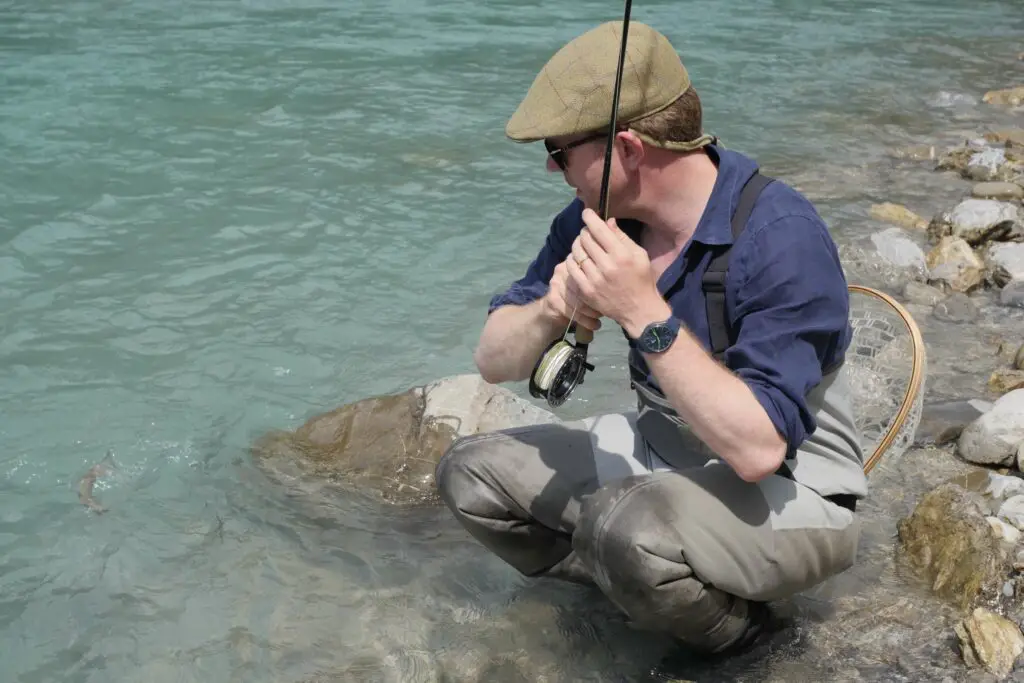
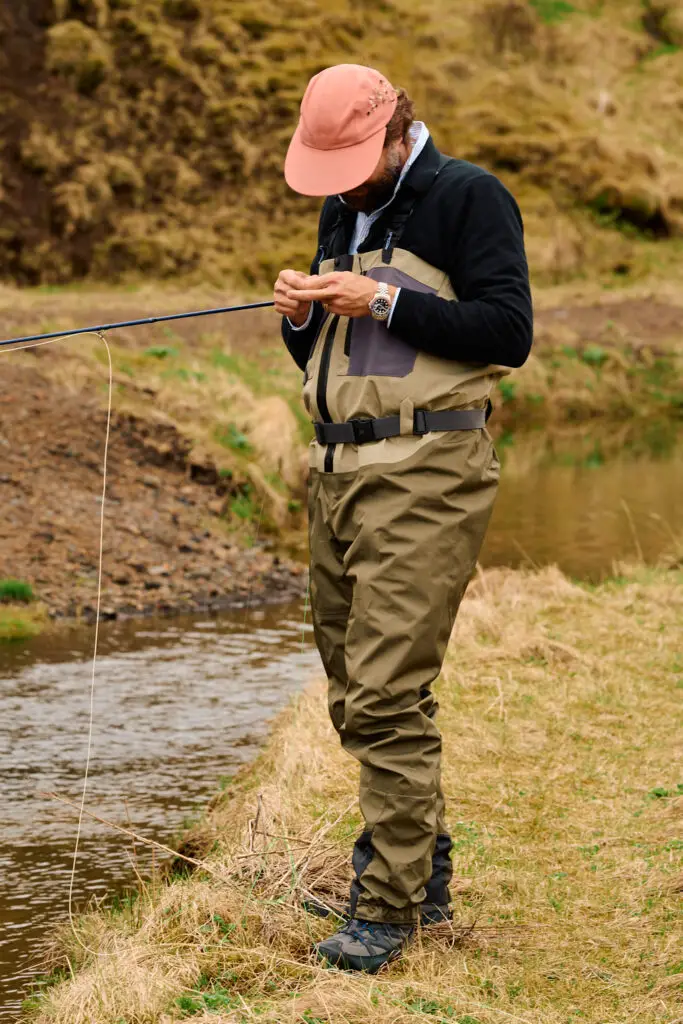
Fly Fishing Waders keep you dry and warm when out fly fishing
Fishing waders keep you dry and allow you to reach places where the fish are holding

Best Waders for Fishing Money Can Buy in 2026

We want to make sure you buy the best product your budget can afford. That’s why we broke down our review into three categories for men’s’ stockingfoot chest waders (the gold standard): premium ones, mid-range ones and affordable ones.
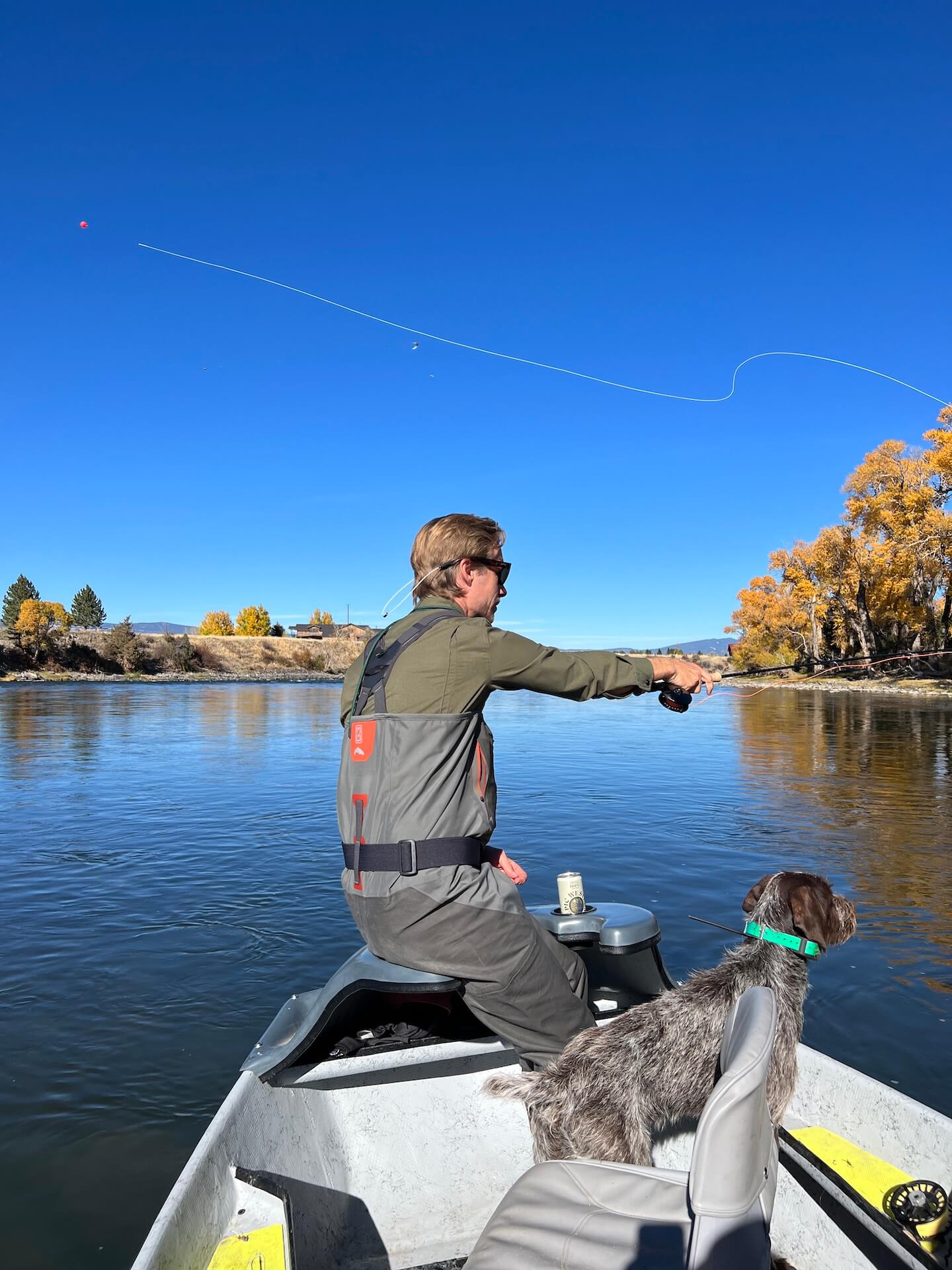
Fly fisherman wearing Simms G3 waders fly fishing the Yellowstone River, Montana.
Wearing the new Simms G3 waders on the Yellowstone River, Montana. Photo: Shane Rickert

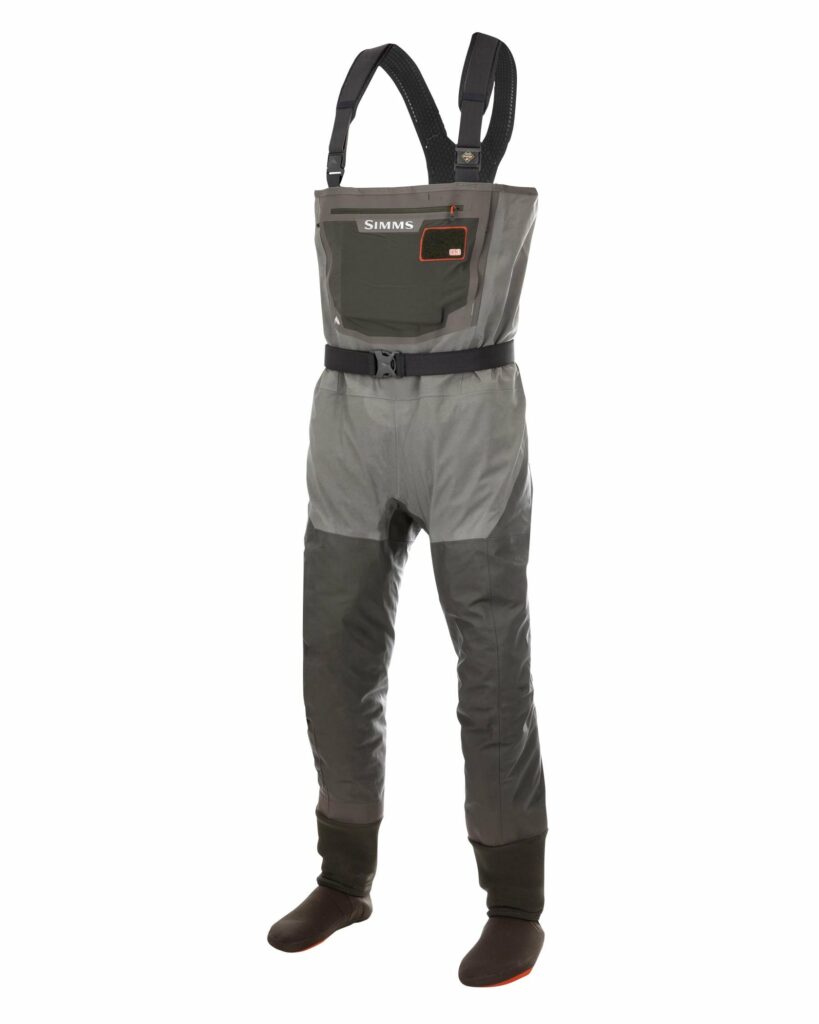
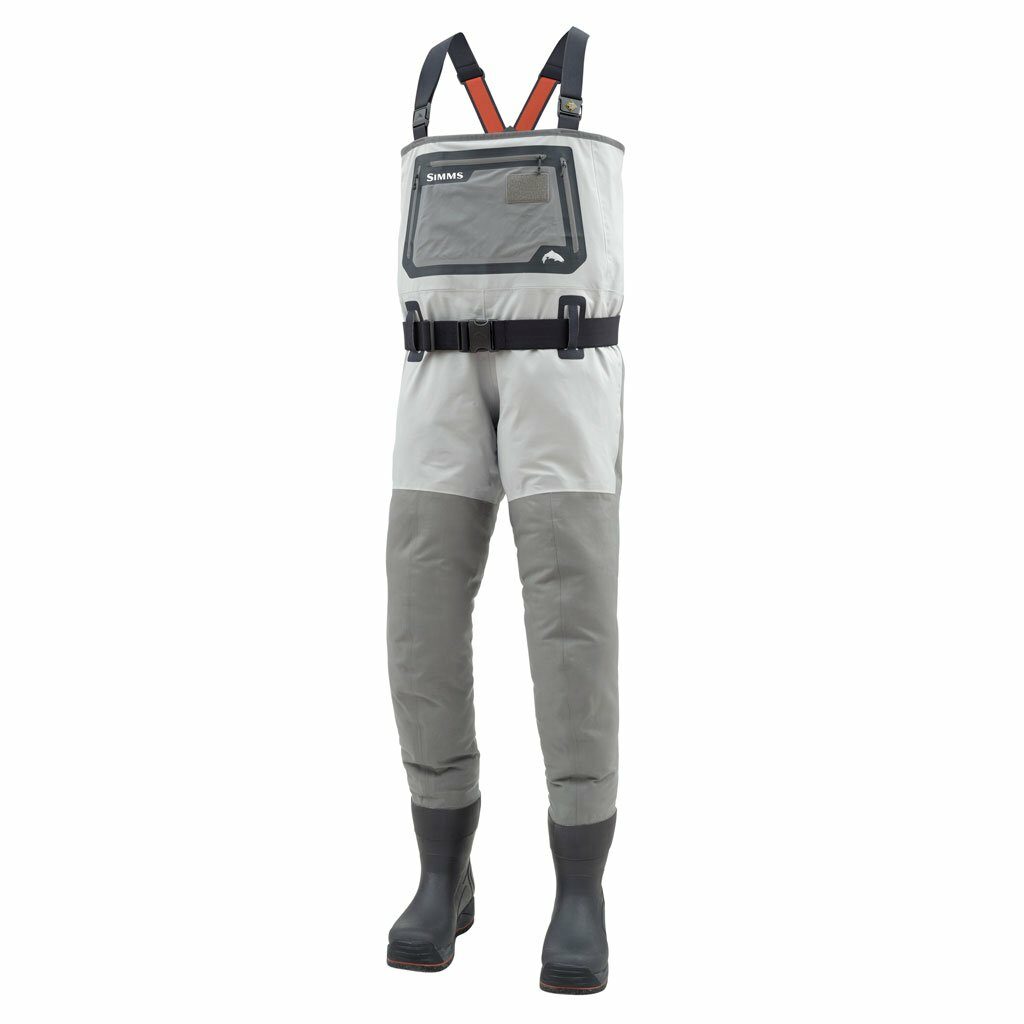
1. Simms G3 Stockingfoot

Simms G3 Stockingfoot 2022
Simms G3 Stockingfoot

Key features:

– Highly breathable GORE-TEX Pro membrane

– Gravel guards fit perfectly and prevent any gravel or sand from entering

– Wading belt and suspender system are the best in the market

Why we picked it:

Montana-based manufacturer Simms has completely reworked their workhorse waders, the Simms G3 Stockingfoot (Read our in-depth review here). They have come up with an even better fabric that features the proven mix of a three-layer Gore-Tex membrane in the upper body and a four-layer setup from the thighs downwards where most of the abrasion tends to happen.

I like the big zippered front pocket on the chest of the Simms G3 Stockingfoot. It keeps all your essentials like pliers, nippers or tippet spools. While we were a fan of the fleece-lined hand warmer pockets on its predecessor already, they have gotten another upgrade since you can close them with zippers now as well. The belt loops have gotten an upgrade as well as they now feature two options to tighten your wading belt.

The adjustable suspender system is just as good as before and offers all-day comfort thanks to its padding. Just like its predecessor, the Simms G3 Stockingfoot features integrated gravel guards to keep sand and gravel out or your wading boots and anatomically engineered neoprene stocking feet.

PROS:

  • Incredibly durable thanks to GORE-TEX membrane
  • Anatomical neoprene booties provide excellent all-day comfort
  • Wide wader belt allows for a net to be tugged in in the back

CONS:

  • Hand warmer pockets could have thicker fleece lining for cold days
  • Chest pocket is made from a rather fragile fabric – careful with sharp objects

GET THEM AT SIMMS

GET THEM AT TRIDENT

Best Entry Level Waders for Fishing: under $250

2. Bassdash Immerse Wader
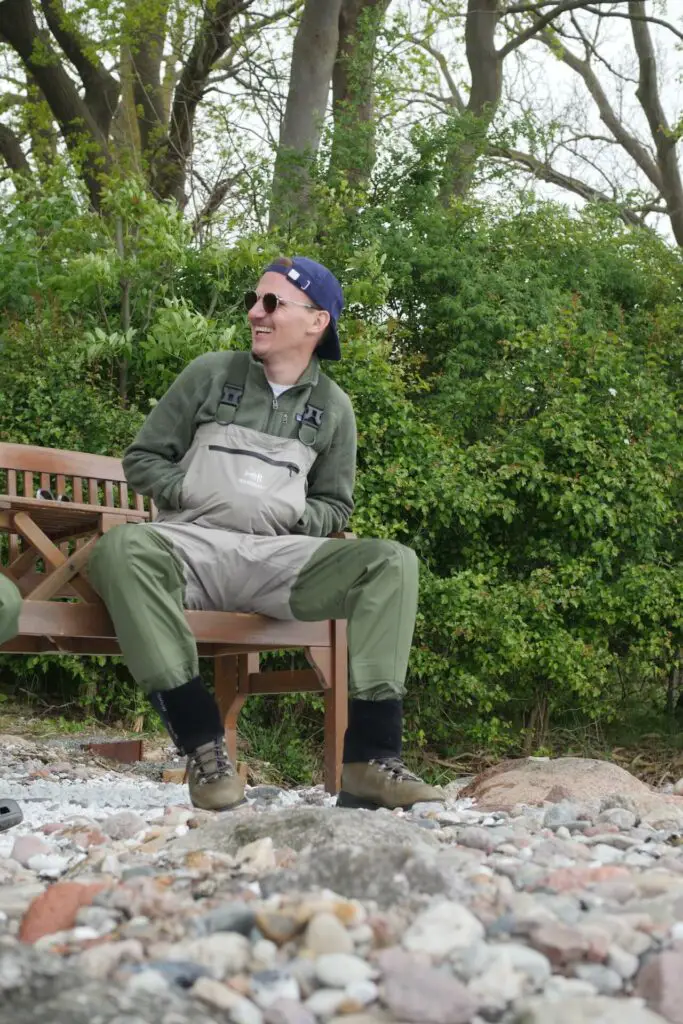
Fly fisherman on bench wearing the Bassdash Immerse waders
Bassdash Immerse waders. Photo: Leonard Schoenberger

Key features:

– Big chest pocket allows for ample storage

– Hand-warmer pockets

– Solide neoprene booties

– Adjustable suspenders and wading belt

Why we picked it:

The Bassdash Immerse waders (read our in-depth review here) are a great pair of entry level waders that feel much more than a mid-range wader. They feature a big chest pocket to store fly boxes, tippet spools or some fishing pliers. Hidden behind this big chest pocket is a reach through handwarmer pocket. This gadget comes in very handy on cold days on the water. An inside flip out pocket stores items such as your wallet or car keys. A D-ring attached to the suspenders rounds off the great list of features.

We found the suspender system on the Bassdash Immerse waders comfortable and highly adjustable. A wide wading belt makes sure no water can penetrate in case you fall into the water. At the bottom, the Bassdash Men’s Veil Camo feature neoprene booties and integrated gravel guards that you can attach to your wading boots to make sure no gravel or dirt enters your boots. The Bassdash are also breathable thanks to their three layer fabric that reaches a WPR score of 15,000mm.

PROS:

  • Plenty of pocket options
  • Gravel guards tuck nicely into the laces of the wading boot

CONS:

  • Suspender system could use a little more padding

GET THEM ON AMAZON

GET THEM AT BASSDASH

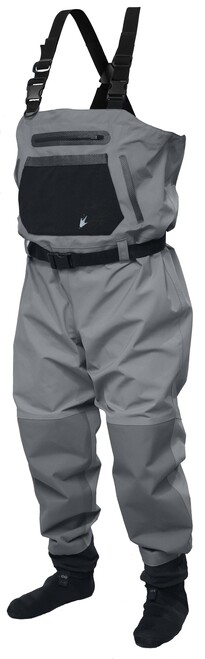
3. Frogg Toggs Sierran Stockingfoot

Frogg Toggs Sierran Waders
Frogg Toggs Sierran

Key features:

– Multiple pockets mean a lot of room for accessory storage

– Huge sizing options

– Enhanced abrasion resistance around the knees and shins

Why we picked it:

In our eyes, the Frogg Toggs Sierran are a solid choice if you’re new to fly fishing and are not sure how much you are going to practice it.

The Frogg Toggs Sierran are chest waders giving you a lot of flexibility when wading deep. They are made of a solid 3-layer nylon material in the upper body and a 6 layer around the knees and shin where a lot of abrasion happens. The suspender system has integrated D-rings. A nice feature since it makes sure you can attach important tools such as pliers or nippers where you need them.

A zippered chest pocket for your essential gear like fly boxes or tippets and hand-warmer pockets are great features in the Frogg Toggs Sierran. Comes with a wading belt and adjustable shoulder straps. Integrated gravel guards make sure no sand or gravel get into your wading boots.

PROS:

  • Reinforced knees for increased abrasion resistance
  • Could pocket system across the chest

CONS:

  • Cut tends to be a little bulky

GET THEM ON AMAZON

GET THEM AT WALMART

4. Redington Crosswater

Redington Crosswater Waders in Action
Redington Crosswater Waders in action in Montana. Photo: Shane Rickert © The Wading List

Key features:

– Good breathability for this price range

– Very lightweight

– Solid gravel guards

Why we picked it:

The Redington Crosswater Waders (read our in-depth review here) are another great entry level option at well under $200. Made from a 3-layer waterproof nylon fabric, they are a good choice if you are looking for breathable waders. They are lightweight and hence a good choice for the summer or if you’re just starting out and don’t know yet how many days a season you’ll end up fishing.

Like we mentioned in other gear reviews, it’s always a good idea to get an entry level product from a brand that also makes high-end products. You can be sure that their know-how trickles down into these products. The Redington Crosswater is no exception to this rule.

The Redington Escape Fly Fishing can easily be turned into a pair of waist high waders, a handy feature when it’s hot. The only real downside we’ve found during our testing is the very limited amount of storage options. The Crosswater only comes with one small flip out pocket. A big chest pocket and ideally a bigger flip out pocket would be a nice upgrade. The same goes for hand-warmer pockets.

PROS:

  • Good breathability
  • Solid suspender system and gravel guards

CONS:

  • Very limited storage options
  • No hand-warmer pockets

GET THEM AT TRIDENT

GET THEM AT BACKCOUNTRY

GET THEM AT ED’s FLY SHOP

Best Mid-Range: $250 – $500

5. Simms Freestone Z Stockingfoot

Simms Freestone Waders Z Review
Simms Freestone Z waders. Photo: Christian Anwander

Key features:

– Waterproof TIZIP front zipper

– Zippered front pockets and fleece lined hand warmer pockets

– Adjustable suspenders and wading belt

Why we picked it:

The Simms Freestone Z Stockingfoot Waders (read our in-depth review here) are one of our mid-range favorites and a really great pair when it comes to value for money. For the Simms Tributary, the same thing holds true that we said about the Redington. Simms Waders are definitely some of the best on the market. The new Simms Freestone Z Stockingfoot Waders are a great entry into the world of Simms and a pair you can use hard and over several years.

The Simms Tributary are made from 4 layer QuadraLam fabric (not quite as tough as Gore-Text but still very durable). The Freestone Z’s main features certainly is its waterproof front zipper that facilitates getting in and out of your waders and the moments when nature calls.

My verdict: The new Simms Freestone Z Stockingfoot Waders are a great pair of waders that are an ideal choice if you’re looking for a lightweight durable pair of waders that won’t break the bank. Yes, there not made from Gore-Tex material but they durability is still great. And the zipper is a plus.

PROS:

  • Waterproof zipper makes in and out easy
  • Snug gravel guards prevent debris from getting in

CONS:

  • Storage options are limited on the Freestone

GET THEM AT SIMMS

GET THEM ON AMAZON

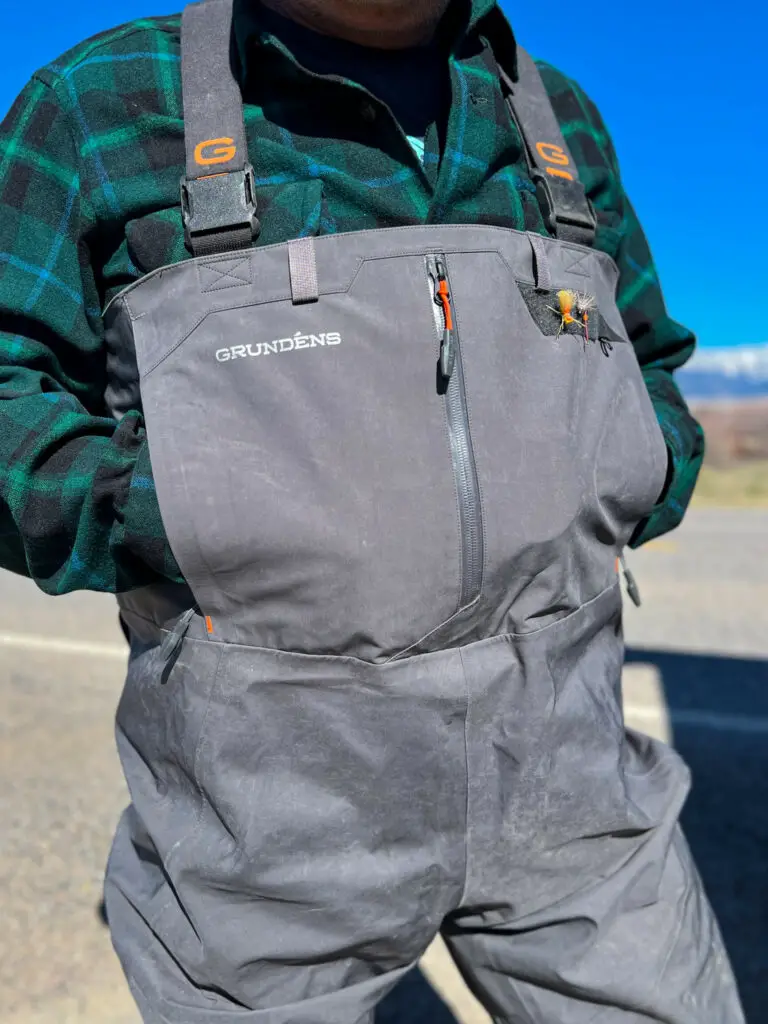
6. Grundéns Vector Waders

Grundens Vector Waders Handwarmer Pockets
The new Grundéns Vector waders during our test. Photo: Shane Rickert

Key features:

– Highly breathable 4-layer membrane

– Zippered handwarmer and vertical chest pocket

– Extra padding around the knee section

Why we picked it:

Grundéns has long been in the game of commercial fishermen gear. Just recently they launched their first wading collection that encompasses several waders and wading boots. Besides their highend boundary waders that come with Gore-Tex® fabric, they also released a mid-range model, called the Vector (read our in-depth review here).

What I liked right out of the box is the fabric that Grundéns uses on these waders. It’s a four layer nylon fabric that is both durable and yet flexible – good job, Grundéns! I also like their chest pocket design with the vertical zippered pocket that gives the Vector a unique look. The suspender system works well too though it’s not on the level of the Simms G3 for example. All in all a very good pair of mid-range waders.

PROS:

  • Highly durable and yet flexible material
  • Standout design with the vertical chest zipper pocket design

CONS:

  • Suspender system could be a little more comfortable
  • Gravel guards do their job although they could fit a little tighter

GET THEM AT GRUNDENS

GET THEM AT AVIDMAX

GET THEM AT SHOP FREDS

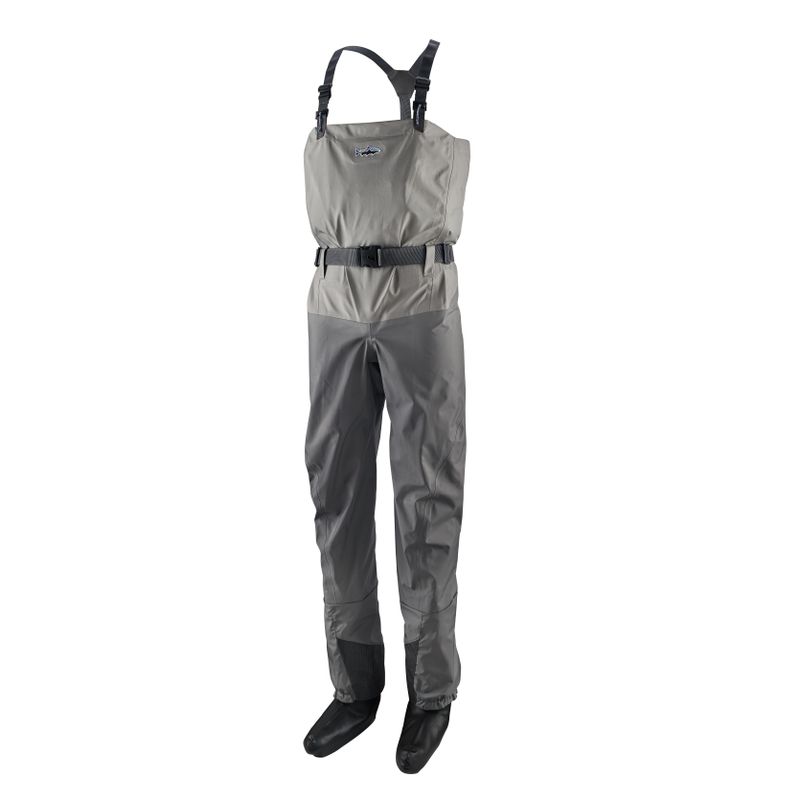
7. Patagonia Swiftcurrent Packable

Patagonia Swiftcurrent Packable Waders
Patagonia Swiftcurrent Packable Waders for Men

Key features:

– Highly packable

– Minimal weight for great freedom of movement

– Extra layers around the ankles for increase abrasion resistance

Why we picked it:

The Patagonia Swiftcurrent Packable are Patagonia’s trimmed down version of their Swiftcurrent (see further down). Most features on these have been reduced in terms of material and weight in order to make these waders a great option if you are travelling a lot. The suspenders and wading belt on the Patagonia Swiftcurrent Packable are a little slimmer than on the regular model. They feature a large chest pocket and a flip waterproof flip out pocket, yet no hand-warmer pockets.

Around the ankles, the Patagonia Swiftcurrent Packable feature extra abrasion resistant material where it matters most. The scuff guards will prevent sand and gravel from entering your wading boots. The Patagonia Swiftcurrent Packable weigh in at only 2.2 lbs.

PROS:

  • Extremely lightweight and highly packable
  • Great waist belt

CONS:

  • Suspenders can become uncomfortable when fishing all days
  • Feet can get cold easily since booties are very thin

GET THEM AT PATAGONIA

GET THEM AT BACKCOUNTRY

Best High-End: over $500

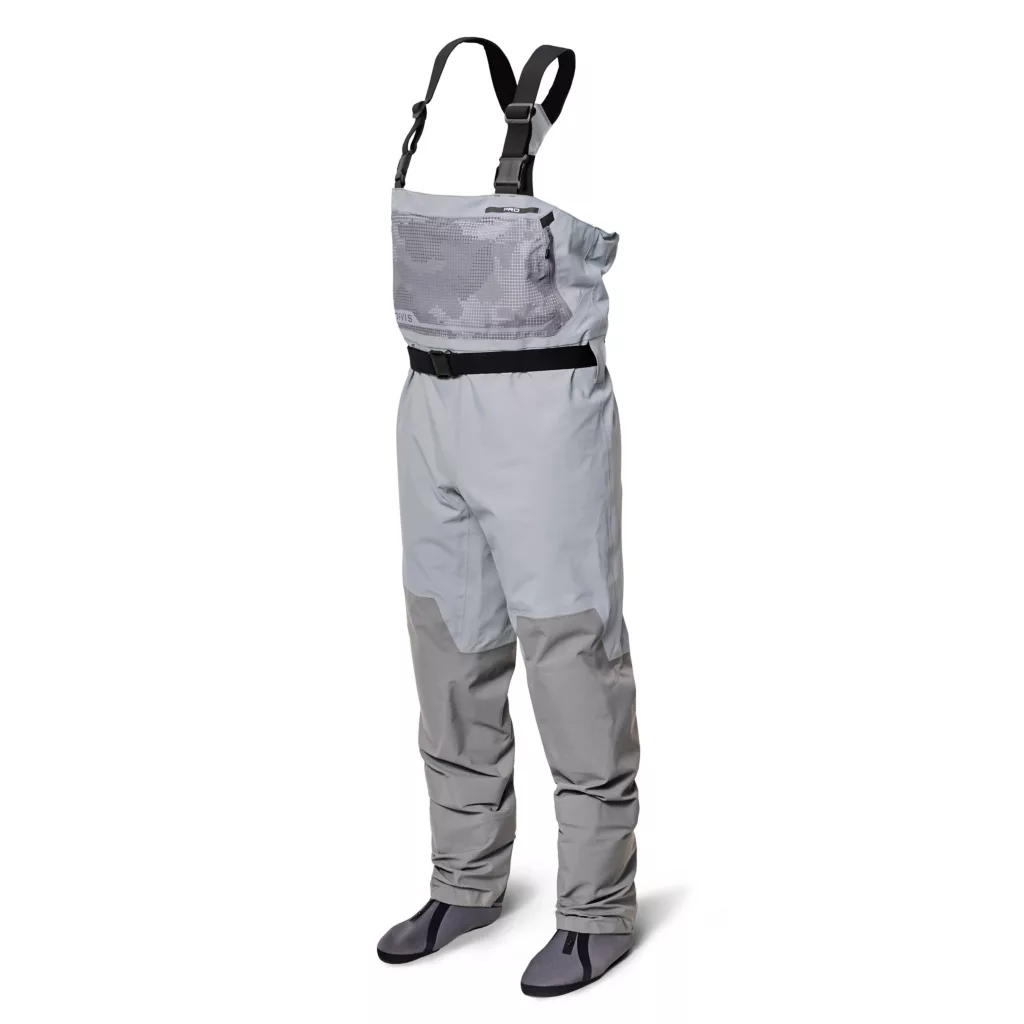
8. Orvis Men’s Pro

Orvis Men’s Pro LT

Key features:

– Extremely abrasion-resistant thanks to 5-layer shell

– Extra wide wading belt for better fit

– Orvis warranty

Why we picked it:

The Orvis Men’s Pro are meant for heavy use over years. For extra abrasion-resistance the lower part of these waders from the thigh downwards is made of extra-durable 5-layer cordura shell.

The Orvis Men’s Pro also feature removable knee pads when you want more freedom of movement around your legs. A number of zippered pockets, flap-out pocket, hand warmer pockets make sure you can store your gear and keep your hands warm in any conditions.

Elastic suspenders on the Orvis Men’s Pro allow for easy conversion into a waist high pair of waders. They come with the great Orvis warranty.

PROS:

  • Extremely durable thanks to 5-layer fabric
  • Wide wading belt provides extra back support

CONS:

  • Small chest pocket
  • Suspender system not as comfortable as Skwala or Patagonia

GET THEM AT ORVIS

GET THEM AT TRIDENT

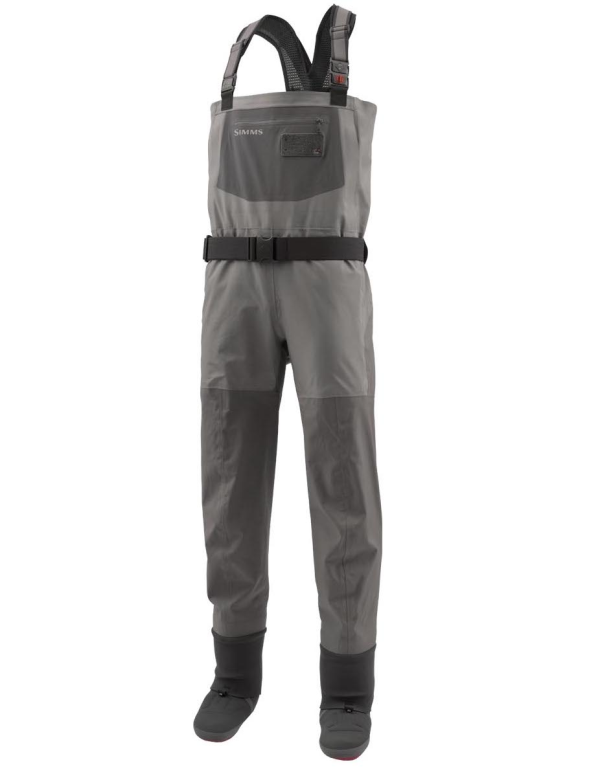
9. Simms G4 Pro

Simms G4 Pro waders
Simms G4 Pro

Key features:

– Highly breathable GORE-TEX Pro membrane

– Best suspender system on the market

– 4-layer Gore-Tex from the knees downwards

Why we picked it:

If money is not an issue, get the Simms G4 Pro waders. Those are the toughest, most durable waders we’ve ever experienced. They feel a bit like elephant skin. That tells you how sturdy they are. The Simms G4 Pro are made from 3-layer GORE-TEX® Pro Shell upper/4-layer GORE-TEX Pro Shell lower. They also feature compression-molded stockingfeet for extra comfort all day long.

The Simms G4 Pro have a fantastic suspender system and come with a waist belt that is safely held in place by multiple belt loops. The micro-fleece lined, reach-through handwarmer pockets come in handy on cold days. The Simms G4 are also available with a front zipper for extra comfort: the Simms G4Z Pro. No matter which version you get, the Simms G4 will serve you well for years.

PROS:

  • Most durable waders we ever tested
  • Superb suspender system that distributes the weight evenly on your shoulders

CONS:

  • Can get a little warm in the summer

GET THEM AT SIMMS

GET THEM AT TRIDENT

GET THEM AT FISH USA

10. Patagonia Men’s Swiftcurrent

Patagonia Swiftcurrent: Some of the best waders for fly fishing

Key features:

– Completely PFAS free

– Excellent suspender system

– Zippered and non-zippered version

Why we picked it:

The Patagonia Swiftcurrent (Read our in-depth review of the Patagonia waders here) are a very versatile pair of fly fishing waders that have been completely reworked for the 2025 season. The biggest news is the fact that they are the first pair of waders (out there) that are completely PFAS free. Besides this big change they’ve been fine-tuned (since they have been an excellent choice in the past already) and their color has been changed from shared of blue to a more greenish grey design.

The new Swiftcurrent waders come in multiple versions. The Swiftcurrent Expedition are the top of the line model featuring handwarmer pockets and a very comfortable suspender system. The Traverse are aimed at the travelling angler, featuring a more basic suspender system that can turn the Traverse into waist high for when the temperatures rise. They don’t have handwarmer pockets. Both versions come as zippered options. The only downside of the new Swiftcurrent waders is their zipper which could open a little further down to facilitate your relief.

PROS:

  • Most stylish waders in the test
  • Convertible into hip waders
  • Completely PFAS free

CONS:

  • Cut around the legs is a little bulky
  • Zipper could open up a little more

GET THE NEW SWIFTCURRENT WADERS AT PATAGONIA
GET THE NEW SWIFTCURRENT WADERS AT TRIDENT

GET THE NEW SWIFTCURRENT WADERS AT PATAGONIA

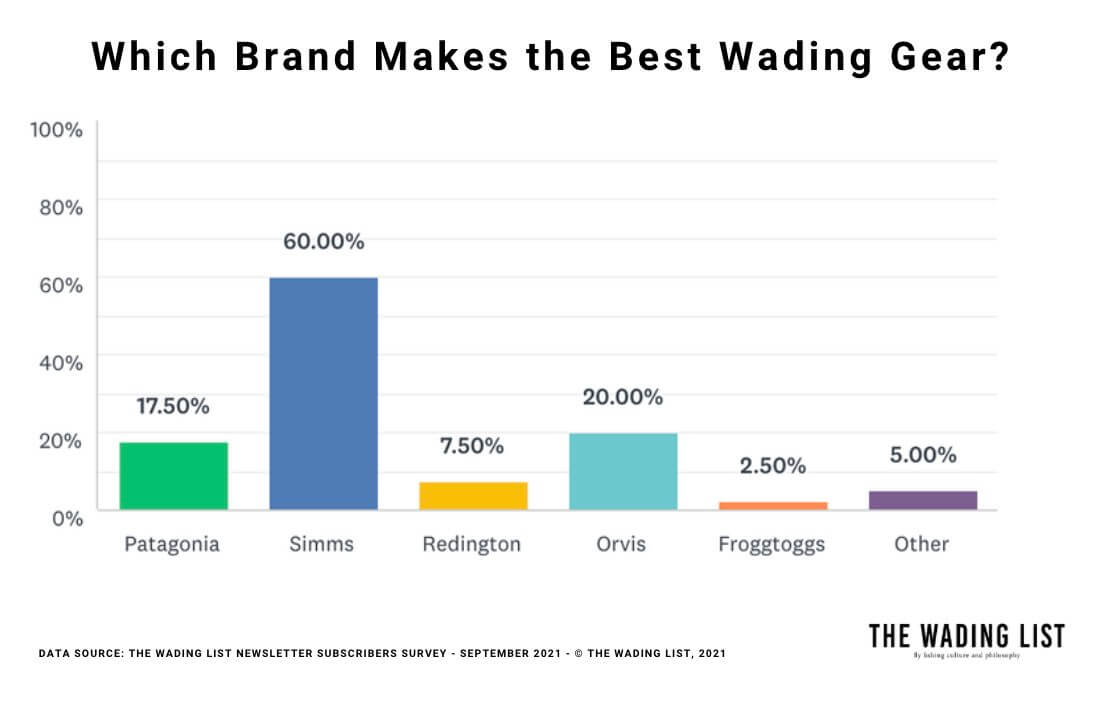
The Wading List Survey Sept 2021 - Who Makes the Best Wading Gear For Fly Fishing?

How to Pick the Best Fly Fishing Waders

A quality pair of waders has a number of key features that you should consider before making a purchase. Here are the most important ones to pay attention to.

Price and warranty

A pair of waders can come in pricy. On the upside the most expensive ones often have the best warranties. Premium brands like Simms, Patagonia or Orvis offer great warranties and easy repair services – a factor you should not underestimate. Often it can be worth investing a little more for a better pair that last you longer. Hence, it can even save you money on the long run.

Fit

The fit is one of the most important factors to have a good day on the water. Here again premium manufacturers like Simms, Patagonia or Orvis offer a wide range of sizes to literally fit any kind of physique. From experience I would say that Simms have a slightly slimmer cut around the leg and Patagonia for example offer a bit more room. You really have to try them yourself to find the best fit. If you are unsure you can order two or three pairs and test them in your living room.

Breathability

Breathability is another crucial factor when choosing your favorite. It defines how well moisture can escape from the inside if you are sweating. Neoprene ones have less breathability since they are made for cold temperatures.

The premium brands have similar technologies and the most expensive ones are all highly breathable. Simms uses the world renown GORE-TEX membrane that has proven to be highly breathable over decades. Patagonia use their own membrane which offers breathability on the same level.

Durability

Generally speaking the more expensive products feature more layers of fabric. For example, Simms’ top model the G4 is made of five layers of GORE-TEX membrane offering an incredible amount of durability. As a result, a pair of these can last you several years even if you are a die hard fisherman. Another important feature of the best fly fishing waders are the seams. what is fly fishing The better the seam quality the less likely your product is to leak.

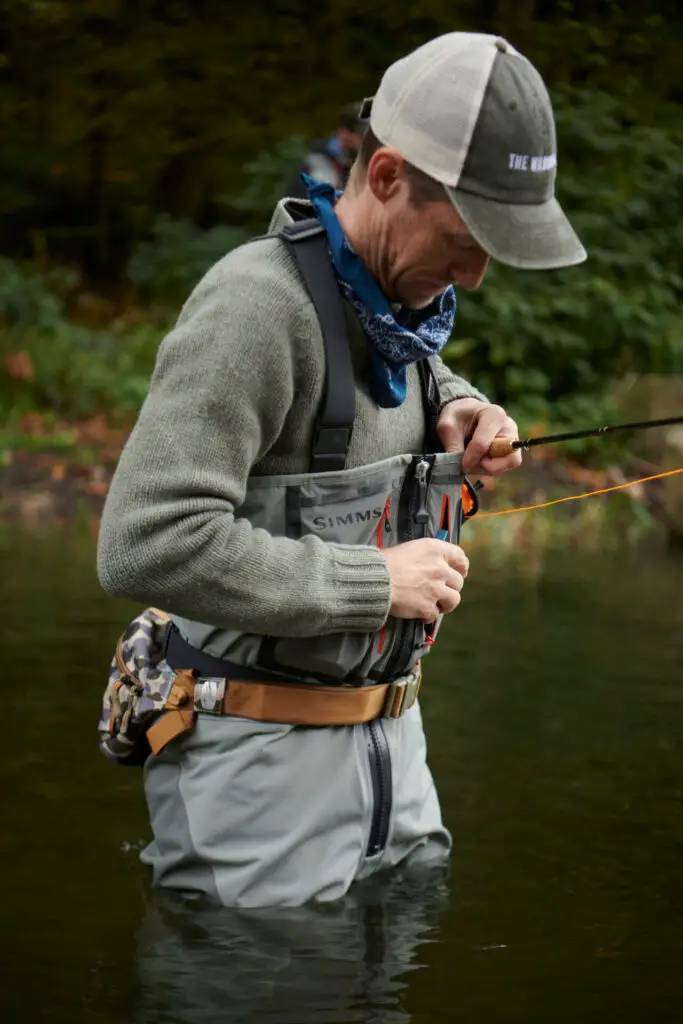
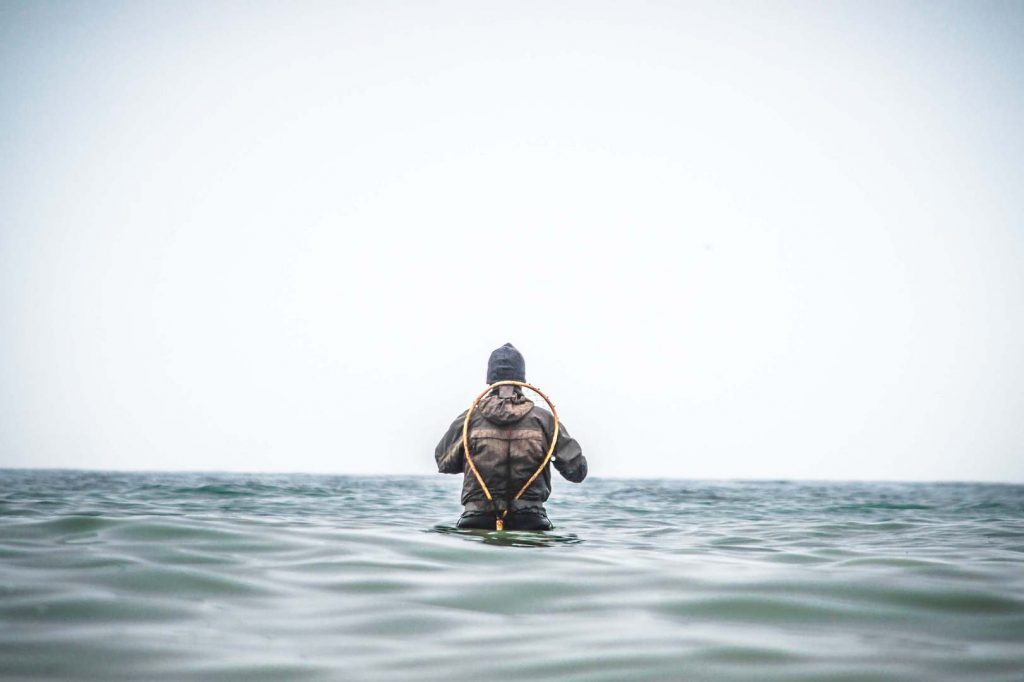
Fly Fisherman in the Water: Best waders for fly fishing 2024 review
Best waders for fly fishing 2026 review

Best Hip Waders for Men/ Wading Pants

Chest high waders give you the utmost in flexibility. Yet, if you know you are only going to fish in warmer temperatures and won’t have to wade deep, a pair of hip waders often also called wading pants can be a good alternative. We created a separate “Guide to the Best Hip Waders” which you can read here!

Since they cover less of your body, you will profit from an increased level of breathability. A downside of hip waders is the fact that you have less pockets to store your essentials. If you decide to use wading pants a sling pack or backpack can be a good add-on to your fly fishing gear.

Best Fishing Waders for Women

All the big manufacturers now make waders especially tailored for women. We have taken a deeper look at the best women’s waders out there in our “Guide to the Best Women’s Waders“. Make sure to check that out if you want to dive deeper into that topic. Here we’ll give you a quick look at our top 3:

Best Waders for Kids / Youth Waders

If you are really into fly fishing, chances are you want to take your kids along to the river one day. Depending on their age they can of course start fishing themselves. In that case a quality pair of waders is essential. Like with all children clothes, the lifespan is usually short because the kids grow so fast.

Nevertheless you should invest in a quality product. Often these ones can be passed on to siblings or cousins. Here are our top 3 kids/youth products:

What you Need to Know

Materials of Waders

Fly fishing waders can basically be organized into two categories: nylon/polyester and neoprene.

Nylon/polyester

Most of modern day breathable waders are made of nylon/polyester. Depending on the quality of the product they range from three to five layers. Nylon and polyester enable moisture from sweating to escape from the inside. The most advanced fabrics are membranes such as GORE-TEX featured in many Simms products.

Neoprene

Neoprene ones are made of thick and pliable synthetic rubber that is mostly used in cold temperatures. It is not breathable and hence only advisable in cold water surroundings. It is also much harder to walk long distances in a pair of rubber ones than nylon ones.

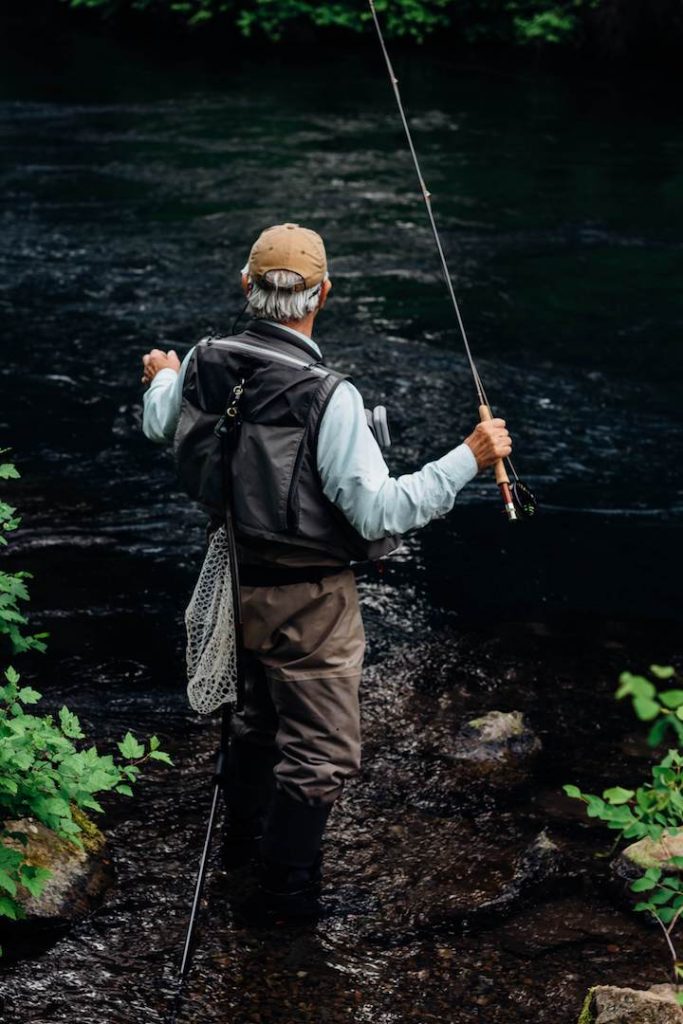
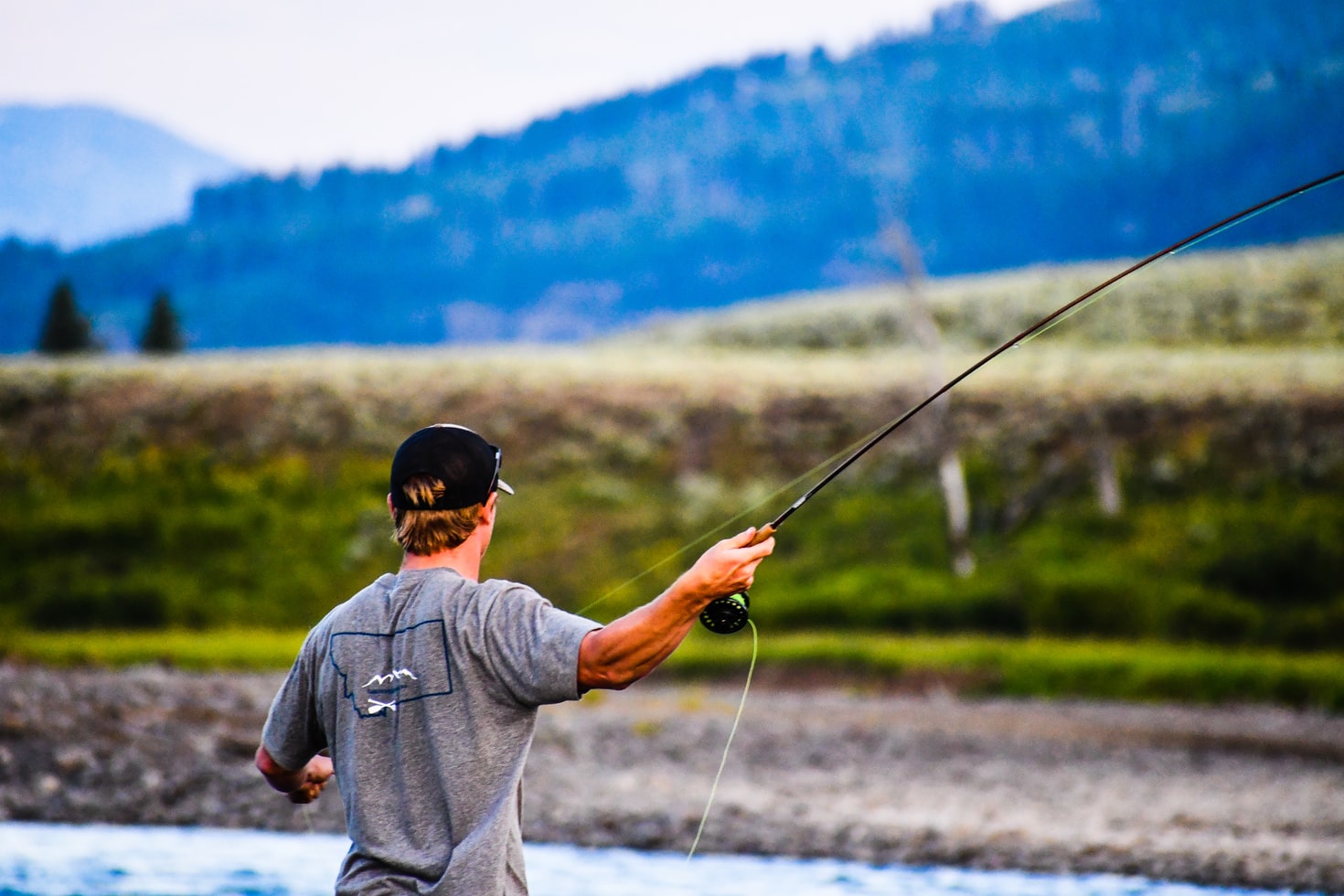
A fly fisherman standing a river

Different types: chest, hip waders, etc.

Which type should you get? You have to decide between bootfoot vs stockingfoot and chest vs hip waders (wading pants). Here is a closer look at the different options.

Bootfoot

Most of the times bootfoots are used in neoprene ones. A bootfoot wader is a pair that has boot attached to the leg. There are also nylon bootfoot waders. Often these are used by guides that use a boot for a day of guiding. Some consider bootfoot ones easier to wear since you don’t have to put on wading boots separately. But they have deficits in terms of flexibility since you can’t use wading boots with different soles for different wading conditions.

An advantage of bootfoot waders is the fact that the rubber boots don’t hold as much water as wading boots. This means you can more easily keep them on when entering a store for example.

Simms G3 Guide Bootfoot

Stockingfoot waders

In modern fly fishing stockingfoot waders are the standard. Stockingfoots feature neoprene socks at the end of the leg. You slide into a pair of wading boots with these neoprene socks just like a pair of hiking boots. You can use different kinds of soles with one pair of stockingfoots, such as vibram (rubber) soles, felt soles or cleated soles.

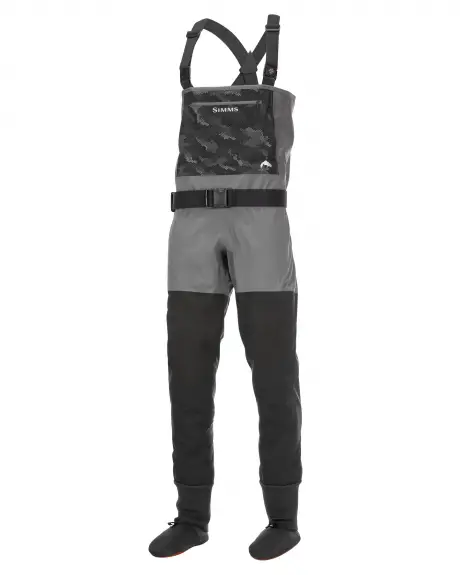
The Simms Classic Guide Wader
The Simms Classic Guide Wader: an example of stocking foot waders

Chest waders

Chest waders are the most commonly used type of stocking foot waders. This is because of their versatility. Chest waders allow you to wade deep. They also offer more comfort and warmth than wading pants. A number of manufacturers offer chest ones than can be converted into wading pants and hence offer extra comfort on warmer days.

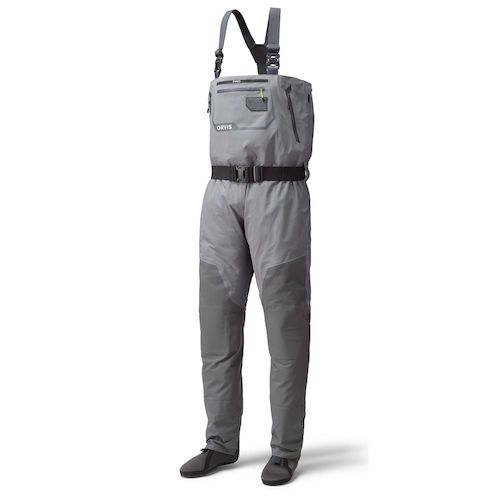
Men's Orvis Pro Fishing Waders
Mens Orvis Pro

Fishing pants / hip waders

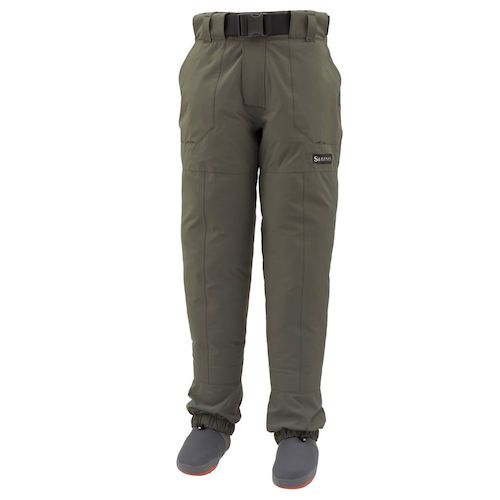
If you’re a minimalist pant wader – often also called wading pants or hip waders – might be a good option for you. For obvious reasons you can’t wade as deep with them but they offer more freedom of movement. Especially if you mostly fish in warmer regions and smaller rivers, wading pants could be a good option for you.

Simms Freestone Wading Pants

Size Chart

Every manufacturer offers their own size chart. Premium outfitters such as Simms, Patagonia and Orvis offer a vast variety of sizing options.

Taking care of your product

Taking care of your waders is very important and will increase its lifespan by a lot. Here are the most important things to keep in mind:

1. Always dry them: as soon as you get home from a day on the water you should hang your waders in a place that is dry and about room temperature. The most common way to hang them is upside down. This way any moisture still left in the legs can emerge.

2. Don’t store them in the car: it might be a tempting thought to keep your waders in the car for a spontaneous trip to the river but it’s not a good idea. The seams and different layers of your product will not like hot temperatures and direct sunlight.

3. Wash them every once in a while: it is always a good idea to wash them properly after each use just using water (no saltwater). Do it at least every few weeks to get rid of small particles, dust and stones that might cause abrasion.

4. Apply a water repellent coating: once they are clean and dry it is a good idea to re-apply a water repellent coating every once in a while. The initial coating wears off after time and hence a replenishing comes in handy.

5. Use a rubber mat when taking them off: the neoprene socks of most fly fishing waders are a sensitive part and especially exposed to abrasion. So when you take off your wading boots make sure you have a rubber mat or a wader bag to step on. This will prevent your neoprene socks from abrasion and will make them last longer.

6. Use a wader bag: if you want to make them last longer use a wader bag to transport them. Here is a selection of options for you:

Conclusion on the Best Waders for Fly Fishing

As you can see from our review the options for a pair of waders are basically endless. There are so many factors that influence your decision. The most important ones are: how much am I going to use the waders, how tough do they have to be? Do I prefer chest waders for fly fishing for the utmost in flexibility when wading deep or are wading pants enough? Do I take them on trips a lot, hence they should be light.

No matter what option you go for in the end, we hope this guide has helped you make a choice and get a better idea of the options out there. If you want to learn more about other wading gear make sure to read our other guides.

Frequently Asked Questions Fishing Waders

A fly fisherman casting a fly rod

u003cmarku003eAre waders necessary for fly fishing?u003c/marku003e

A quality pair of waders is an essential piece of gear when fly fishing. Though you can technically cast a fly rod from a bank without wading, the possibility of stepping into the water to reach lies of fish further away, is crucial. Waders not only keep you dry, they also keep you warm if you are fishing in the northern hemisphere. Water temperatures in most rivers are cold even during summer. Without a pair of waders for men you would be cold quickly.

u003cmarku003eAre Simms waders worth it?u003c/marku003e

From our experience Simms waders are definitely worth the money. The cheapest ones from the American manufacturer start at less than $200. They have great durability and Simms gives a fantastic guarantee.

u003cmarku003eWhy do fly fishermen wear waders?u003c/marku003e

Fly fishermen and women wear waders to protect themselves from the elements while fishing. Waders enable you to stand in the water without getting wet or cold. Since fly fishermen and women often spend our pursuing their sport, waders are an essential piece of gear.

u003cmarku003eHow long should a pair of waders last?u003c/marku003e

A quality pair of waders for men should last an average fisherman at least 3-4 seasons. High end waders for men made from multiple layers of the best fabrics can easily last 5 seasons or longer.

u003cmarku003eWhat are the best waders for the money?u003c/marku003e

The best waders for the money are waders that combine great quality and durability with a price you can afford. In order to choose the best waders for the money you should set a budget for yourself. It’s also a good idea to look at entry level products from manufacturers that also produce high end waders such as Simms, Patagonia or Orvis. Often, their know-how trickles down into their entry level product and they hence offer great value for money.

u003cmarku003eWhat are the best breathable waders?u003c/marku003e

The best breathable waders are made from Gore Tex fabrics. As in all waterproof rain gear, this fabric has become the gold standard in breathability. The American manufacturer Simms is the only waders producer using Gore Tex material. However, brands such as Patagonia or Orvis also have premium fabrics when it comes to breathability and waterproofness.

u003cmarku003eAre stockingfoot waders better than bootfoot waders?u003c/marku003e

In general fishing waders can be broken down into two main categories: so called stockingfoot waders that feature neoprene socks at the end of the leg. You wear them with a pair of wading boots. The other option are so called bootfoot waders that come with integrated rubber boots. They both have their pro’s and con’s. Generally speaking stockingfoot waders offer more flexibility and stability because of separate wading boots with increased ankle support. Bootfoot waders on the other hand are very practical with their integrated rubber boots and tend to be the choice of guides when working in a boat.

u003cmarku003eAre breathable stockingfoot waders better than neoprene waders?u003c/marku003e

Neoprene waders really only make sense if you will fish in very cold conditions for the most part. This could be the case if you are targeting species such as steelhead in the Pacific Northwest. They have supreme capacities to keep you warm no matter how cold it gets due to their thick fabric (often 4mm or 5mm of neoprene). They work similarly to a wet suit in surfing. Breathable stockingfoot waders have the advantage when it comes to breathability. And if it gets cold you can always add a layer to keep yourself warm.

u003cmarku003eHow do you repair your waders?u003c/marku003e

Most premium brands of the best waders such as Simms, Orvis, Patagonia or Redington include a repair kit with their fly fishing waders. That way you can repair small tears or rips yourself. The weapon of choice is a super glue called Aquaseal that you apply to the section where your waders are damaged (they need to be dry in order to apply the glue). The glue dries very quickly when exposed to sunlight. Should there be a bigger issue most of these brands offer great warranty and repair services. If your pair is out of warranty you can still send them in to the manufacturer and often get them repaired for a small handling fee.

Read more of our Gear Guides here:

Ultimate Guide: Best Wading Jackets

Buyer’s Guide Best Wading Boots

Top 6 Fly Rod Combos

Top 6 Best Fly Fishing Nets

A Guide to the Best Fly Fishing Starter Kits

Guide to the Best Fly Reels for Saltwater

Guide to the Best Fly Rod under 200

Notice: we take part in so-called affiliate programs. If you click on a link in this article and end up purchasing a product, we might earn a small commission at no extra cost for you. We never get paid by the manufacturers and always express our honest opinions about each product to help you make the best choice. Thank you!

A pair of waders is the interface between an angler and water that is, by the fish’s preference, far too cold to stand in. Trout feed most actively between roughly 50°F and 65°F (substrate: salmonid metabolic window); below 40°F they hold deep, above 68°F they’re under dissolved-oxygen stress and shouldn’t be fished for at all. That window covers most of the year on most trout water, which is why waders are not weather gear, they’re access gear. Without them, the angler is limited to summer hatches on the warmest tailwaters.

What separates a good wader from a bad one is not waterproofness, which every modern wader has, but two physical properties most buyers never see specified: how the membrane handles vapor in two directions, and how the seams hold up under cyclic flexing. Both are mechanism questions, and both are why a $700 Simms G4 Pro outlives three $200 budget pairs.

I’ve tested most of what’s currently on the US market over multiple seasons at Heidarvatn (Iceland, sea trout, demanding cold-water conditions) and on Western US rivers. The picks below are organized by price band. The sections after the picks ground out the materials physics and seam mechanics that make those picks meaningful.

Trout, char and salmon are cold-water specialists. Brown trout tolerate up to 65°F before they’re stressed, brook trout and grayling shut down even sooner, Atlantic salmon hold in colder still. The angler has to meet them in their thermal window, which on most rivers means standing for hours in water under 60°F. Skin in water that cold loses heat about 25 times faster than skin in air at the same temperature (substrate: water’s thermal conductivity is roughly 25x that of air). A wader is a passive thermal barrier that lets the angler operate in that environment without entering hypothermia within the first hour.

The secondary job is hydrostatic. Beyond about knee depth, water pressure on the legs is enough that any non-waterproof seam, zipper, or fabric defect leaks under pressure even if it sheds water on the surface in lighter use. Chest-high waders extend the wadable depth by another two to three feet of pressure head, which is what makes the difference between fishing the near bank and reaching a far seam on a wide river.

REWRITE, under same H2, brief continuation

Wet wading is the alternative when air and water are both warm enough (substrate: typically July-August on lower-elevation freestones in the lower 48). For most of the season on most trout water, it isn’t.

Fly fishing waders span roughly $150 to $900 at retail. The mechanism difference between the floor and the ceiling shows up in four places: how many layers of fabric the membrane is laminated into, how the seams are joined, how the stockingfoot interfaces with the boot, and how the cut accommodates motion across a working day. Brand prestige is downstream of all four; it isn’t a fifth criterion.

Modern breathable waders are not single-layer rubber. They’re composite laminates: an outer face fabric (typically a tightly woven nylon or polyester for abrasion resistance and DWR coating), an inner membrane layer (the actual waterproof-breathable barrier, Gore-Tex Pro or a proprietary equivalent like Patagonia’s H2No or Grundéns’s proprietary 4-layer), and one or more backing layers that protect the membrane from interior abrasion and skin oils. A “3-layer” construction means face + membrane + backing bonded as one stack. A “4-layer” stack adds a second backing or reinforcement layer, almost always in the lower legs where rocks, gravel and boat-deck contact concentrate.

The breathability claim is real but counterintuitive. A waterproof-breathable membrane works because liquid water droplets are too large to cross its micro-porous structure (Gore-Tex membranes have pores about 700 nanometers wide), while water vapor molecules are small enough to pass through. The gradient that drives vapor outward is the partial pressure differential between humid sweat inside the wader and drier air outside. In humid weather that gradient collapses and even a top-tier wader feels clammy, because the physics, not the membrane, is the limit.

The 4-layer lower section on a Simms G3 or G4 Pro isn’t there for waterproofness, which 3-layer would also achieve. It’s there for abrasion physics. When the angler kneels on gravel, slides into a drift boat, or pushes through brush, the impact face of the fabric absorbs cyclic point-loads. A second backing layer absorbs and dissipates those loads before they reach the membrane. The G4 Pro’s “elephant skin” feel is that extra backing.

INSERT, new H3 “Seam construction” (under the same H2)

Where the wader fails first is almost always at a seam. There are two construction approaches: stitched-and-taped, where panels are sewn together and a waterproof tape is heat-applied over the inside of the stitch line to seal the needle holes, and welded (or seam-sealed), where panels are bonded by RF or ultrasonic energy without piercing the fabric at all. Welded seams have no needle holes to leak, which is why high-end waders (Simms G4 Pro, Orvis Pro, Patagonia Swiftcurrent Expedition) trend toward welded construction in the high-flex zones (crotch, knees, gravel-guard attachment).

Stitched-and-taped works fine for years if the tape is well bonded and the wader isn’t stored hot. The failure mode is tape delamination: heat (a car trunk in summer hits 140°F+) plus humidity weakens the adhesive bond between tape and membrane, the tape lifts, and water enters at the now-exposed stitch holes. This is why “don’t store waders in your car” is not housekeeping advice, it’s the single biggest controllable factor in wader lifespan.

The lateral-seam test on a new pair: hold the inside of any major seam up to a strong light. The tape should be smooth, glossy, and uniformly bonded with no air pockets or wrinkles. Wrinkles are the lift points that will fail first.

INSERT, new H3 “Stockingfoot versus bootfoot interface” (under the same H2; promotes the existing deep-nested H4 content)

In modern fly fishing, stockingfoot is the standard and bootfoot is the exception. A stockingfoot wader terminates in a sewn neoprene sock; the angler slides a separate wading boot over the sock. The interface matters because that boot-and-sock pairing has to do three things: support the ankle on uneven river substrate, accommodate sole swaps (rubber for clean-water states, felt where still legal, studs for slick limestone), and seal at the cuff against gravel infiltration.

The gravel-guard sleeve is the small flap of fabric that anchors over the laces or hooks of the boot and bridges down to seal the boot-cuff. If the guard fit is loose, gravel works into the boot and then between sock and boot, where it abrades the neoprene sock from the outside and the boot lining from the inside. A bad guard is why budget waders develop sock pinholes in their second season.

Bootfoot waders integrate a rubber boot directly into the leg. They persist for three use cases the substrate identifies: drift-boat guiding, where the angler doesn’t walk much and slip-on convenience matters; ice-out and winter fishing, where the boot’s looser fit accepts a thick insulating sock layer; and salt-marsh and oyster-bar wading, where the simpler interface has fewer entry points for grit. For 95% of fly anglers in 50°F+ water, stockingfoot is the right choice, and the picks above reflect that.

Brand cut differences (Simms slimmer through the leg, Patagonia roomier) are real but secondary. The fit decision that actually matters is at the gravel-guard cuff and the knee. The gravel guard should sit flush against the top of the wading boot when the boot is laced; if it’s loose, see the previous section. The knee should accommodate a deep kneel without binding the fabric across the patella, because the angler kneels to land fish, change flies in difficult lies, and stay low against the skyline. Premium waders use anatomically-cut knee panels (visible as the curved seam across the lower thigh on a Simms G3 or G4 Pro); budget waders typically use straight-panel construction that bunches at the knee and wears through the bunch first.

Order two sizes when in doubt and try them with the actual wading boots you’ll fish, not in socks on the living-room floor. The cuff-to-boot fit is the test that matters.

A budget pair (under $200) is typically 3-layer throughout, stitched-and-taped, with serviceable but not anatomically cut panels. It lasts an average angler 2 to 3 seasons of moderate use, the failure point is usually a seam tape or a sock pinhole, and at that point the repair-versus-replace economics favor replacement.

A mid-range pair ($250 to $500) typically goes 3-layer upper / 4-layer lower, mixed welded-and-taped seams, anatomically cut. Lifespan in the 4-to-6-season range with the same care, repairable through manufacturer warranty programs at all the brands worth buying from.

A premium pair ($500+) is 3-layer or higher throughout with welded seams in the high-flex zones and 4- or 5-layer reinforcement on the lower legs. The Simms G4 Pro and Orvis Pro LT are the archetypes. Lifespan 5 to 8+ seasons of guide-level use, full-rebuild warranty service from Simms and Orvis specifically.

The dominant cost driver is the seam method and the lamination process, not the brand badge. Welded seams require specialized equipment and a slower production cycle, which is most of why the premium tier costs what it does.

The three sub-categories below all share the same chassis decisions (stockingfoot, breathable composite, seam method) but adjust the geometry for a different water-depth or body-shape use case.

Chest versus hip waders by water depth

Chest waders are the default because the chest height adds wadable depth without geometric penalty, and the chest pocket panel is the natural location for the fly box, tippet spool and nippers the angler reaches for constantly. Hip waders (also sold as “wading pants”) cover from the waist down and trade depth for breathability and freedom of motion, which makes them the right choice on small streams and warmer tailwaters where deep wading isn’t on the table. The cost of going hip-high is also storage, since the chest panel disappears, and most hip-wader users carry a sling pack or chest pack to compensate.

Women’s-specific waders by fit geometry

The big four (Simms, Patagonia, Orvis, Redington) all make women’s-specific patterns. The pattern difference isn’t decorative, it’s geometric: narrower shoulders relative to hip width, longer torso-to-rise ratio, narrower foot in the stockingfoot sock. A unisex wader sized down for a woman’s frame typically bunches across the chest panel and the stockingfoot sock floats around the heel, which is a guaranteed gravel-guard fit problem.

Youth and kids’ waders by rotation expectation

The economics of kids’ waders are different from adult waders because the rotation window is 12 to 24 months before outgrowth. A premium pair amortizes badly; a mid-tier pair is usually the right call, with the understanding that the wader will pass to a sibling or be resold while still serviceable. The fit priorities reverse: a snug fit at the gravel guard matters less because the child outgrows it before it matters, but a wide-enough shoulder strap range matters more because growth happens through the torso first.

Two material families dominate the wader market and they serve different thermal windows.

Nylon-polyester composites (the modern default)

Most fly fishing waders sold today are nylon or polyester face fabrics laminated to a waterproof-breathable membrane (Gore-Tex Pro, Patagonia’s H2No, or a proprietary equivalent). The face fabric handles abrasion, the membrane handles waterproofness, and the inside backing handles the contact between membrane and wearer. This stack is light, dries quickly, and breathes well enough that the angler’s sweat moves outward as vapor instead of pooling against the skin. The tradeoff is that it provides almost no insulation on its own; the angler layers fleece pants and merino base layers underneath to match the water temperature.

Neoprene (cold-water specialist)

Neoprene is closed-cell synthetic rubber, typically 3.5mm to 5mm thick in wader applications. It insulates by two mechanisms: the closed-cell nitrogen bubbles in the rubber slow conductive heat loss directly, and the thin water layer between skin and rubber warms to body temperature and stays trapped (which is why neoprene fits snug, a loose fit flushes the warm layer and the wearer chills). The cost is zero breathability (closed-cell, no vapor transport) and significantly more weight and walking effort than breathables. Neoprene waders make sense for ice-out steelhead, late-fall Great Lakes runs, winter striper wading and dedicated cold-water specialists. For most fly anglers in the 50°F-to-65°F trout window, breathables plus layering wins.

A pair of breathable waders rewards specific care because most of the failure modes are gradual and preventable.

Dry them upside-down after every trip. The interior of the boot of the leg is the slowest part to dry and the place mildew and adhesive failure start. Hang them by the suspender loops in a room-temperature space with airflow; a household fan helps. Direct sunlight or a hot car trunk shortens lifespan dramatically because heat plus humidity weakens the seam tape bond. This is the single highest-leverage care step.

Wash them with fresh water after every salt exposure and every few trips in fresh water. Salt is not the problem; dried salt crystals are. Crystallized salt at the membrane-backing contact face acts as a fine abrasive every time the wader flexes, gradually delaminating the stack from the inside. A rinse with fresh water before the salt dries dissolves the crystals before they form.

Re-treat the DWR (durable water-repellent) coating once a season or whenever the outer face fabric stops beading water. DWR is a thin fluoropolymer or, increasingly, a C0 hydrocarbon coating bonded to the outer fabric face. Its job is to reduce surface tension at the fabric-water interface so droplets bead and roll off instead of soaking into the outer layer. When DWR wears off, the wader doesn’t leak (the membrane underneath still works), but the saturated outer face wets through and evaporative cooling makes the wader feel cold and heavy. Nikwax TX.Direct or Grangers Performance Repel are the standard options; both wash-in. Patagonia, Simms and Orvis sell branded versions of the same chemistry.

Step onto a rubber mat or a wader bag when boots come off. The neoprene stockingfoot is the most abrasion-exposed face of the entire wader because it’s exposed every time the boot comes off and gets walked on. A car-park asphalt step puts a small but real abrasive load on the sock fabric, and that’s the load that creates pinholes around year three.

Use a wader bag for transport. Folded compression and zipper teeth contact both abrade the membrane stack; a soft bag protects against both.

The waterproof-breathable membrane in the highest-tier waders is most often Gore-Tex Pro, which Simms licenses for its G-series and which Sitka also uses on its current wader line. Patagonia uses its proprietary H2No membrane (PFAS-free as of the 2025 Swiftcurrent), Orvis uses a proprietary Cordura-based laminate on the Pro LT, and Grundéns uses a proprietary 4-layer on the Vector. All four are genuinely breathable at the membrane level; the differentiation between them is in the face fabric weight, the seam construction method, and the lower-leg reinforcement, not the membrane chemistry itself.

Neoprene insulates by two combined mechanisms: closed-cell nitrogen bubbles slow conductive heat loss through the rubber itself, and a thin water layer trapped between skin and the inside of the rubber warms to body temperature and stays trapped (which is why neoprene must fit snug, a loose fit lets water flush and the wearer chills). It works well for ice-out, winter steelhead and late-fall Great Lakes wading. Breathables plus layering wins in the 50°F-to-65°F trout window because the layering can be tuned to conditions and the breathability dumps body-heat sweat that would otherwise condense inside neoprene and chill the wearer once activity slows.

If you’ve picked a pair of waders, three companion gear decisions sit on the same buying trip.

[Link: /best-wading-boots/], Wading boots are the other half of the stockingfoot interface. Sole choice (rubber, felt, studded) depends on the river substrate and the state’s invasive-species regulations.

[Link: /best-wading-jackets/], A wading jacket completes the upper-body weather barrier above the wader’s chest height; the layering choice connects to the breathable-versus-neoprene decision in the section above.

[Link: /best-fly-fishing-sling-packs/], If the wader is hip-height (or chest-height without a usable chest pocket), the storage decision migrates to a sling or chest pack.

Leonard Schoenberger is a fly fishing professional and gear specialist with over 20 years of experience on the water. As the manager of Heidarvatn, a world-class sea trout lodge in Iceland, his product recommendations and tactical advice are tested in some of the most demanding conditions on earth. His expertise has been mentioned in The New York Times, the Financial Times, and at the Outdoor Media Summit.