Last updated on September 30th, 2026.
Women used to have to wear men’s waders. Not anymore as many brands now produce special waders for women. Here are the best money can buy.
Our Picks for the Best Waders for Women
Quick advice: If you fish a lot, the Simms Women’s Freestone is the pair to buy: breathable, tough and cut for women, with the Simms warranty behind it. If you fish hard every week, go up to the Simms Women’s G3 Guide. If you are just starting, the Caddis Women’s Attractive Teal keeps you dry for a fraction of the price.
-
Best Overall: Simms Women’s Freestone ($450)
-
Best Premium: Simms Women’s G3 Guide ($600)
-
Best Cut: Patagonia Women’s Swiftcurrent Traverse ($519)
-
Best Entry-Level: Caddis Women’s Attractive Teal ($149.99)
More and more women are entering the beautiful sport of fly fishing. Hence it was only a question of time that the major manufacturers would produce waders specifically designed for women. Luckily the days when fly fisherwomen had to cope with wearing men’s waders are over.
In this guide we want to give you an overview of the best waders for women on the market. We’ll take a look at waders for every budget and tell you what we like about them.
Why is a Quality Pair of Waders a Good Investment?
A quality pair of waders is a good investment because it gives you less things to worry about when wading. You know you are going to stay dry, warm and safe and can focus on your fishing.
This is especially true when you are fishing in colder rivers. If you can’t rely on your waders it’s going to take away from the fun you’ll have fishing. All of the waders in this test are chest high ones. There is a reason for that. Chest high waders give you the utmost in flexibility. They make you reach places that hip waders wouldn’t. Plus they provide extra warmth around the upper body when needed.
They also give you the option of storing your most essential gear in a chest pocket. If you prefer fishing with little gear, such a chest pocket can be enough for the tools you need. You don’t need to bring along a backpack or sling pack.
A pair made for women also simply fits better. It is cut for a woman’s shoulders, hips and inseam instead of relying on the wading belt to take up the slack, so it doesn’t bunch up at the knees and is easier to move in all day.
Best Women’s Fly Fishing Waders
Now that you know why you should invest a bit of money in a quality pair, we’ll take a look at some of the best on the market.
You can’t go wrong with any of the waders in our test. Some are more entry-level products, some are mid-range and some are high-end for serious fly fisherwomen. They are made of different fabrics and come with different warranties.
Simms W’s G3 Guide Stockingfoot: Best Premium
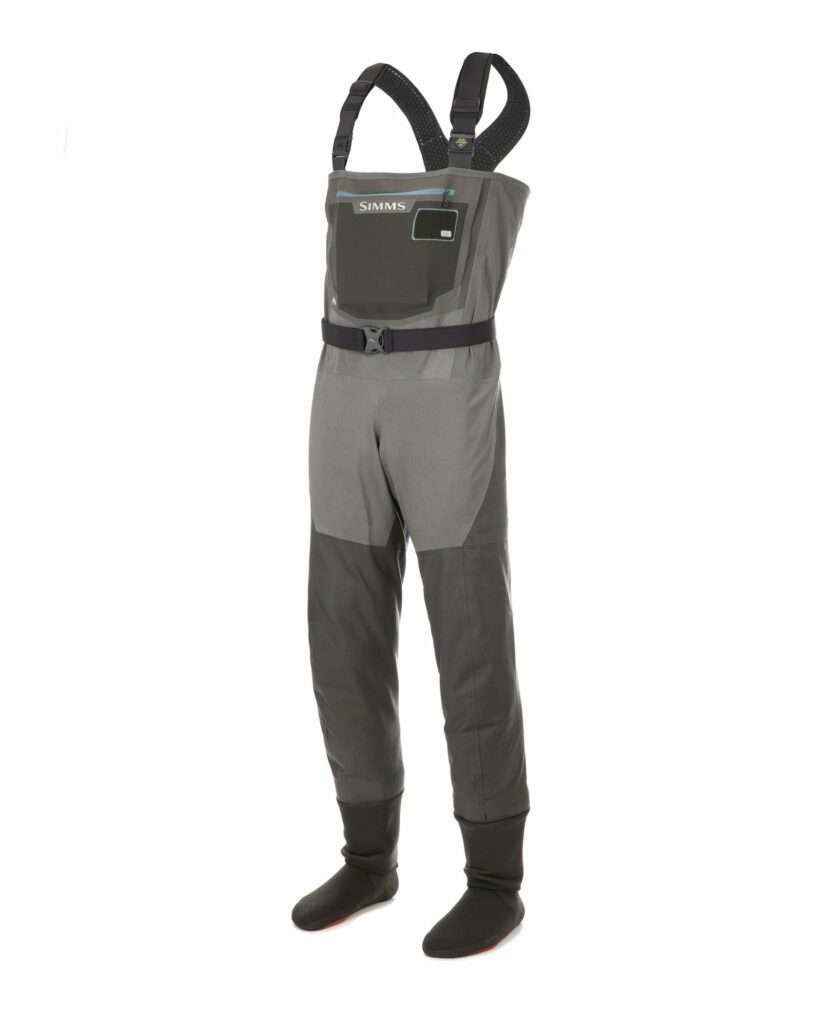
Key features:
– Made from Gore-Tex Material
– Anatomic neoprene booties with gravel guards
– Wading belt with tight fit thanks to belt loops
– Adjustable suspender system
American manufacturer Simms has completely reworked its hugely popular G3 waders series for 2022. Part of the update is a dedicated Simms W’s G3 Guide Stockingfoot edition with a women’s specific fit. Just like the men’s version, the Simms W’s G3 Guide Stockingfoot features a three layer Gore-Tex fabric for the upper body and even a four-layer around the legs where most of the abrasion happens.
The suspender system has been upgraded using a mesh fabric that promises even more comfort for long days on the water. The wide diameter of the suspenders distributes the weight equally which results in you basically don’t realising you’re wearing them over your shoulders. The Simms W’s G3 Guide Stockingfoot comes with a large zippered front pocket for all your essentials and zippered reach-through hand-warmer pockets behind that chest pocket.
The Simms W’s G3 Guide Stockingfoot features a wading belt that is adjustable in terms of high for increased comfort. Anatomic neoprene stocking feet with integrated gravel guards protect your feet from the elements. An excellent pair of waders that will last for years and comes with the great Simms warranty in case something is not right.
Simms Women’s Freestone Stockingfoot: Best Overall
Simms no longer makes the women’s Freestone Z. The Women’s Freestone, its sibling without the zip, is the one Simms sells now, and the buttons below go to it.
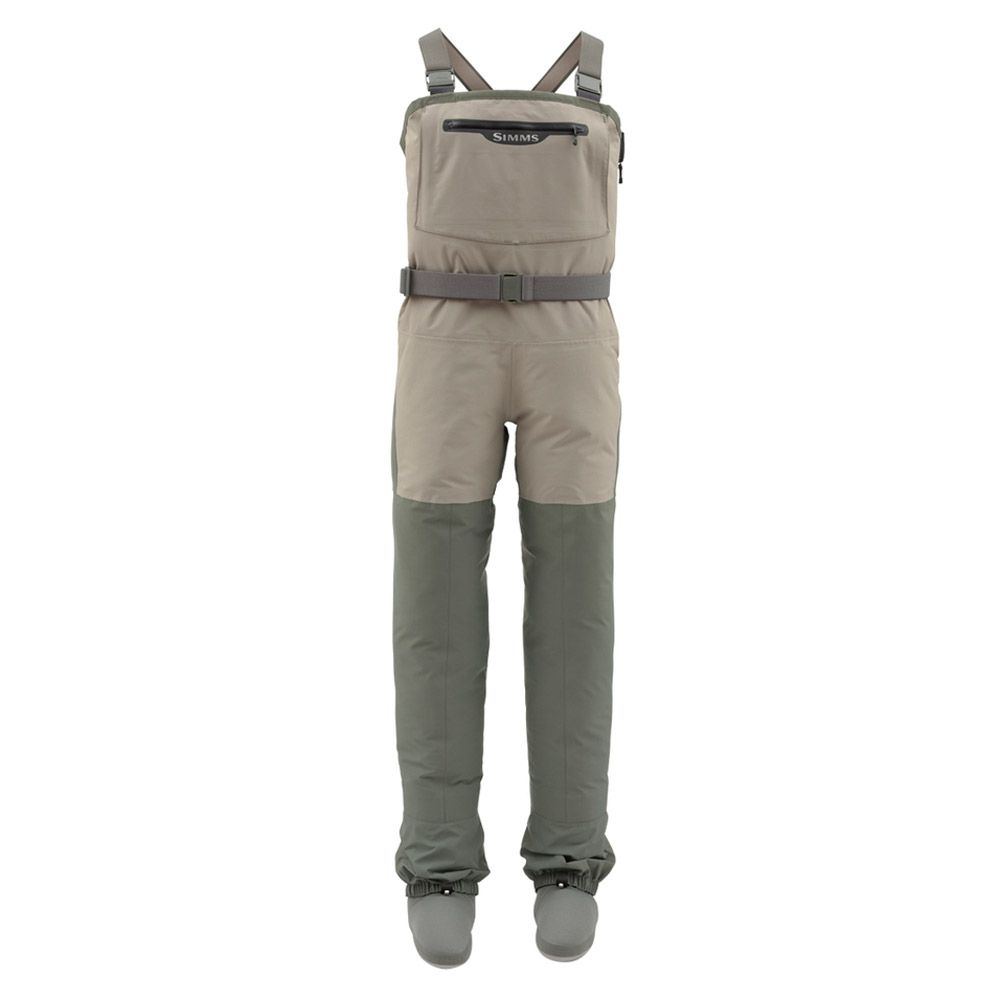
Key features:
– Reach through hand warmer pockets
– Anatomic neoprene booties with gravel guards
– Adjustable wading belt
The Simms Women’s Freestone are an excellent choice if you are serious about fly fishing. Simms has been in the game for decades and their waders are second to none.
The Simms Women’s Freestone combine great abrasion resistance with a low weight. The chest pocket gives you ample opportunities to store your essentials. The fleece-lined hand warmer pockets come in handy on cold days.
If you are looking for a more entry level pair from Simms, check out the Simms Women’s Tributary.
As all Simms waders, the Simms Women’s Freestone come with gravel guards attached to the stockingfoot booties, to keep gravel and sand out of your wading boots. Comes with the great Simms warranty.
Patagonia Women’s Swiftcurrent Traverse: Best Cut
Patagonia has replaced the women’s Swiftcurrent with the Swiftcurrent Traverse and the heavier Swiftcurrent Expedition. The buttons below go to the Traverse, and the differences between the two are in my review of the new Patagonia Swiftcurrent waders.
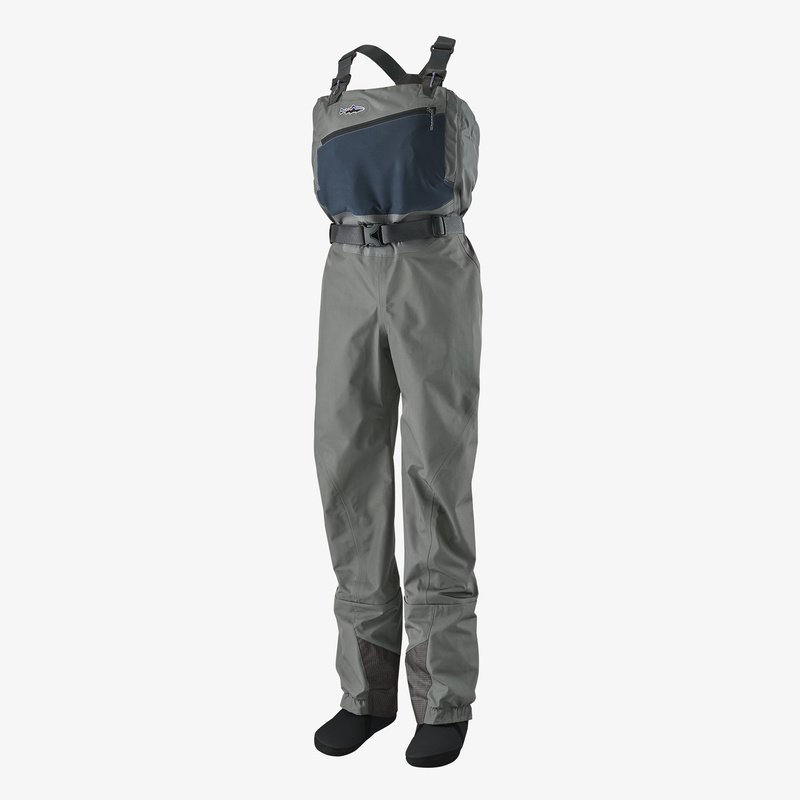
Key features:
– Large, zippered chest pocket
– Adjustable suspender system and wading belt
– Integrated gravel guards
– Reinforced section on the inside of the ankles
The Patagonia Women’s Swiftcurrent Traverse are the female version of Patagonia’s hugely popular Swiftcurrent. Their suspenders let you convert these waders into waist-high should the weather be warm.
The Traverse has two big zippered chest pockets but no hand warmer pockets, which makes it the better choice for warmer water.
Like the new Expedition, the Traverse is completely PFAS-free. If you are looking for a quality pair that will last you a long time look no further than the Patagonia Women’s Swiftcurrent Traverse.
Caddis Women’s Attractive Teal: Best Entry-Level
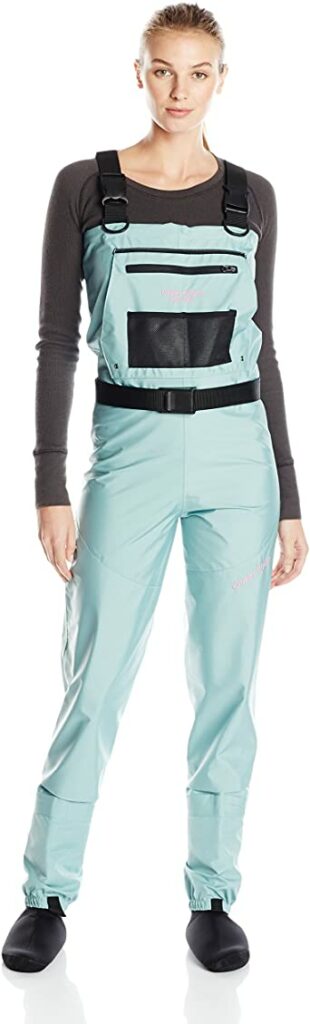
Key features:
– Integrated gravel guards
– D-rings at the front of the suspenders
– Zippered chest pocket
At the end of this wader review we want to give you are our favorite entry-level product: the Caddis Women’s Attractive Teal. At only a little over $100 they are a great choice if you are not sure yet if you’ll stick to fly fishing.
The Caddis Women’s Attractive Teal have a number of quality features. They include an adjustable wading belt and shoulder straps. The chest pocket holds your essentials and the hand warmer pockets keep your fingers warm.
The Caddis Women’s Attractive Teal are made of a breathable polyester material with neoprene booties and gravel guards. The fabric however is not as thick and solid as the other waders in this test. A fact that does not surprise if you consider the price of these.
The Caddis Women’s Attractive Teal won’t be your last pair of waders if you decide to stick with fly fishing but they are a great entry level option for fly fisherwomen.
Conclusion on Women’s Waders
As you can see from our review there is now a good selection of waders for women available on the market. Almost every big manufacturer has products specifically designed for females in their line up.
Depending on your needs and budget you can get your first pair of waders at a little over $100 dollars. If you are looking for a product that should last a few seasons you should invest a little more. It will pay off on the long run.
A good way to increase the lifespan of any wader is to dry them properly after every use. Also, don’t keep them in your car for longer periods when it’s hot: the seams don’t like that. It’s also always a good idea to use a wader bag to store and transport your waders. You can also use it to stand on when getting into and out of your waders. This helps to prolong the lifespan of your neoprene booties.
Best Women’s Fly Fishing Waders: FAQ
Yes, there is a difference between mens and womens waders: the sizing and cut of the waders. While used to fish with mens waders, nowadays all major brands such as Simms, Patagonia, Orvis or Redingtion have waders specifically tailored for women.
Notice: we take part in so-called affiliate programs. If you click on a link in this article and end up purchasing a product, we might earn a small commission at no extra cost for you. We never get paid by the manufacturers and always express our honest opinions about each product to help you make the best choice. Thank you!
Why You Should Trust Us
Leonard Schoenberger and his team spend countless days out on the water to test new gear. We always give our honest opinions and never get paid for reviews. Our goal is to tell you what’s great about a product and what’s not – so you can make a good purchase decision. Thanks for being a reader of The Wading List.

Leonard Schoenberger is a fly fishing professional and gear specialist with over 20 years of experience on the water. As the manager of Heidarvatn, a world-class sea trout lodge in Iceland, his product recommendations and tactical advice are tested in some of the most demanding conditions on earth. His expertise has been mentioned in The New York Times, the Financial Times, and at the Outdoor Media Summit.