Last updated on September 30th, 2026.
Neoprene waders are an excellent option when it’s really cold outside. But they have their downside as well. We tell you what to look for and which waders to pick.
Our Picks for the Best Neoprene Waders
Quick advice: Buy neoprene only for very cold water and short walks, such as winter fishing for sea trout on the coast. The Bassdash Bare Camo with its insulated boots is the warmest of our picks, the Frogg Toggs Amphib is the one to get if you want to wear your own wading boots, and for everything else breathable waders are the better choice.
-
Warmest Boots: Bassdash Bare Camo ($169.98)
-
Thickest Neoprene: HISEA Bootfoot ($99.99)
-
Best Stockingfoot: Frogg Toggs Amphib ($89.15)
-
Best for Deep Wading: Foxelli Chest Neoprene ($99.97)
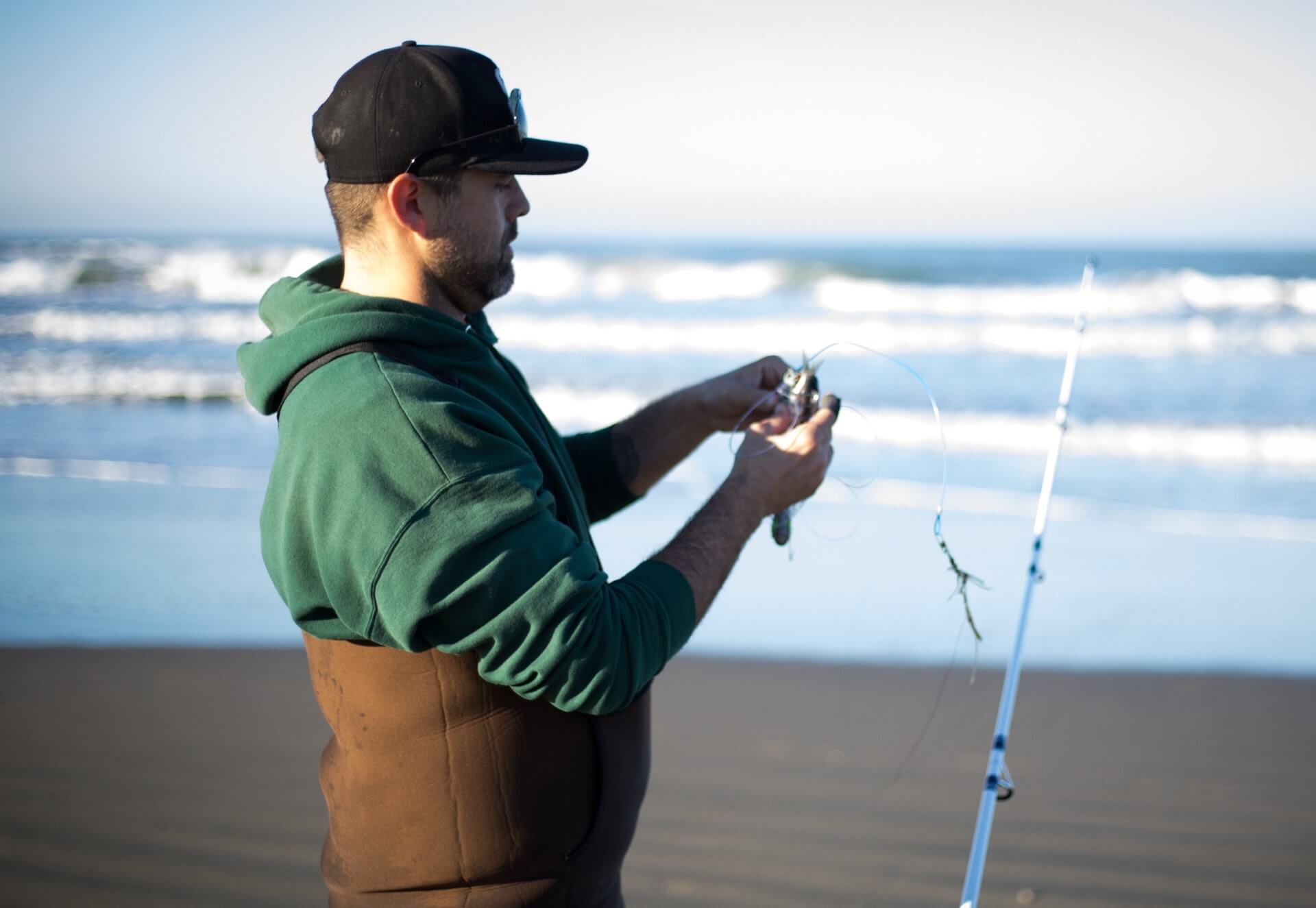
Most (fly) fishermen and women will not need a pair of waders made from neoprene. However, in some fishing situations they can come in really handy if you are fishing in winter times when the water and air are close to zero. For example when you are looking for sea trout in the Baltic Sea or for Hucho Hucho in the Balkans. If you are after these elusive species, you will have to put in a lot of hours to catch one.
In this guide we want to give tell you about the advantages of neoprene waders when it’s cold outside. In the second part we’ll take a look at a couple of good options and tell you the pros and cons of the respective products.
What to Know about Waders Neoprene
In most fly fishing situations are pair of breathable chest waders or even wading pants is the best choice. Especially when you are mostly fishing in warmer conditions (even thought the water may be cold like in a river) a pair of breathable waders is the best choice. What exactly differentiates a pair of breathable ones from a pair of neoprene ones?
Neoprene vs. Breathable Waders
Neoprene waders are made from rubber material that can vary in thickness (just like a wet suit in surfing). As a rule of thumb, the thicker the fabric, the warmer the waders. In general neoprene fishing waders range from 3mm for “warmer” conditions to 5mm for colder weather. They are filled with very small nitrogen bubbles that increase insulation and hence keep you much warmer than breathable ones.
The downside of this effect is that neoprene waders don’t have any moisture wicking capabilities. Hence they only make sense when it’s really cold and when you don’t sweat. Since the technology behind neoprene ones is less advanced than in breathable ones, they generally cost a lot less.
Best Waders Made from Neoprene for Fishing
Now that you know the differences, we can dive into a couple of products that we recommend if you know that you will be fishing in cold conditions. We’ll take a look at both bootfoot and stockingfoot waders. Bootfoot models have integrated boots while stockingfoot ones have integrated neoprene socks. This means you need additional wading boots.
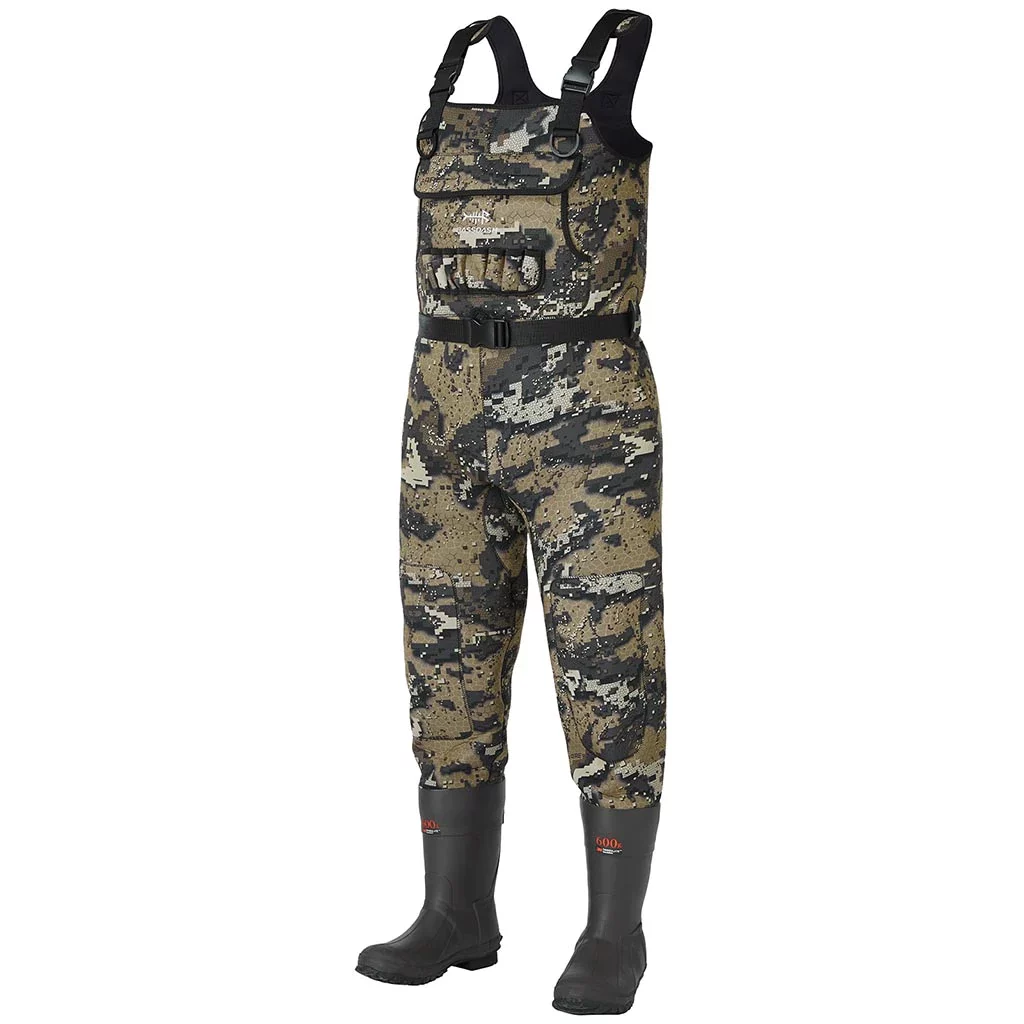
Bassdash Men’s Bare Camo Neoprene
Key Features:
– Bootfoot version with integrated boots
– Velcro chest pocket
– Handwarmer pockets
– Adjustable suspenders
Why we picked them: The Bassdash Men’s Bare Camo Neoprene is a very solid pair of neoprene waders made from a 4.3mm neoprene. The rubber booties consist of a Thinsulate insulation that makes sure your feet stay warm in even the coldest conditions. The heel and toes of the integrated rubber boots are reinforced since those areas are the ones where the most abrasion happens.
The big chest pocket of the Bassdash Men’s Bare Camo holds all your essential fishing gear such as pliers, tippet spools, a nipper or a fly box. Be aware that this pocket is not waterproof though. A hand warmer pocket hidden behind the chest pocket is an essential feature when it gets really cold. The suspenders and wading belt are adjustable and provide solid comfort all day long. A great pair of waders, especially if you’re into hunting as well thanks to its camouflage design.
Pros:
– Excellent insulation on the boots
– Camouflage design and front pocket features make it a great choice for hunters as well
Cons:
– We found the connection between the boots and the waders to get a little stiff on very cold days during winter fishing
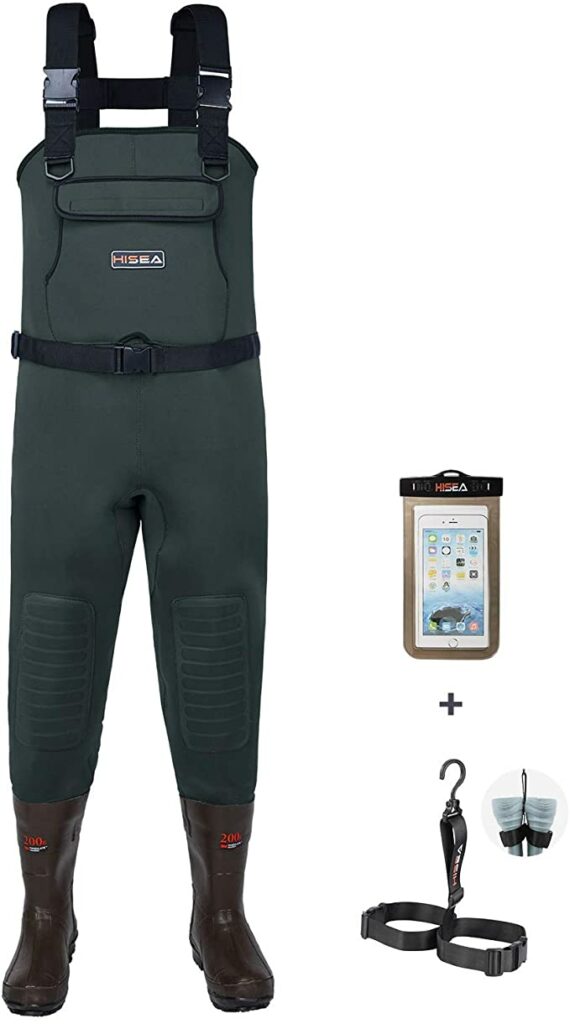
HISEA Bootfoot
Key Features:
– Bootfoot version with integrated rubber boots
– Velcro chest pocket with handwarmer pockets hehind it
– Adjustable wading belt and suspenders
– Hanger system for drying
Why we picked them: The HISEA Fishing Chest are a solid and classic pair of neoprene waders. They come in two colors and especially the green version makes for a great pair. They come with integrated boots and are hence ready to use out of the box.
The HISEA are made of 4.5mm neoprene and hence a great choice for really cold conditions. Around the knees, an area of increased abrasion, this model features pads for extra protection and durability. The boots of the HISEA are lined with 200gr 3M Thinsulate to keep your feet warm and dry no matter the conditions. Cleated soles on the boots provide excellent traction.
Adjustable shoulder straps and a wading belt ensure a snug fit of the HISEA. These ones are a good choice for male and female fly fishers and come with a one-year warranty.
Pros:
– Very comfortable suspender system
– Hanger that comes with the waders is a great little extra feature
Cons:
– Padding around the knees could need a little upgrade as it feels a little bulky, particularly on cold days during the winter
Frogg Toggs Amphib
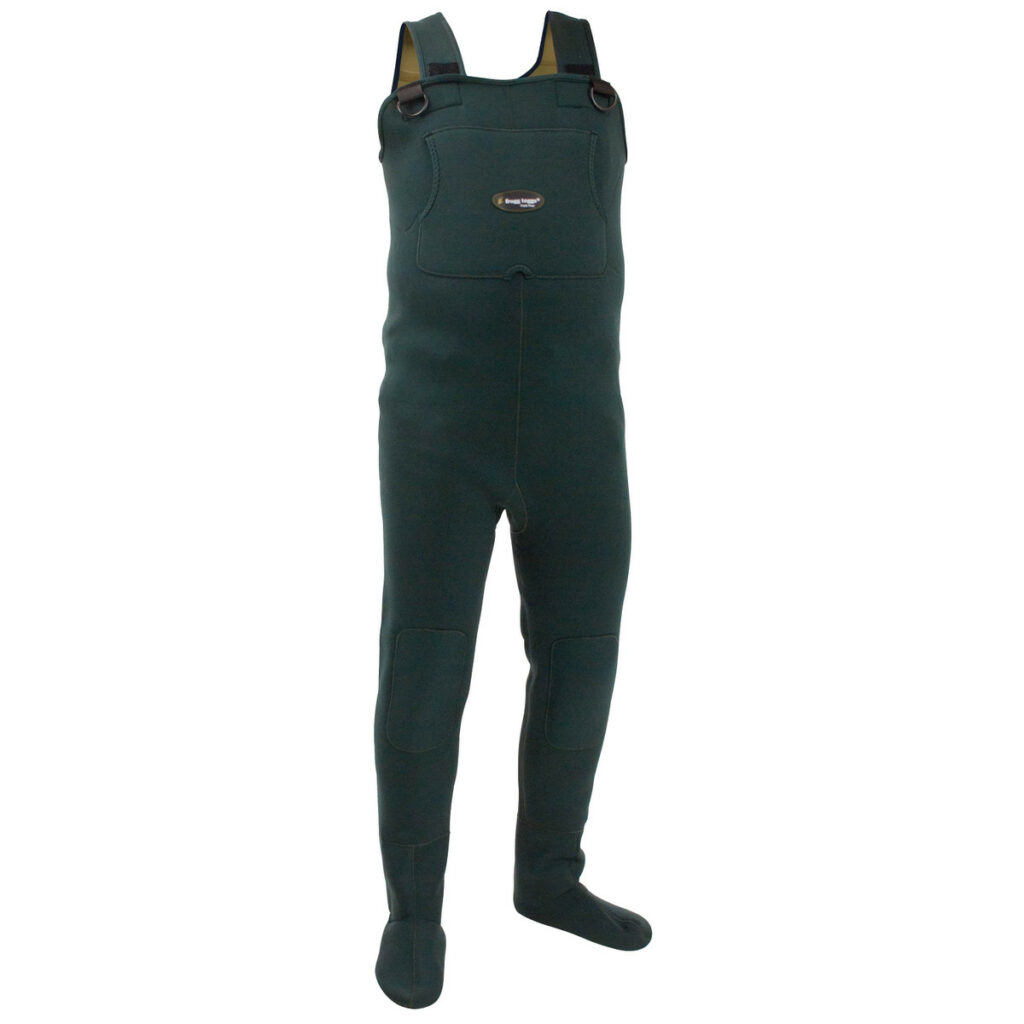
Key Features:
– Stockingfoot version with neoprene booties
– Adjustable suspenders with D-rings next to them
– Handwarmer pockets
– No wading belt
Pros:
– Drainage system on the chest pocket is a plus if you plan to wade deep
– D-rings close to suspenders come in handy for extra gear
Cons:
– You need to get a wading belt if you plan on wading deep
Why we picked them: The Frogg Toggs Amphib Wader is another great choice if you are looking for a pair of neoprene waders. Frogg Toggs have made a name for themselves in recent years for producing quality wading gear at affordable prices. The Amphib series is available as a stockingfoot wader (pictured above) or with an integrated boot.
With a thickness of 3.5mm the Frogg Toggs Amphib provides excellent warmth but a level below the HISEA (which are 4.5mm). The suspenders are adjustable, a reach-through handwarmer pocket provides extra warmth on cold days and the knees are padded for extra comfort. The neoprene booties of the Frogg Toggs Amphib fit well and ensure comfort all day long. Check our Wading Boots Guide if you are looking for a pair of boots to go along with these waders.
Foxelli Chest Neoprene
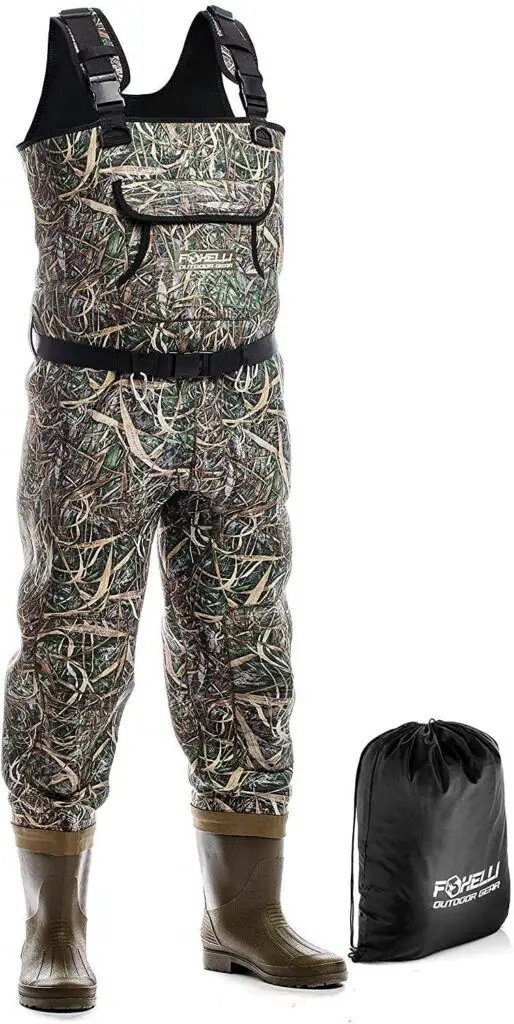
Key Features:
– Bootfoot version with integrated boots
– Small chest pocket
– Handwarmer reach-through pockets
– Adjustable, padded suspenders
Why we picked them: The Foxelli Chest Waders are a great choice if you are into hunting as well due to their camouflage looks. They feature extra wide shoulder straps for increased wearing comfort.
The Foxelli’s high cut in the back makes these waders an excellent option if you want the utmost in wading capabilities. They feature integrated boots with anti-slip soles and padded knees. D-rings on the front to attach extra gear such as nippers or pliers are a handy feature for fishermen. The Foxelli also come with a one-year warranty.
Pros:
– Suspender system is highly adjustable and very comfortable to wear even on long days
– Comes with a bag for easier transport and storage
Cons:
– The profile of the soles was not the best in our test. If you’re fishing on snowy ground in the wintertime, be aware
Conclusion on the Best Neoprene Waders
As you can see from the products we reviewed above, neoprene ones come in all sorts of styles. The most basic choice you have to make is between stockingfoot (you need a pair of wading boots) and bootfoot waders where the boots are integrated into the waders.
You should also think about the thickness of your waders. Most often these waders range from 3mm to 5mm. The thicker the neoprene, the warmer the waders as a rule of thumb.
Why You Should Trust our Reviews
Leonard Schoenberger and his team spend countless days out on the water to test new gear. We always give our honest opinions and never get paid for reviews. Our goal is to tell you what’s great about a product and what’s not – so you can make a good purchase decision. Thanks for being a reader of The Wading List.
FAQs
Why should I choose neoprene fishing waders?
Neoprene fishing waders provide excellent insulation, making them ideal for cold water fishing. The material is also very durable, which can be beneficial in rough or rugged fishing environments.
How should I care for my neoprene fishing waders?
After each use, rinse your waders with fresh water to remove any dirt or salt. Allow them to dry thoroughly before storing to prevent mildew growth. Avoid folding or creasing the waders to prevent cracking or damaging the material. Periodically check for any punctures or tears and repair them promptly to prevent leaks.
How can I determine the correct size for my neoprene fishing waders?
Most brands provide a size chart for their waders. You’ll want to take into account your chest, waist, inseam, and shoe size. If you’re between sizes, it’s typically a good idea to size up to ensure you can comfortably layer clothing underneath.
Can I use my neoprene waders in both freshwater and saltwater environments?
Yes, neoprene waders can be used in both freshwater and saltwater. However, it’s important to rinse them thoroughly after use in saltwater to remove any salt that could degrade the material over time.
Are there different types of neoprene waders?
Yes, there are bootfoot waders where the boot is permanently attached to the wader, and stockingfoot waders, which require you to buy separate wading boots. The choice between the two depends on your personal preference and the fishing conditions. Bootfoot waders are typically easier to put on and take off, while stockingfoot waders offer better ankle support and are more versatile as you can change boots based on the terrain.
Notice: We take part in affiliate programs. If you click on one of the links in the text and end up purchasing a product we earn a small commission at no extra cost for you. We only recommend products we are convinced of.

Leonard Schoenberger is a fly fishing professional and gear specialist with over 20 years of experience on the water. As the manager of Heidarvatn, a world-class sea trout lodge in Iceland, his product recommendations and tactical advice are tested in some of the most demanding conditions on earth. His expertise has been mentioned in The New York Times, the Financial Times, and at the Outdoor Media Summit.