Last updated on September 30th, 2026.
Women’s wading boots are crucial to have fun at the water. Here are the best money can buy.
Our Picks for the Best Women’s Wading Boots
Quick advice: If you fish more than one kind of water, get the Korkers Women’s Darkhorse: its interchangeable soles give you felt and rubber in one boot. If you walk a lot, the Patagonia Forra wears like a hiking boot, and for the most support the Simms Women’s Freestone will last you for years. Try any boot on over the neoprene socks of your waders.
-
Best Overall: Korkers Women’s Darkhorse ($229.99)
-
Best Fit: Patagonia Forra ($319)
-
Most Durable: Simms Women’s Freestone ($230)
-
Best Value: Redington Women’s Aurora ($110.30)
-
Lightest: Orvis Women’s Ultralight ($229)
The days when women had to wear men’s wading boots are luckily over. The major manufacturers have taken notice that fly fishing is becoming ever more popular amongst women.
To have fun at the water, a good wading boot is crucial. It can prevent you from slipping and it can make you reach places a bad wading boot won’t. In this guide we’ll give you an overview of the best options. We will also explain what you should look for in general when buying a new pair of wading boots: material, sole and fit. Let’s go.
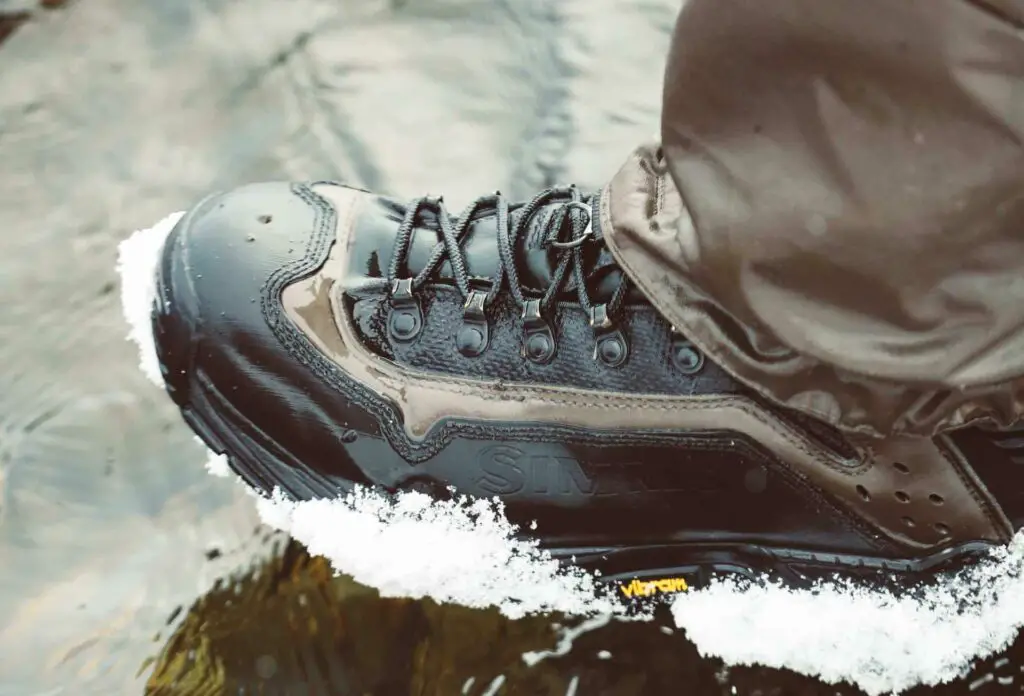
The Best Womens Wading Boots on the Market
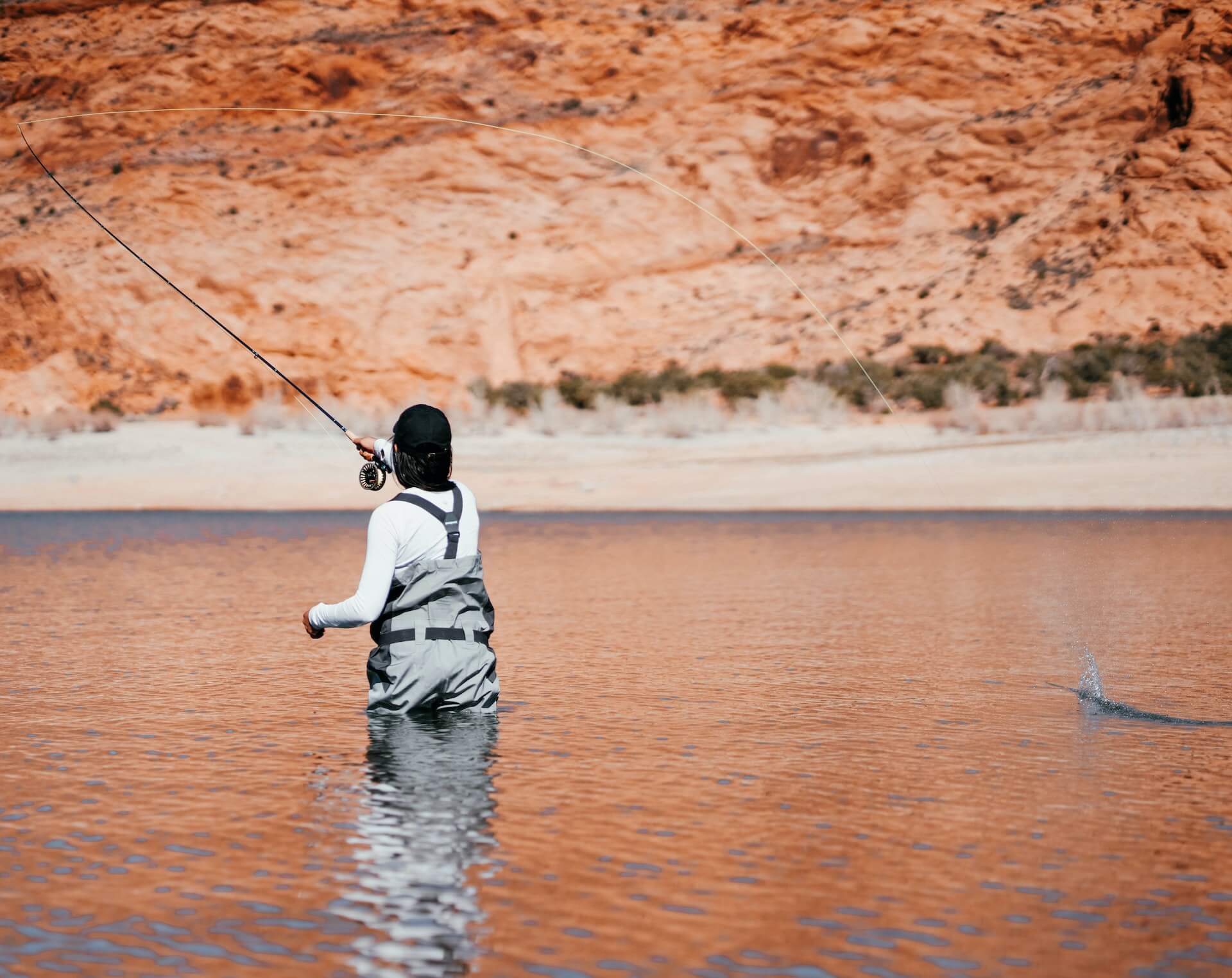
Apart from Patagonia, all the big fly fishing brands have fishing boots for women in their lineup nowadays. Here are our top five.
Notice: The Wading List is reader-supported. We take part in so-called affiliate programs. If you click on one of the product links in this article and end up purchasing a product we might earn a small commission at no extra cost for you. We never get paid for reviews and only recommend products we tested and are convinced of. Thanks for your support! Learn more about our review process here.
Korkers Women’s Darkhorse
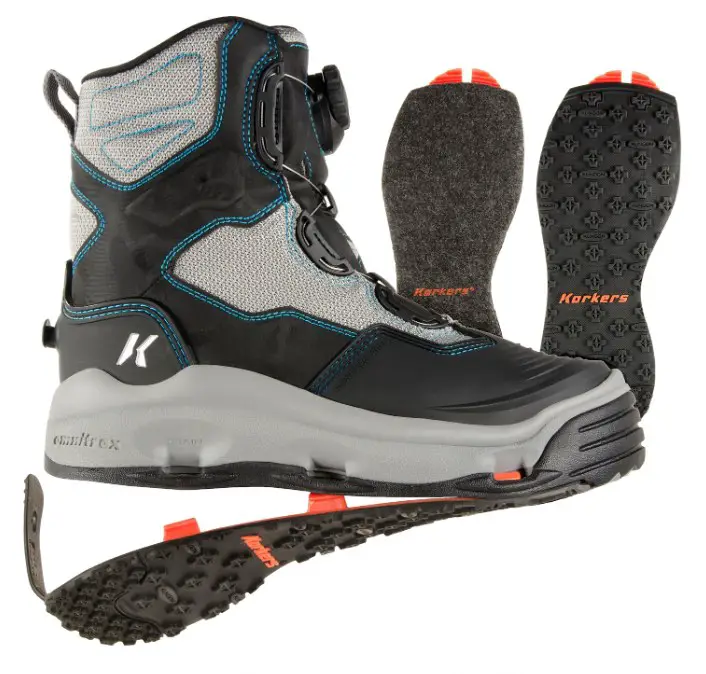
The brand Korkers has really innovated fly fishing boots over the past years. Their Korkers Women’s Darkhorse feature their unique sole system as well.
With the Korkers Women’s Darkhorse you don’t have to choose between rubber and felt soles when buying a pair of wading boots. The Omnitrax Interchangeable Sole System offers you two solutions in one boot. You can even chose if you want one felt and one rubber sole or two rubber soles where one of them comes with studs for extra traction.
On top of that revolutionary sole system the Korkers Women’s Darkhorse features light weight material ensuring your boots dry quickly. The unique sole system makes the Korkers a little heavier than its competitors but at 3lbs 3oz (1.44kg) the boots can still easily be worn all day.
Best Fit: Patagonia Forra Wading Boots
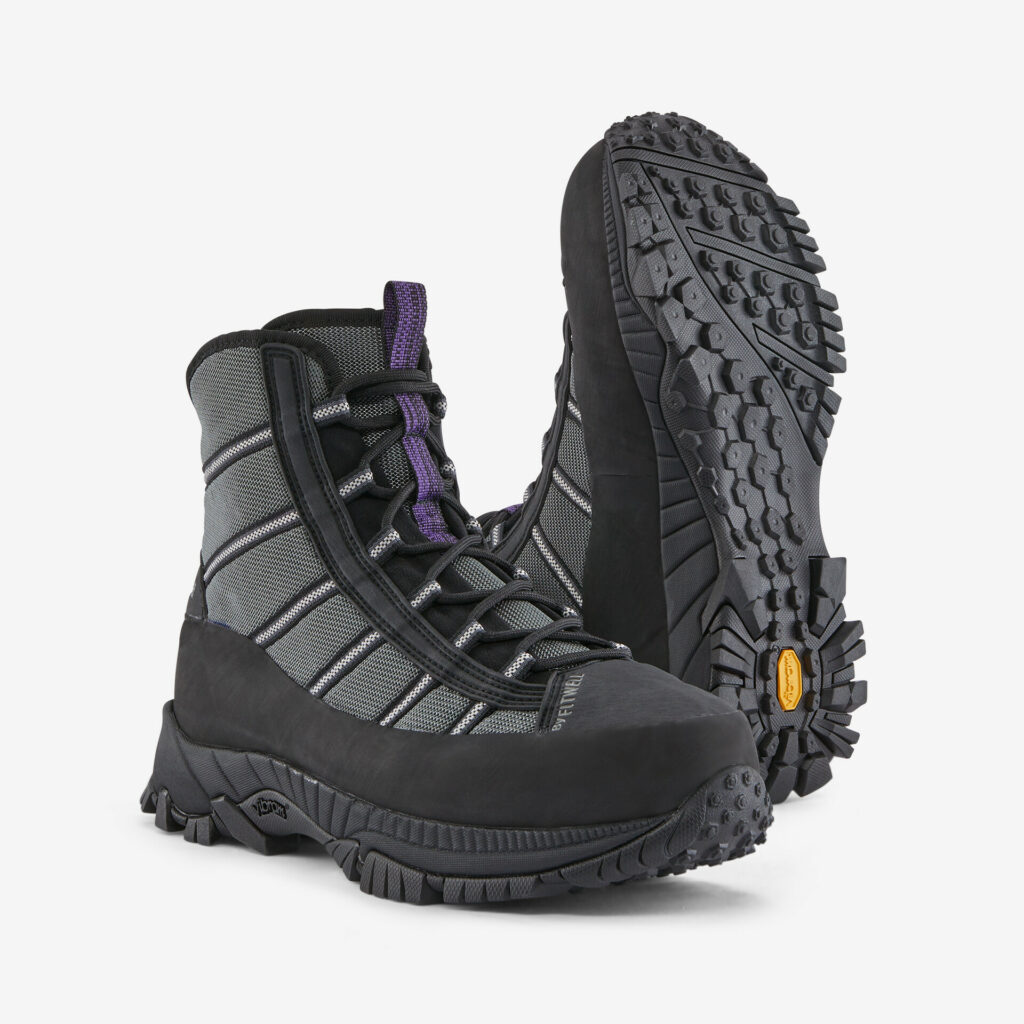
Patagonia doesn’t feature a dedicated Women’s wading boot in their lineup anymore. However, in my eyes, their new lightweight wading boot, the Forra (read our in-depth review here) is an excellent choice for women since it comes with a low weight and slimmer fit.
What’s also great about the Forra is the fact that it doesn’t feature any metal parts (even the lace loops are made from fabric) and is hence an excellent choice if you also want to fish in the salt without having to worry about corrosion. I’ve found the vibram sole to provide excellent traction on all kinds of surfaces. If you want to add an extra layer of traction, you can always add studs.
The padding around the ankles is not as thick as on the Simms for example, however I’ve always found the Forra to be very comfortable even on long days out and the ankle support is very solid. This boot wears more like a great hiking boot than a clunky wading boot in my opinion. Overall, an excellent choice for the female angler.
Simms Women’s Freestone Wading Boot
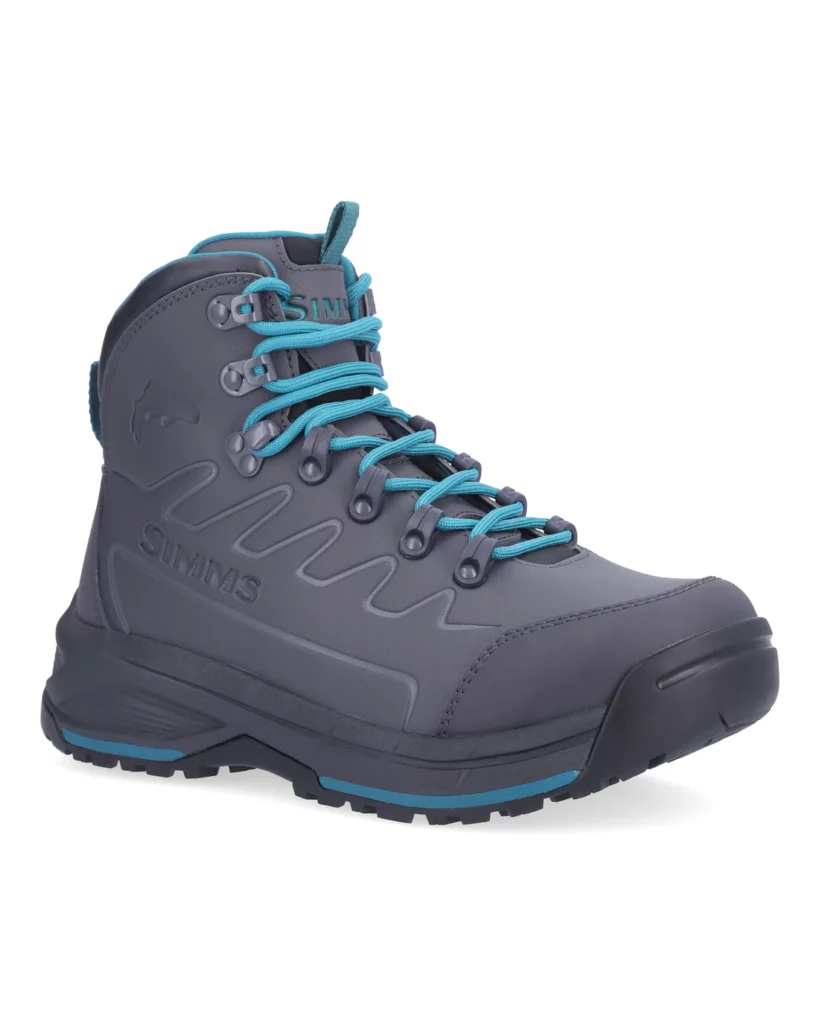
American manufacturer Simms is known for making some of the best fly fishing gear in the industry. Their Freestone Wading Boot is no exception to this rule. Now they’ve reworked their very popular Freestone boot from the ground up.
The new version features a thicker sole and increased abrasion resistance where it matters the most: around the toe and heel caps. The Freestone comes with traditional laces, nice padding around the ankle and loops at the tongue and heel for easy entry into the wading boots.
Although this boot is very sturdy, we didn’t find it to feel to heavy during our testing. One of the reasons for that is the fact that the drainage holes on the inside of the boot do a good job at getting the water out quickly.
Redington Womens Aurora Wading Boots
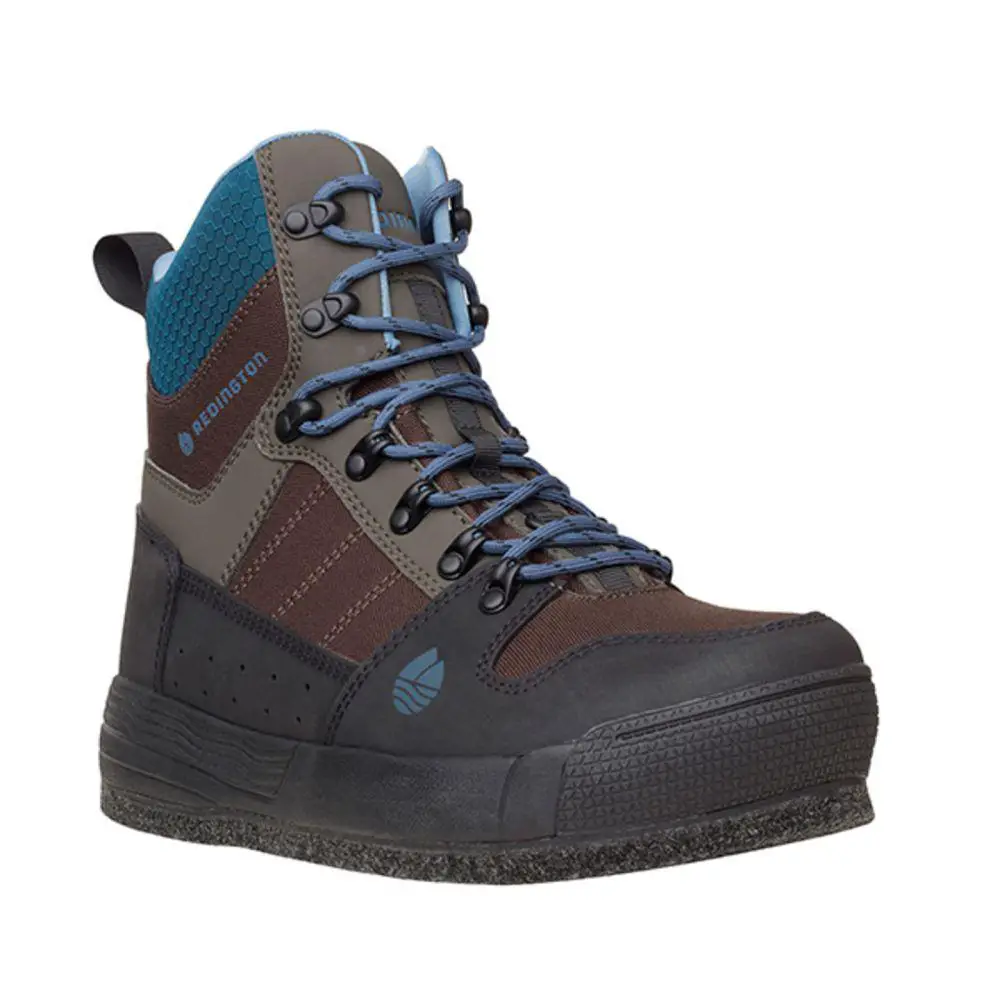
The Redington Womens Aurora Wading Boots are another excellent choice for a pair of fishing boots for women if you’re looking for premium quality that will last for years. This boot is available with a felt sole and a sticky rubber sole. Felt soles are fantastic for slippery rocks, sticky rubber is the perfect allrounder if you are fishing in different environments.
The Redington Womens Aurora has a form specifically designed for the woman angler. A EVA midsole provides comfort for long days on the water and the high shaft guarantees stability even on slippery surfaces. The drainage system works well and ensures that the water gets out quickly so your boots stay light.
Depending on your preferences you can add studs to the sole for extra grip. The webbing pull loops at the front lace make putting the Redington Womens Aurora on and taking it off easy.
Orvis Women’s Ultralight
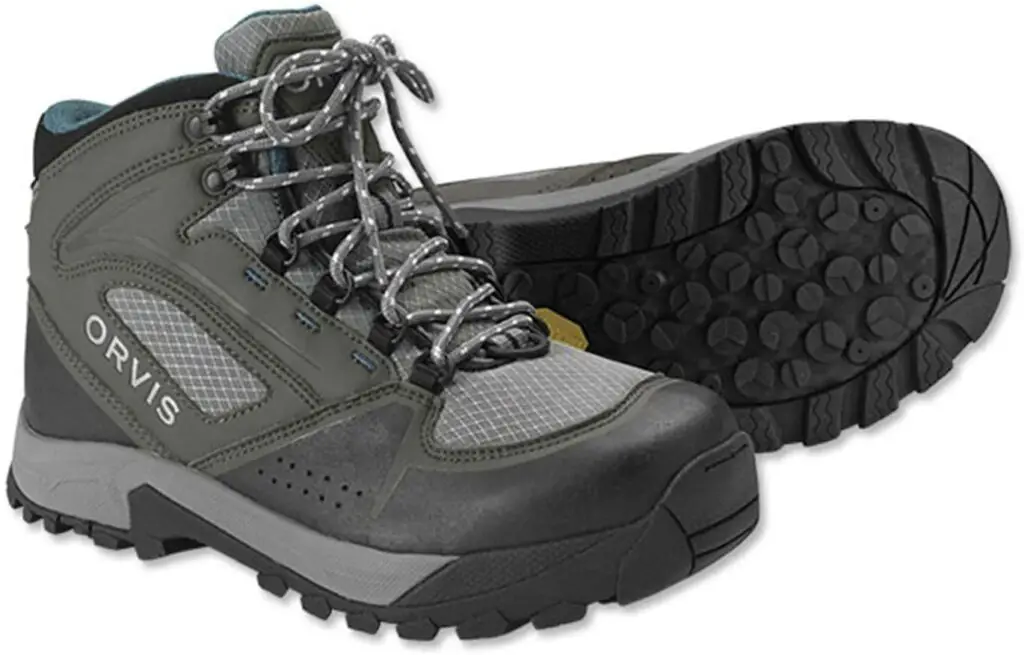
The Orvis Women’s Ultralight is a wading boot for women that leaves nothing to be desired. As the name suggests it’s a great choice for long days on the water as it weights in at only 2.78 pounds (1.25kg).
Its quick drying microfiber makes sure your wading boots don’t stay wet for long. The Orvis Women’s Ultralight features a vibram sole, well known to be one of the best on the market. The fact that the Orvis Ultralight’s shaft is not too high, makes it a great choice if you move around a lot during a day of fishing. It almost feels a bit like a hiking boot.
If you want the extra bit of grip out of your Orvis Women’s Ultralight, you can add some studds. They come in handy when you do a lot of wading on slippery surfaces such as stones overgrown with algae.
What you Need to Know about Wading Boots for Women
Wading boots are one of the most important parts of your equipment when you want to have a good day on the water. You shouldn’t worry about a solid stance. Hence it’s worth to invest a bit of money into a quality pair of boots. You can’t to wrong with any of the fishing boots for women we reviewed above. Here are a few things to pay attention to:
Sole of a Wading Boot – Felt vs. Rubber Soles
The general question you have to answer first is felt sole or rubber sole (you don’t have to answer that question if you go for the Korkers with their interchangeable sole system).
Generally speaking you can say that rubber soles give you extra comfort when you do a bit of walking getting to and from your fishing location. Felt on the other hand is the better option on slippery surfaces such as river beds with rocks covered with algae.
Felt has one catch. It soaks up water and takes a long time to dry, so it can carry invasive species such as didymo from one river to the next, which is why several US states and countries have banned felt soles. If you travel to fish, rubber with studs is the sole you can wear everywhere.
No matter whether you opt for felt soles or rubber soles you can always add cleats/studs to your wading boots. They give you more traction and stability. The only downside of them is that you have to be careful off the river, for example when stepping into a fly store.
Weight
The shape and built of your wading boots has an influence on its weight. If you prefer a really light boot you should go for one with a lower shaft such as the Orvis Women’s Ultralight Wading Boot. If you want increased stability and sturdiness a product such as the Simms Women’s Freestone is the way to go. They are basically indestructible and will last you for years.
Taking Care of your Wading Boots
The most important thing to make your wading boots last longer is to dry them properly after every use. Make sure they are completely dry before storing them for longer periods. If they are still wet they can mould.
Buy your boots with the waders you will wear them with, since they go over the neoprene socks of stockingfoot waders. Our picks of the best waders for women are here.
Comparison Table
| Brand | Sole Options | Price |
| Korkers Womens Darkhorse | Rubber/Felt | $229.99 |
| Patagonia Forra | Rubber | $319 |
| Simms W’s Freestone | Rubber/Felt | $230 |
| Redington Aurora | Rubber/Felt | $110.30 |
| Orvis W’s Ultralight | Rubber | $229 |
FAQs: Best Women’s Wading Boots
What makes wading boots specifically designed for women?
Women’s wading boots are designed with a more contoured shape to better fit the anatomy of women’s feet. They often have narrower heel cups, slightly reduced volume, and adjustments in sizing to provide a comfortable and secure fit.
Are there different types of soles available for women’s wading boots?
Yes, women’s wading boots come with various sole options, including felt, rubber, and studded soles. Each type offers specific advantages, such as traction on different surfaces or compliance with regulations in certain fishing areas.
How do I determine the right size for women’s wading boots?
To find the correct size, measure your foot length and width. Keep in mind that wading boots should accommodate neoprene booties or socks worn with waders. Consulting the manufacturer’s sizing chart is crucial for selecting the most suitable size.
Can I use the same wading boots for different types of fishing environments?
Some wading boots are versatile and can be used in various fishing environments, while others are designed for specific conditions. Consider the type of water, terrain, and climate you’ll be fishing in to choose boots with appropriate features and sole types.
How do I clean and maintain women’s wading boots?
Regularly clean your wading boots to remove dirt, debris, and invasive species that may be transported from one fishing spot to another. After each use, rinse the boots thoroughly, and if needed, use a brush to scrub off stubborn residue. Allow them to dry completely before storage.
Are studded soles necessary for women’s wading boots?
Studded soles provide additional traction, especially on slippery surfaces. Whether they are necessary depends on the fishing conditions you encounter. Studded soles are beneficial for wading in fast-flowing rivers or on rocky riverbeds.
Can I wear neoprene booties or socks with women’s wading boots?
Yes, most women’s wading boots are designed to accommodate neoprene booties or socks, providing insulation and added comfort. Ensure that the boots you choose have enough space to accommodate the thickness of your preferred socks or booties.

Leonard Schoenberger is a fly fishing professional and gear specialist with over 20 years of experience on the water. As the manager of Heidarvatn, a world-class sea trout lodge in Iceland, his product recommendations and tactical advice are tested in some of the most demanding conditions on earth. His expertise has been mentioned in The New York Times, the Financial Times, and at the Outdoor Media Summit.