Last updated on October 14th, 2026.
The Ray Ban Wayfarer glasses are some of the most iconic shades ever made.
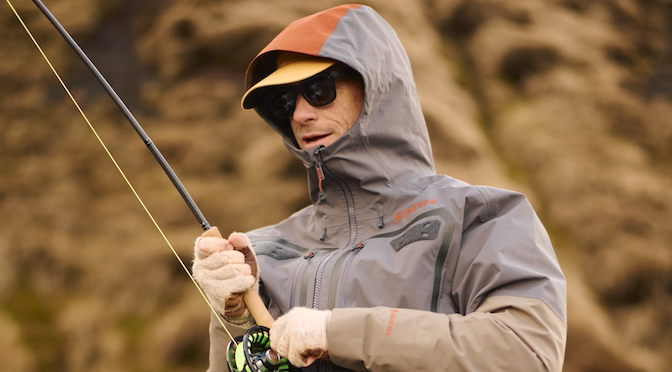
When it comes to fly fishing sunglasses, the choices are endless. You can easily go for one of the top dogs’ frames from Costa, Smith, or Oakley. Or, if you’re looking for a piece of gear that combines a classic silhouette with a modern tech playground, you can take a look at the Ray-Ban Meta Wayfarer (Gen 2).
Specs and Features of the Ray Ban Meta Gen 2
Frame color: black
Lens colors: graphite
Polarisation: Yes
Price: $409 (in the polarized version)
Comes with leather pouch with USB-C charging
Disclaimer: Some of the links in this article are affiliate links. If you click on one of them and end up purchasing a product we earn a small commission at no extra cost for you. We only recommend products we believe in ourselves. Learn more here.
Ray-Ban Meta Gen 2 Polarized: $409 at Amazon
First Impression

As you know from my reviews, I am a big fan of versatility. I like a pair of shades that look cool on and off the water, performing just as well while tracking a fish as they do when you’re sipping a cocktail back at the dock. The classic Wayfarer shape has been around for decades, but Meta has packed this frame with high-end components that make it a highly capable tool for the modern angler. Now let’s take a closer look at what makes them a good pair of fly fishing sunglasses.

Polarized Lenses: The Core Requirement
When it comes to fly fishing, polarization is absolutely imperative. It’s the barrier that cuts through harsh surface glare, allowing you to see sub-surface structures and spot moving fish rather than staring at a blinding mirror.
The model featured here comes equipped with Graphite Polarized lenses carrying a Category 3P rating. During testing on the water, the level of polarization proved excellent. The lens provides crisp contrast and true color transmission, which is exactly what you need when you’re trying to distinguish the dark flank of a trout from a mossy boulder in a shaded mountain creek. It’s a great overall lens, the only downside comes into play when the light fades – that’s when the graphite lens color gets too dark and only a yellow or reddish tone can still help you.

Hands-Free Media Capture: The Built-in Third Hand
The real standout feature of the Gen 2 frames is the integration of an ultrawide 12 MP camera directly into the hinge which can record video in 3K (see video above). Chasing fish in dynamic conditions means your hands are constantly occupied with the rod, the reel, or the net. You simply don’t have the time or the spare hands to reach into a pocket for a smartphone—and nobody wants to risk dropping their phone into a rushing current.
The Meta frames solve this problem beautifully by allowing you to record completely hands-free. A simple voice command (“Hey Meta, take a video”) or a quick tap on the temple starts a capture cycle. Because the lens is positioned right at eye level, the perspective is perfectly aligned with your line of sight. It captures exactly what you see: the surface take, the deep bend in the graphite, and the final release.
Besides being able to take videos or photos, the shades can also play music or be used for taking a phone call. I used the Ray Ban Meta 2 in very wet conditions and it didn’t have any issues handling that. I wouldn’t recommend submerging the shades but wet conditions are definitely no problem. The only downside I found during my use was the battery time. Ray Ban promises 8 hours. Like with smartphones that might be true in absolutely ideal conditions (which you rarely have when out fishing). Colder temperatures and being out of reception drained the battery quicker than expected but 4 hours of real usage are totally possible.

Audio and Build Quality
Beyond the optics and the camera, the frames house a 5-microphone array that records clear, directional environmental audio. It captures the full ambient experience of the river—the rush of the water and the scream of the drag—while the open-ear speakers let you take a call or stream audio via Bluetooth 5.3 without blocking out the sounds of the wilderness around you.
In terms of measurements, the frames feature a 50mm lens width, 22mm bridge width, and 150mm temple length, offering a stable High Bridge Fit that stays securely on your face even when you’re leaning over the water.
Pros and Cons
PROS:
-
Quality polarization
-
Records photos and videos in 3K
-
Can play music and take phone calls
-
Can withstand wet conditions
CONS:
-
Battery life is shorter than promised
Verdict on the Ray Ban Meta Gen 2 Wayfarer Polarized
The Ray Ban Meta Gen 2 Wayfarer come in a nice leather pouch that also serves as the charging station (USB-C). Setting up the shades and pairing them with your smartphone is a piece of cake. Coming in at $409 I think the Ray Ban provide excellent value for money since they are two great products in one (or even three if you consider being able to listen to music or take phone calls).
Frequently Asked Questions: Ray Ban Meta 2
How does the polarization hold up compared to dedicated fishing brands?
The polarization on the Graphite Polarized lenses is excellent for cutting down surface glare, easily on par with the lifestyle lines of major optics brands. However, because the classic Wayfarer is a flat, fashion-forward frame rather than a deep, wrap-around sports frame, you will get more peripheral light entering from the sides. For deep canopy creeks or general saltwater flats, they do the trick beautifully, but on blindingly bright days, they won’t block side-glare like a dedicated wrap frame.
Can the glasses handle being dropped in the water?
The Ray-Ban Meta Gen 2 frames carry an IPX4 water-resistance rating. This means they can easily handle a sudden downpour, heavy river mist, or saltwater spray on the bow of a skiff. However, they are not waterproof. If you take a spill into the river and submerge them completely, you risk frying the internal electronics. A secure eyewear retainer strap (like a Croakie) is highly recommended on the water.
How long does the battery last on a typical day of fishing?
On a single charge, you get up to 8 hours of mixed use, which drops to about 4 hours if you are continuously streaming audio. If you are primarily using them for quick 30-second video clips of fish hookups and releases, the battery will comfortably get you through a solid day session. The included charging case holds up to 32 hours of extra juice, so dropping them back into the case during lunch will easily top them up for the evening rise.
How do you transfer the footage to your phone while off the grid?
The frames use built-in Wi-Fi 6E and Bluetooth 5.3 to pair with the Meta View app on your smartphone. You don’t need cellular service or an external internet connection to transfer your clips; the glasses create their own local connection to your phone. Thanks to the updated Gen 2 hardware, media transfer speeds are roughly 10% faster than the previous generation, meaning your release videos are ready to view almost instantly on the bank.

Leonard Schoenberger is a fly fishing professional and gear specialist with over 20 years of experience on the water. As the manager of Heidarvatn, a world-class sea trout lodge in Iceland, his product recommendations and tactical advice are tested in some of the most demanding conditions on earth. His expertise has been mentioned in The New York Times, the Financial Times, and at the Outdoor Media Summit.