Last updated on May 26th, 2026.
Most “fishing gifts” lists treat the sport as a single hobby with a single set of accessories. It is not. A bass angler running a baitcaster on a 7-foot 3-inch medium-heavy rod, a saltwater flats guide poling for permit, a small-stream brook trout fisher on a 3-weight, and a winter steelheader running a Skagit head off a 13-foot two-handed rod are all “fishermen.” Almost nothing in their gear bags overlaps. A gift that would delight the saltwater guide would be useless to the brook trout fisher, and vice versa.
The fly-fishing side of the sport has the steepest gear-specialization curve of any of them. Rods are sized by AFFTA grain weight from 1 through 16, and the right gift in the wrong line weight is firewood. Tippet is sold in seven X-ratings between 0X and 7X, and giving a saltwater angler a spool of 6X is like giving someone size-4 dress shoes when they wear size 11. This page is built for the buyer who knows the recipient fly fishes, or who suspects they want to, and who wants to put something in their hands that actually gets used.
The recommendations below are organized by price tier, with the mechanism that makes each category useful explained in plain terms. Every category maps to an existing TWL gear guide so you can see the specific products that hold up under first-hand testing in real conditions.
What makes a fly-fishing gift different
Fly fishing is the one branch of angling where the lure is too light to be cast on its own. The fly weighs fractions of a gram, so it cannot pull line off a reel the way a half-ounce spinner does. Instead, the fly fisher casts a weighted line, and the fly rides along for the trip. Everything in the gear bag is downstream of that single mechanical fact.
That includes the rod, which is sold not by length and power but by AFFTA line weight: 1-weight through 16-weight, where a 5-weight is the trout standard, a 7- to 9-weight covers heavy streamers and bonefish, and a 10- to 12-weight is the tarpon and saltwater bluewater tool. It includes the reel, which on most trout setups is mostly a line-storage device but on a saltwater 10-weight is the brake system that fights the fish. It includes the leader and tippet, which bridge the thick coated fly line down to a fine point at the fly. And it includes everything that goes around the cast itself: the polarized lenses that let the angler see fish, the wading boots that keep them upright on slick stones, the net that lands the fish without exhausting it.
The result is that “useful gift” splits cleanly into categories the recipient will recognize the moment they unwrap the box. Tippet runs out, fly boxes fill up, leaders break, nippers walk off, polarized lenses scratch, wading boot studs wear flat, sling packs get traded for something better. Any of those gets used the next time the recipient is on the water. By contrast, a generic “fishing gift basket” usually contains things a fly fisher will quietly donate within a month: novelty lures they do not throw, bass-tackle items that do not fit their rig, gimmicky multitools that duplicate what is already on their pack strap.
The price tiers below assume the recipient already fly fishes. If they do not yet but want to, the entry-level kits and the fly fishing for beginners primer lay out the actual starting setup, which is more useful as a gift than a random rod and reel chosen by guesswork.
Sub-$50: the consumable-and-tool tier
Anything that lives in the angler’s pack and gets used up or lost belongs in this band. These are the gifts a fly fisher quietly hopes someone else buys them, because they are unglamorous, they get rebought without fanfare, and they always run out at the wrong moment.
Tippet spools are the consumable backbone. A trout fisher running a 9-foot 5-weight will burn through 4X and 5X tippet faster than they restock it. Fluorocarbon spools last longer than nylon because they get used for nymphing rather than dries, but both go through the pack in a season. A four-pack of Rio, Scientific Anglers, or Trout Hunter tippet in the 3X to 6X range, picked from the brand the recipient already uses, costs about thirty dollars and shows you paid attention to what was already on their lanyard.
Leader assortments are the same logic one step up the rig. Standard trout leaders are 9 feet long, tapered from a heavy butt section through a midsection to a fine terminal end. A box of three or four pre-tied 9-foot 4X leaders covers the recipient’s next several trout outings without them having to tie their own.
Fly boxes are the slot where consumables and tools meet. A waterproof slit-foam box from Tacky, Cliff Outdoors, or Umpqua holds a few hundred flies and lasts a decade. The right gift here is the second or third box, the one for a specific category (streamers, nymphs, dries) that the recipient has been putting off buying. Pair it with a starter selection of category-appropriate flies from a local fly shop and the gift opens itself.
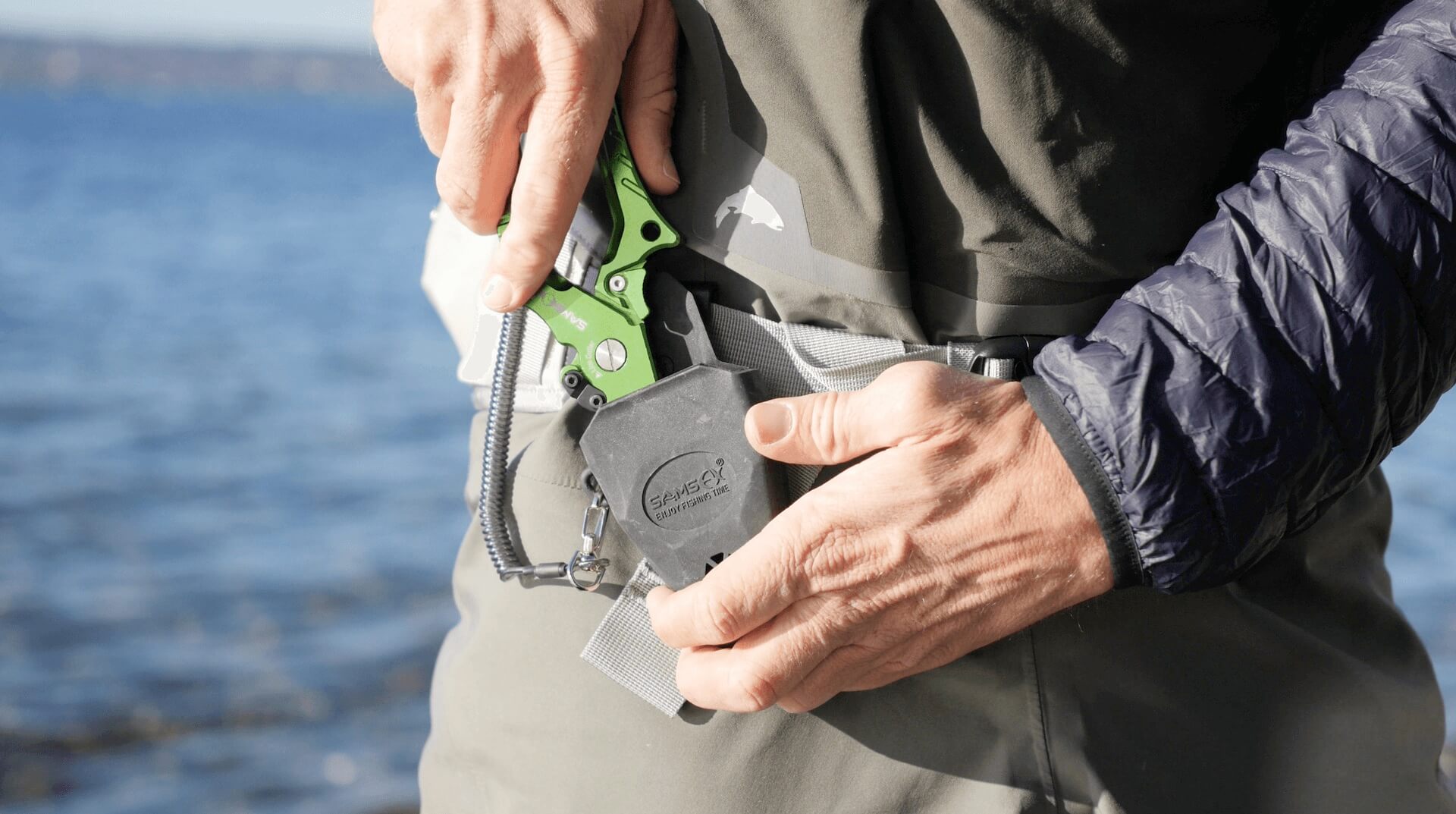
Nippers, hemostats, and forceps round out the tool side. A pair of dedicated fly fishing nippers clipped to a zinger sits on the pack strap and trims tippet cleanly every time the recipient retired a knot. Teeth-as-clippers chew the polymer and leave a frayed cut, which weakens the next knot tied on that piece. Hemostats unhook fish without crushing the jaw. Both run under thirty dollars and both get used every time the recipient steps in the water.
Fly-tying starter materials, for the recipient who has been talking about tying their own flies, also fit this band. Hooks in the sizes they fish, a small spool of 6/0 or 8/0 thread, a pack of pheasant tail feathers, some hare’s mask dubbing, and a few bead-head cones. None of it costs much individually. Bundled in a small case it becomes a real first step toward the vise, especially when paired with one of the entry kits from the fly tying kits guide.
$50 to $150: the upgrade-something-they-already-have tier
This is the band where you can buy a piece of gear the recipient owns a worse version of and they will quietly swap to yours within a week. The criteria: the item is something they already use, the upgrade is noticeable in the hand, and the price point is high enough to feel like a gift but low enough that you are not making a relationship-level statement.
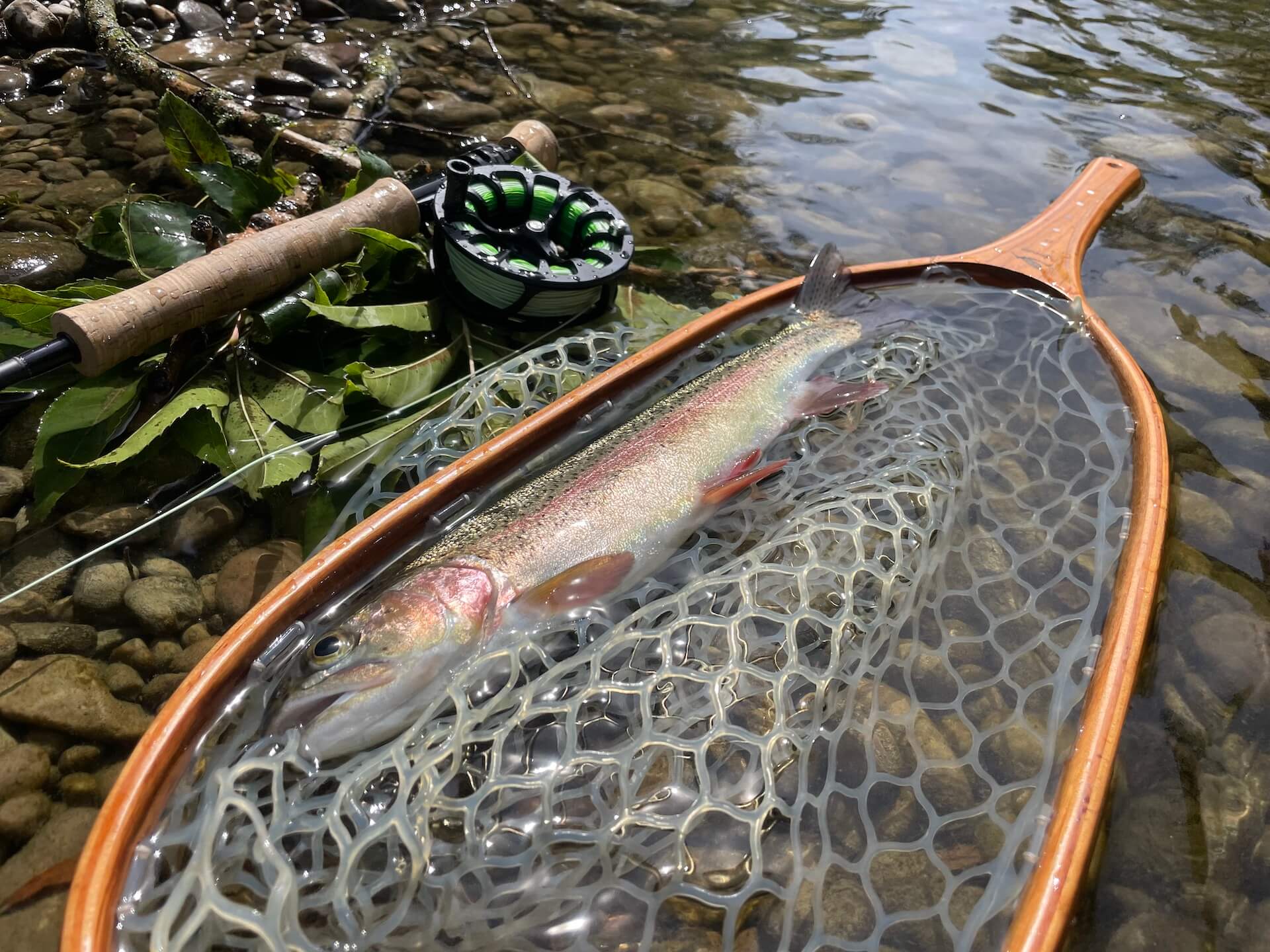
A quality landing net is the cleanest example. A wood-framed net with a clear rubber bag from Fishpond, Brodin, or Nomad lands a trout without scraping the slime layer that protects the fish from infection. Rubber bag versus knotted nylon mesh matters: nylon mesh strips slime, tangles hooks, and weighs more wet than dry. Anyone fishing catch-and-release in 50 to 65 degree water (the trout-comfort band) wants the rubber bag. The fly fishing nets guide lays out the specific models that hold up over multiple seasons.
A Yeti Sidekick Dry is the other gift in this band that gets used the day it is opened. It is a fully waterproof magnetic-closure pouch that holds a phone, wallet, keys, and a couple of fly boxes. It clips into the back of a sling pack or a wading-jacket pocket, keeps electronics dry through a full day of wet wading, and survives the boat ride home. The Yeti Sidekick Dry 3L sizing review compares the size variants; the 3L is the best fit for most fly fishers.
Wading socks and gloves are the cold-water upgrade most fly fishers put off buying for themselves. Neoprene wading socks layer under stockingfoot waders and add real warmth in spring runoff or fall conditions. Fingerless wool or fleece-lined gloves keep the recipient’s hands functional for tying knots on a cold morning, when bare fingers go numb fast. Both run between fifty and a hundred dollars and both get worn for every shoulder-season trip.
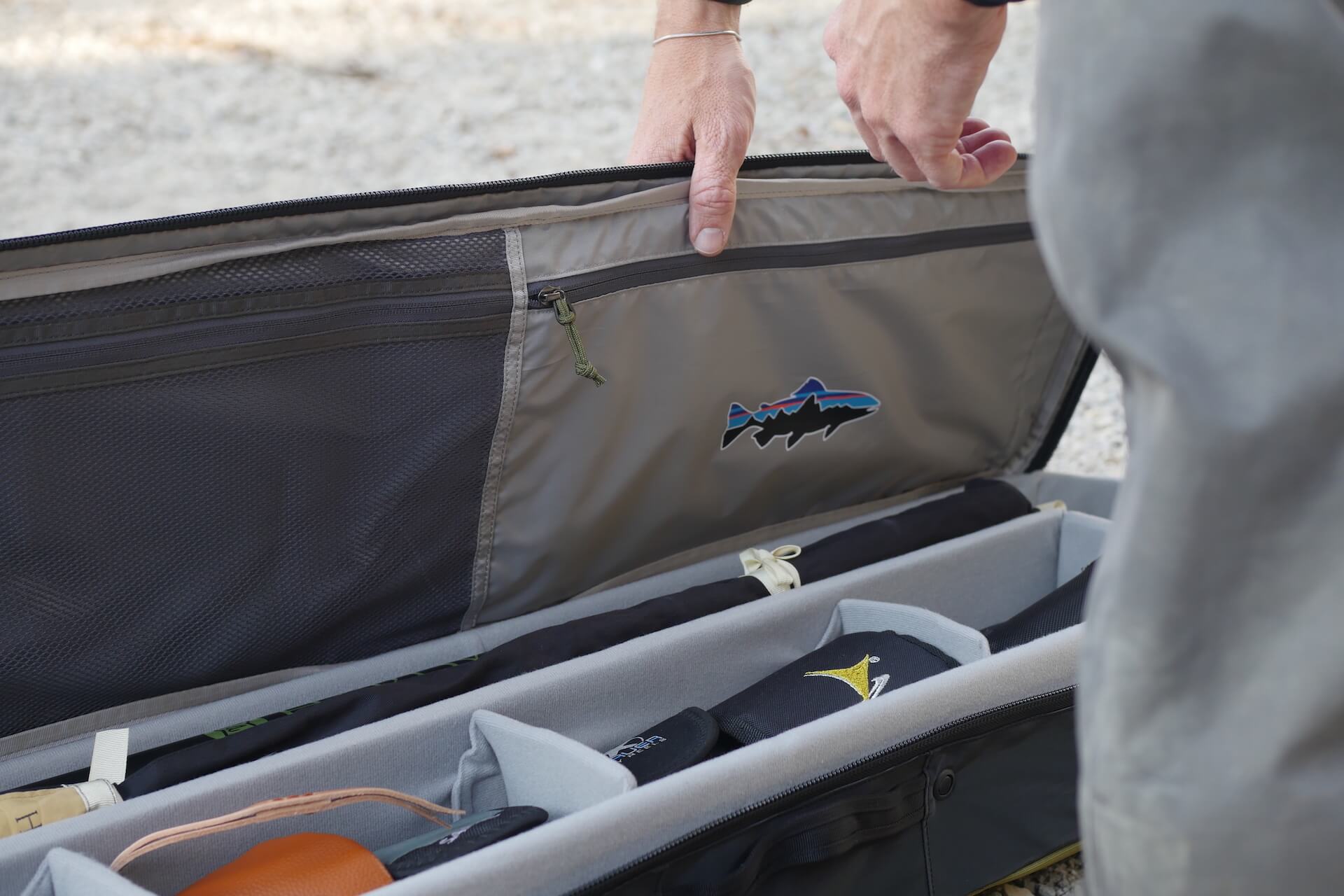
A fly box upgrade fits here too. The category jumps from the basic slit-foam box at thirty dollars into the magnetic, two-sided, or threader-equipped versions at sixty to a hundred. A magnetic streamer box keeps articulated patterns from tangling. A threader box with pre-threaded tippet slots gets nymphs ready faster on cold-fingered mornings.
A guidebook to the recipient’s home water is the gift that often outlives the gear itself. State-specific or watershed-specific titles cover the hatches, access points, and seasonal patterns of a specific drainage. The recipient already knows their home water, but a printed guidebook reorganizes what they know and surfaces sections they have never fished. Pair it with the fly fishing for beginners overview if the recipient is still building their first home-water rotation.
$150 to $400: the serious-piece-of-gear tier
This is the band where the gift is a single object that becomes part of the recipient’s permanent kit. The criteria shift: the item has to be in a category where the recipient genuinely does not have one yet, or where their current one is visibly worn out.
Polarized sunglasses are the top of the list because they are also the easiest to size correctly. The angler does not need to be measured, the prescription does not need to match, and the frame style is largely personal. What matters is the lens: copper or brown lenses are the high-contrast all-around standard, amber covers low-light dawn and dusk conditions, and grey is the color-neutral choice for intense offshore brightness. Glass lenses (Costa 580G, Smith ChromaPop+ Glass) deliver the highest optical clarity and scratch resistance but weigh more and can shatter on impact. Polycarbonate lenses (Bajio, Roka, Vallon) are lighter and impact-safe at slightly lower optical sharpness. The fly fishing sunglasses guide breaks down which model fits which fishing context.
A wading boot upgrade lives in this band too. The current dominant pattern is a stockingfoot wader with a separate wading boot in either rubber or felt soles. Rubber, often studded for traction on slick stones, is now the standard because felt absorbs water, dries slowly, and is a primary vector for invasive species like Didymo, which has led to felt being banned in several US states and international destinations. A Simms G3, Korkers OmniTrax, or Patagonia Foot Tractor sized to fit over the recipient’s wader-neoprene-sock thickness lands solidly in the gift band.
A small-stream rod is the third option here. Most fly fishers buy a 9-foot 5-weight first and use it for everything. A small-stream 7-foot 6-inch or 8-foot 6-inch 3-weight is the rod they discover they want when they fish a tight brook trout creek where a 9-footer cannot turn over in the brush. Fiberglass small-stream rods from Echo, Orvis, or Redington run between two hundred and four hundred dollars and turn the recipient’s home creek into a different fishery. The full breakdown of where each rod fits sits at the best fly rods guide for the generalist set and the best 5-weight fly rod guide for the trout standard.
A sling pack is the carry-system upgrade. The recipient already has some kind of pack: an old vest, a chest pack, a hip pack, a backpack. A modern sling pack from Fishpond, Patagonia, or Orvis swings from back to front for access on the water, holds three to four fly boxes, and keeps the dominant shoulder free for casting. The fly fishing sling packs guide walks through which sling fits which fishing-style profile.
$400 and up: the centerpiece-purchase tier
At this price the gift is a significant object that the recipient will treat as such. The gift-giving math is different here: the item has to fit the recipient’s existing system or it becomes an expensive piece of unused inventory.
A 5-weight rod upgrade is the most common single purchase a serious fly fisher makes. Their first rod was likely an entry-level Echo, Redington, or TFO outfit. A premium 9-foot 5-weight from Sage, Scott, G. Loomis, or Orvis Helios is the rod that gets fished for the next twenty years. The action profile matters: a fast-action graphite rod (high modulus, stiff blank) generates the line speed needed to punch through wind and cast long, while a medium-action rod down to a slow-action fiberglass blank delivers the close-range delicacy needed for spring creek work. Knowing which the recipient prefers (or asking discreetly) prevents the gift from going wrong.
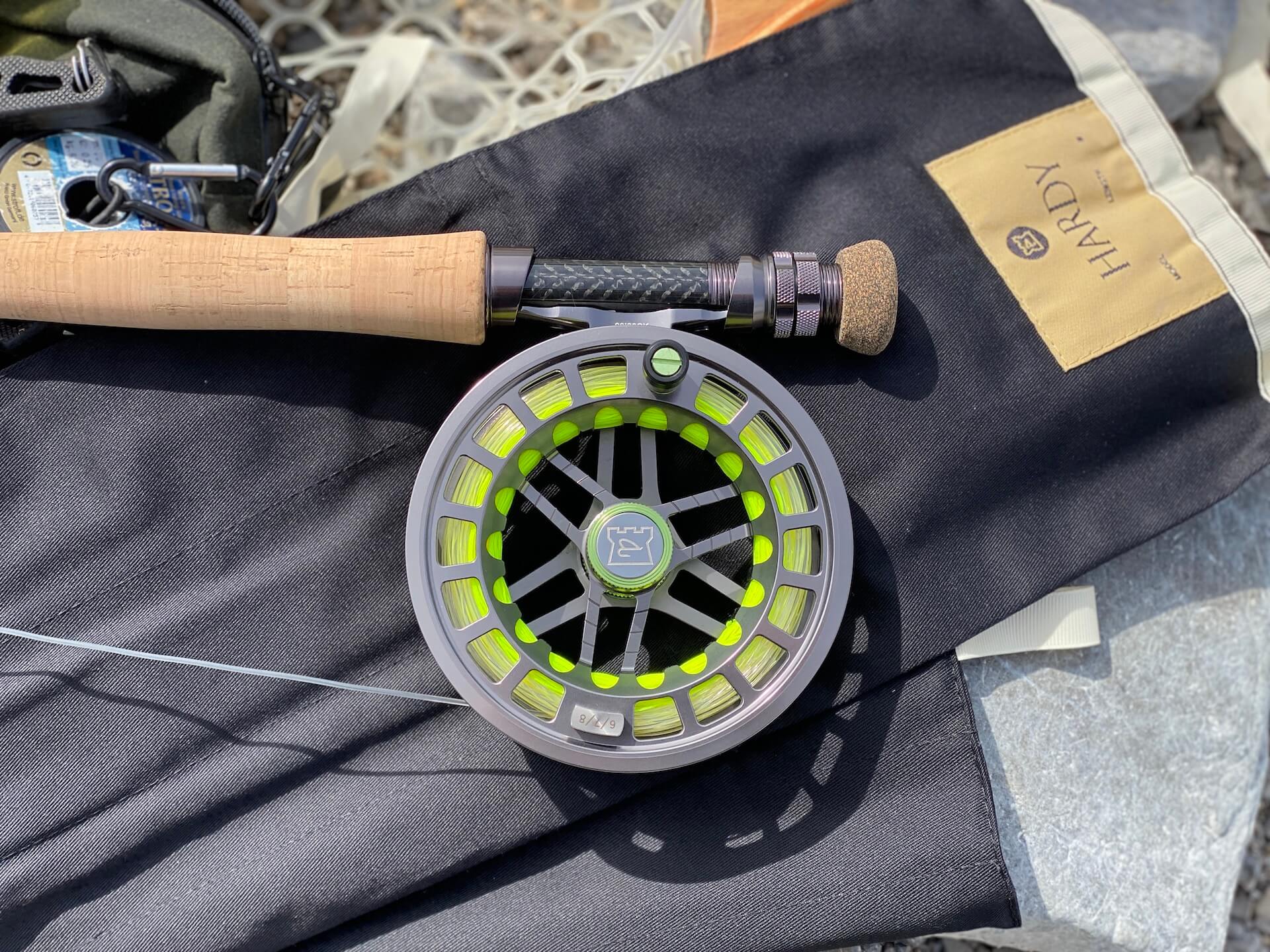
A quality reel is the parallel purchase. For a trout 5-weight the reel is mostly a line-storage and balance tool, so a large-arbor click-and-pawl reel from Hardy, Galvan, or Ross fits the aesthetic without overspending on a drag system the freshwater trout will never test. For an 8-weight saltwater setup, the reel becomes the brake system, and a sealed disc drag from Hatch, Lamson, or Nautilus is mandatory: sand and salt destroy unsealed mechanisms within a season. The fly reels guide lays out the specific models worth the spend.
A saltwater 8-weight or 9-weight setup is the gift that opens a new fishery. If the recipient already fishes trout exclusively, a complete rod-reel-line combo in 8-weight (the standard for bonefish, redfish, and light striped bass) gives them the tool to book a flats trip without renting gear. The rod, reel, and line together run between eight hundred and two thousand dollars depending on tier, but the gift is the combination, not the individual pieces.
A guided trip booking is the gift that converts into experience rather than gear. A half-day or full-day with a local guide on a tailwater the recipient has been wanting to fish but has not figured out the access for, or a hosted week at a destination lodge, lands differently from any object. The math is straightforward: a day with a good guide is three hundred to seven hundred dollars in most US trout fisheries, and the recipient typically learns more in that day about water-reading and presentation than in a full season of self-guided fishing.
Soft gifts: subscriptions, kits, and books
Not every gift has to be hardware. Several categories work for the recipient who has plenty of gear already, or for the giver who wants to land something thoughtful without guessing rod weight or boot size.
A fly-tying kit is the most flexible of these. The recipient who has talked about tying their own flies but has not started needs a vise, a bobbin holder, hackle pliers, hair stackers, a starter material kit, and a beginner book or video reference. The complete kits from Orvis, Renzetti, and Wapsi bundle these into a single box at a hundred to three hundred dollars. The fly tying kits guide lays out which kit fits the recipient’s likely tying ambition.
A magazine subscription to The Drake, Hatch Magazine, or American Angler arrives in the recipient’s mailbox or inbox six to twelve times a year and keeps fly fishing present in their thinking even during off-season months. The cost is forty to a hundred dollars annually.
A lodge gift card or trip deposit credit at a destination operation (Heidarvatn in Iceland, Andros South in the Bahamas, the Anchorage River lodges in Patagonia) is the soft equivalent of the guided-trip gift in the centerpiece tier. The recipient applies it to the lodge of their choice and the gift becomes part of a trip they already wanted to take.
A stack of substrate-relevant books is the gift that ages well. Datus Proper’s What the Trout Said is the closest thing fly fishing has to a unified theory of how fish see flies. Lefty Kreh’s Presenting the Fly compiles fifty years of casting thinking into a single volume. John Gierach’s essay collections (Trout Bum, Standing in a River Waving a Stick) are the genre-defining literary fly-fishing writing. A short stack of three or four titles, picked for whichever angle of the sport the recipient most engages with, makes a more durable gift than a single piece of gear.
How to choose between the tiers
The decision logic is short. Match the budget to the recipient’s existing kit gap, not to the price point that feels generous.
A recipient who fly fishes only occasionally, with one rod and a basic pack, gets the most use out of consumables (tippet, leaders, flies) and small tools (nippers, hemostats). They will not appreciate a premium reel because the reel they have is fine for their fishing. They will appreciate a fly box upgrade because they are running out of fly storage.
A recipient who fly fishes seriously, with multiple rods, a sorted pack system, and a tying bench, needs the upgrade-something-they-already-have approach. Their tippet drawer is fully stocked. They already have nippers on their zinger. What they do not have is a small-stream 3-weight, or a saltwater 8-weight reel, or the polarized lenses they have been meaning to replace.
A recipient who is brand new to the sport and is about to start fly fishing wants the fly fishing for beginners primer and a complete starter outfit, not a single accessory. A rod-reel-line-leader-tippet-fly-box bundle that lets them fish on day one is the right move; piecemeal accessories without the rod they go around frustrate the beginner more than they help.
A recipient whose current rod or boot or pack is visibly worn out wants the replacement in the same category, ideally one tier up from what they have. The wear is the signal: it tells you they use that piece, they have been postponing the replacement, and they will recognize the gift the moment they unwrap it.
The fail-safe across all of these: ask a fly-shop staffer who lives in the recipient’s fishing region. The person behind the counter at the local Trout Unlimited shop knows the seasonal hatches, knows which products move, and knows what the regulars on the home water are buying. Twenty minutes of conversation there will save you from any of the common gift mistakes (wrong line weight, wrong tippet diameter, wrong wading boot size). The recipient will be on the water with whatever you brought home within the week.

Leonard Schoenberger is a fly fishing professional and gear specialist with over 20 years of experience on the water. As the manager of Heidarvatn, a world-class sea trout lodge in Iceland, his product recommendations and tactical advice are tested in some of the most demanding conditions on earth. His expertise has been mentioned in The New York Times, the Financial Times, and at the Outdoor Media Summit.