Last updated on May 29th, 2026.
Bass like bait that behaves like the prey they already hunt. They are ambush-feeding warmwater predators with broad diets, and what triggers a strike is not the lure’s name on the package but the combination of motion, profile, vibration, and color that the lure puts into the water. A largemouth holding next to a submerged stump in three feet of stained water is not reading the label on a Senko. It is reacting to a soft, slow-falling profile that looks like a wounded baitfish or a crayfish backing into cover. Get that signal right and the fish eats.
The honest answer to “what bait do bass like” splits into two questions. What do bass actually eat in the wild? And what trigger does a lure exploit, either by imitating real prey or by provoking a reaction strike from a fish that is not actively feeding? Real diet runs from baitfish (shad, alewife, shiner) and crayfish through frogs, large insects, leeches, sculpins in rocky river systems, and the occasional mouse or duckling. Lures fall into two categories that mirror this: imitators that copy a specific food item, and attractors that trigger a defensive or aggressive response without trying to mimic anything in particular. The same imitator-versus-attractor split runs through fly tying as well, and the underlying logic is identical.
The decision tree at the water is therefore about reading conditions and matching the lure category to what bass are responding to that day. Water temperature governs metabolism and aggression. Water clarity governs whether bass are hunting by sight or by lateral-line vibration. Cover governs where the lure has to go. The rest of this page works through the mechanism, the lure categories, the seasonal and condition matrix, and a short decision logic for picking on the water.
What actually triggers a bass strike
Bass hunt with three sensory systems in parallel: vision, lateral-line detection of water displacement, and a chemoreception system for taste and smell. In clear water with good light a bass will key on visual cues first, and color, profile, and silhouette dominate the decision. In stained or muddy water vision is degraded and the lateral line takes over, which is why lures with strong vibration signatures (chatterbaits, spinnerbaits, deep-bellied crankbaits) outproduce subtle finesse presentations in low-visibility conditions. The lateral line picks up displacement out to several feet around the fish; a vibrating lure announces itself across that distance even when the bass cannot see it yet.
The strike itself is a reaction, not a deliberation. A bass that commits has decided in fractions of a second that whatever just appeared in its window is either food or a threat that needs to be removed. Imitator lures (soft-plastic worms, paddletail swimbaits, crayfish creature baits, jigs with chunk trailers) lean on the food side of that decision by matching size, profile, and fall rate of real prey. Attractor lures (bright spinnerbaits, oversized glide baits, prop topwaters) lean on the reaction side by presenting something disruptive enough that the fish hits without classifying it as food. Most of the productive bass lures in any tackle box do both at once: a chatterbait imitates a baitfish profile while throwing enough vibration to provoke a reaction strike.
Water temperature is the absolute governor underneath all of this. Bass metabolism climbs with warming water through roughly 75 degrees Fahrenheit, then plateaus, then drops off as dissolved oxygen falls in the warmest summer pools. Below 50 degrees the fish are lethargic, and the strike window is narrow and short. Above 80 degrees in shallow stagnant water the bass retreat to deeper cooler water or to oxygen-rich current. This is the same thermal logic that governs trout: caloric intake has to exceed caloric expenditure, and a cold or oxygen-stressed fish will not chase a fast-moving lure. Slow the presentation when the water is cold or hot. Speed it up in the productive 60 to 75 degree band when the fish are aggressive and willing to commit.

Color matters less than most tackle marketing implies, but it matters where it matters. In stained water, dark profiles silhouette better against a brighter sky and chartreuse-and-black combinations outperform natural colors. In clear water, natural baitfish patterns (green pumpkin soft plastics, shad-color crankbaits, white spinnerbait skirts) match what bass already see in the water column. Bright colors in clear water can spook pressured fish in low-pressure clear lakes; reaction-strike lures (red crankbaits, chartreuse spinnerbaits) work because they disrupt the visual field rather than blend into it.
The lure categories and what each one mimics
Bass lures organize cleanly into five working categories, and each category lives in a specific part of the water column with a specific imitation logic.
Soft plastics are the most versatile category and account for the majority of bass caught on artificial lures across North America. Plastic worms (Senkos, ribbon-tail worms, finesse worms) imitate worms, leeches, and unidentifiable wounded prey on a slow horizontal fall. The Senko’s flat sides and salt-impregnated weight produce a tantalizing side-to-side wobble on the drop that triggers strikes from pressured fish. Creature baits and craws imitate crayfish, with the buoyant arms standing up in a defensive posture on the bottom. Paddletail swimbaits imitate swimming baitfish with the kicking tail providing the displacement signal a bass picks up on the lateral line. The Ned Rig, a small mushroom jighead paired with a short stick of buoyant plastic, is the finesse answer for heavily pressured water where larger profiles get refused. Soft plastics rigged Texas-style (weedless) go anywhere there is cover.
Crankbaits are hard-bodied diving lures with a plastic bill that controls depth. The bill profile dictates whether the lure runs at two feet (square-bill crankbait, ideal for crashing through shallow cover), six feet (medium-diving crankbait, the open-water summer workhorse), or fifteen feet (deep-diving crankbait, for ledge fishing in lakes with significant depth changes). Crankbaits imitate baitfish with their lip-driven wobbling action; the deflection off a stump, dock pile, or rock is often where the strike comes, because the change in direction looks exactly like a baitfish trying to evade. Lipless crankbaits (the Rat-L-Trap class) sink and vibrate hard, covering water fast and excelling around grass and rocky flats in spring.
Spinnerbaits and chatterbaits combine a vibrating blade or bladed-jig profile with a skirted body. Spinnerbaits run a wire arm with one or two willow or Colorado blades flashing above a hook-and-skirt assembly; the safety-pin wire frame makes them remarkably weedless. The flash and vibration imitate a small school of baitfish, and the lure can be slow-rolled at any depth. Chatterbaits (bladed jigs) put a hex-shaped blade against the head of a jig, producing a violent hunting wobble that is part crankbait, part spinnerbait, and exceptional through submerged grass and along weed edges.
Jigs are the bottom-contact specialist category and account for a disproportionate share of trophy bass caught each year. A football-head or arky-head jig with a soft-plastic chunk trailer (the classic jig-and-pig configuration) imitates a crayfish backing into cover, fished slow along rocks, brush piles, and dock structure. Swim jigs run the same skirted profile through the upper water column with a steady retrieve. Finesse jigs in lighter weights go to clear water where pressured fish reject heavier profiles.
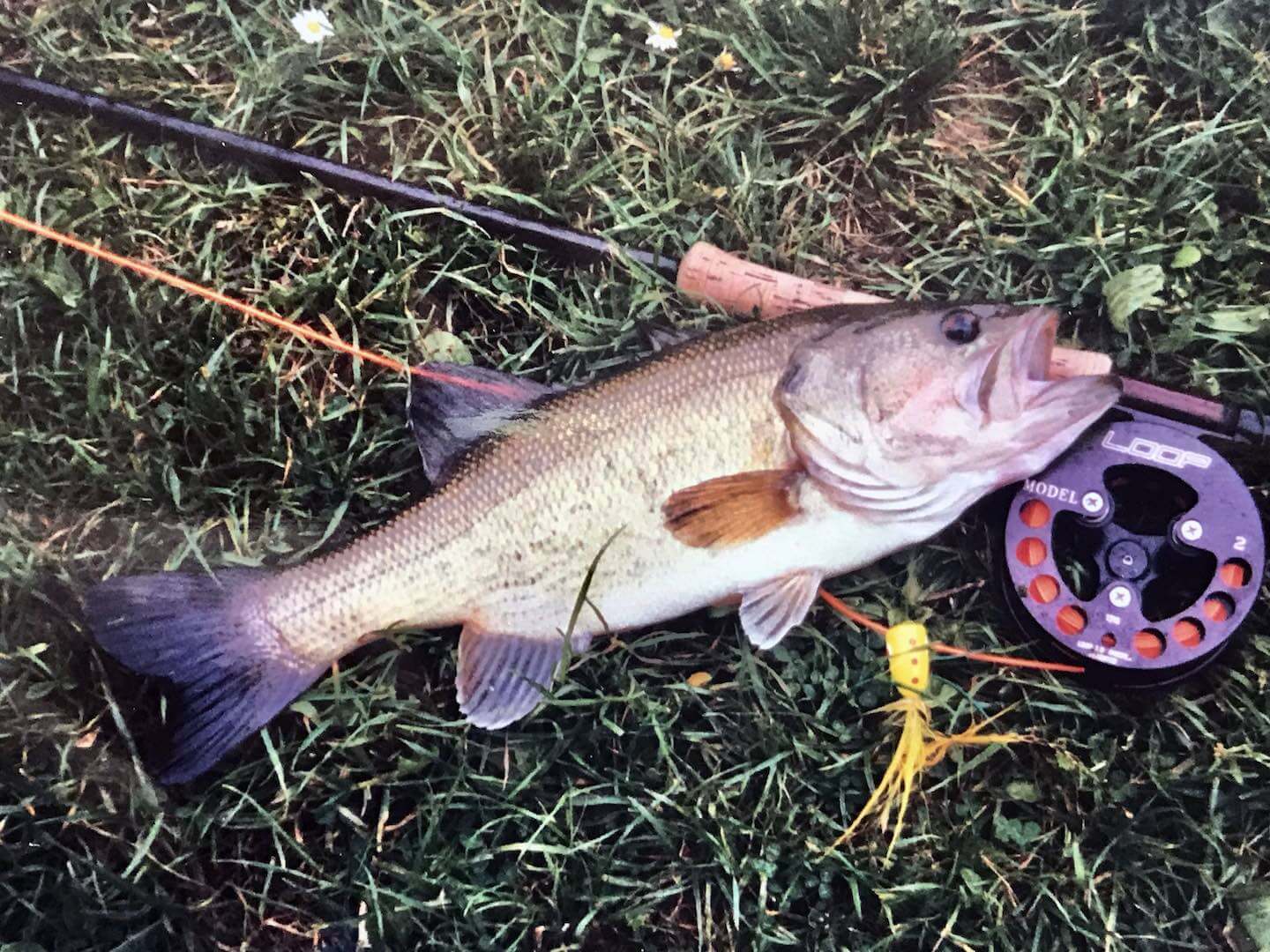
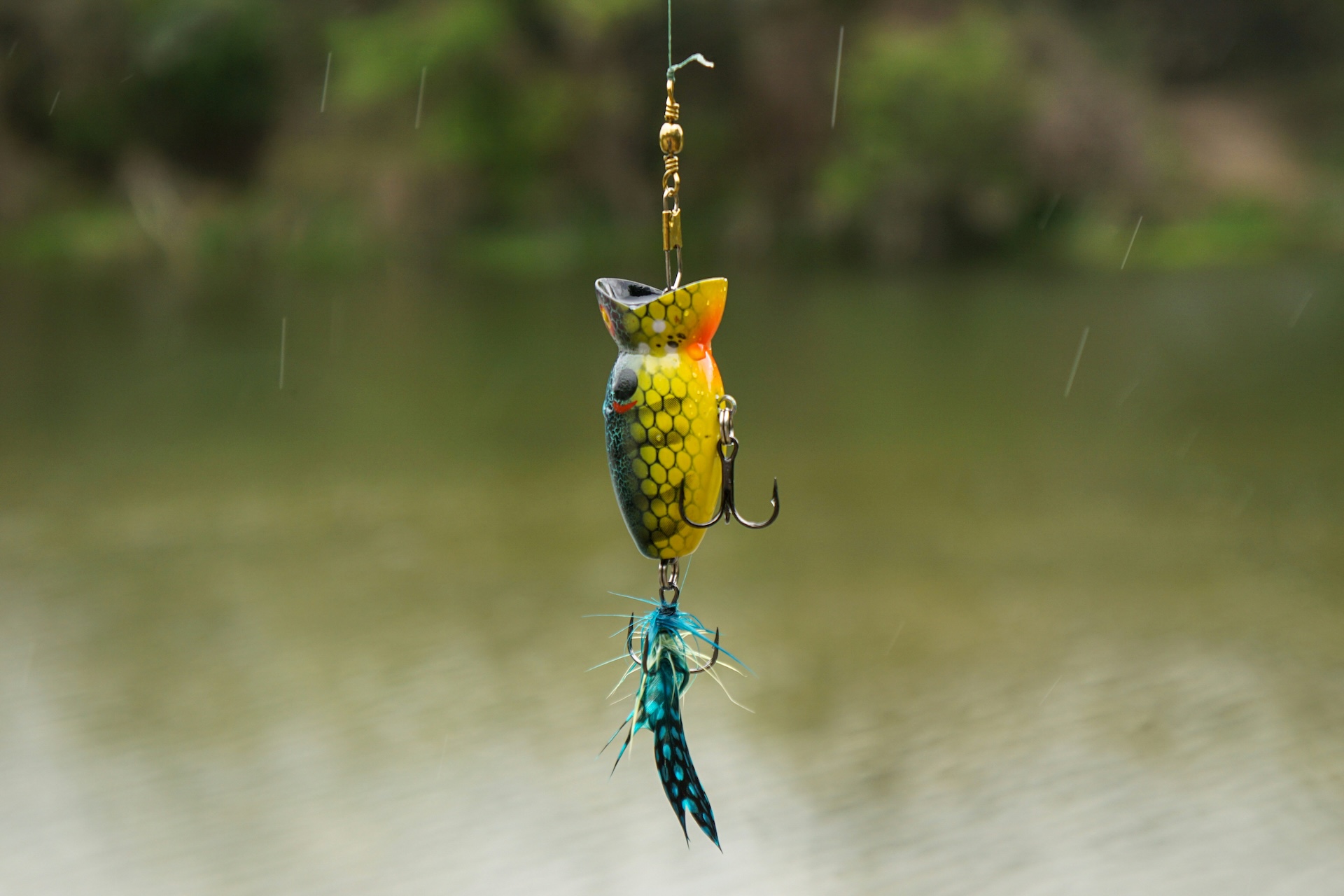
Topwater lures fish on the surface and trigger the most visible strikes in freshwater fishing. Poppers (cupped face, popping-and-pause retrieve) imitate baitfish struggling on the surface. Walking baits (Spook-style, walk-the-dog action) glide side to side and imitate wounded baitfish. Hollow-body frogs run weedless across lily pads and matted vegetation where no other lure can go. Prop baits and buzzbaits create surface disturbance with rotating blades. Topwater works best in low-light dawn and dusk windows and when surface temperatures sit above 60 degrees. The strike is often a violent surface eruption; setting the hook too early on a frog strike, before feeling the weight of the fish, is the single most common topwater mistake.
A note on fly tackle: if you came across this page from the fly-fishing-for-bass side of the house, the lure categories above translate directly to fly patterns. Surface poppers and frog flies in deer-hair or hard-foam. Subsurface streamers (Clouser Deep Minnow, Murdich Minnow, Game Changer) for the crankbait and swimbait category. Weighted crayfish patterns for the jig-and-pig role. The best-bass-flies selection works on the same predator-trigger logic as a tackle box of soft plastics, just delivered on a 7-or-8-weight rod with a strip-and-pause retrieve instead of a baitcaster.
Seasonal patterns and the condition matrix
Bass behavior changes through the season because their food sources and their physiology change. The yearly arc breaks into four windows, and the lure category that produces in each window is different.
Pre-spawn is the most aggressive feeding window of the year. As water warms through the 50s into the 60s, bass move shallow and feed heavily to build energy reserves for the spawn. Jerkbaits (long pause-and-twitch minnow profiles) produce well when the water is still below 55 degrees, because they hang in front of lethargic fish long enough to draw a slow committed take. Lipless crankbaits ripped through hydrilla and milfoil edges excel as the water climbs through the upper 50s. Soft plastics on a slow drop, fished tight to bedding cover, take fish as the spawn approaches. The pre-spawn through post-spawn timing shifts week by week with latitude and water temperature; tracking surface temps with a thermometer at the boat ramp is the single best diagnostic.
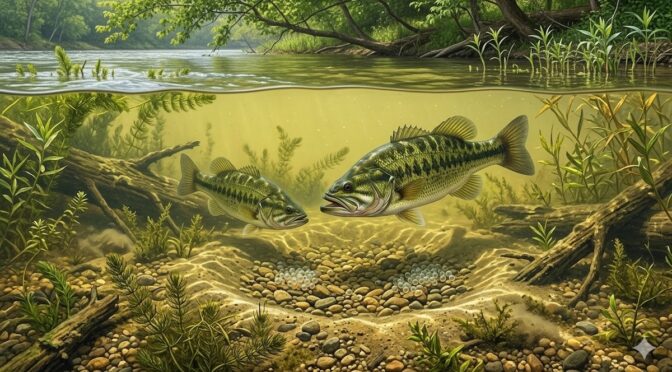
Spawn itself moves fish onto beds in protected coves and along firm sandy bottoms in two to four feet of water. Sight-fishing the bedded male with a creature bait, a tube, or a small jig is a regional summer ritual on Southern reservoirs. The strike is almost never a feeding take; the male is moving the lure away from the bed, and the hookset is on the lift. Catch-and-release bedding fish quickly and let them return to the bed.
Post-spawn and summer push bass through a productive recovery window before the heat consolidates. Topwater is at its peak in early morning and late evening from June through August. Midday summer fishing requires going deep with crankbaits along ledges, slow-rolling spinnerbaits down brush piles, or fishing soft plastics on a Carolina rig along main-lake points. Smallmouth in moving rocky water hold up better through heat than largemouth in stagnant ponds, because river current keeps dissolved oxygen high; if you understand how to fish in river for smallmouth, summer becomes a productive window rather than a slow one.
Fall is the second prime window after pre-spawn. Baitfish move into the shallow backs of creeks and bass follow them, feeding heavily to build winter reserves. Lipless crankbaits, spinnerbaits, and shad-pattern jerkbaits ripped through shallow flats outproduce most other categories during the fall baitfish migration. The window runs from the first cooling weeks of September into early November on most northern waters and later in the South.
Water clarity overlays this seasonal arc. In clear water, finesse presentations and natural colors win, because the fish has time to inspect the lure. In stained or muddy water, vibration and dark high-contrast profiles win, because the lateral line is doing the work the eyes cannot. Cloud cover and falling barometric pressure tend to draw bass out of cover and make them willing to chase faster moving lures; bluebird high-pressure days push them deeper and tighter to structure, which is why how barometric pressure affects fishing is a real diagnostic on big-lake bass water and not just a folk belief.
How to pick a lure on the water today
The decision logic compresses to four questions, asked in order, before tying anything on.
What is the water temperature? Below 50 degrees, slow finesse presentations win: jerkbaits with long pauses, soft plastics on a slow fall, jigs dragged slowly along structure. Between 50 and 60 degrees, the productive band widens: lipless crankbaits, slow-rolled spinnerbaits, Senkos. Between 60 and 75 degrees, the fish are aggressive and almost any category produces; topwater enters the rotation at the warm end of this band. Above 75 degrees in shallow water, fish go deep or into shade; deep crankbaits, Carolina rigs, and topwater at dawn and dusk become the working categories.
What is the water clarity? In clear water, downsize the profile, switch to natural colors, and slow the retrieve. In stained or muddy water, upsize, switch to dark high-contrast or chartreuse colors, and pick a category with strong vibration: chatterbait, spinnerbait, lipless crankbait, dark jig with a craw trailer. Bass in muddy water find the lure with their lateral line before they see it.
What does the cover look like? Open water with sparse structure favors moving baits that cover ground: crankbaits, swimbaits, spinnerbaits. Dense cover (lily pads, matted vegetation, brush piles, fallen timber) demands weedless or near-weedless lures: hollow-body frog, Texas-rigged soft plastic, weedless jig, weedless spinnerbait. Hard bottom with rock and gravel favors crayfish imitations: jig-and-craw, creature baits, football jigs. Smallmouth fisheries especially key on crayfish in rocky environments, and the spotted bass and largemouth species differences shift the productive lure mix; spots in deep clear lakes lean toward small swimbaits and finesse presentations more than largemouth do.
What is the light and pressure? Low light at dawn and dusk, overcast days, and falling barometric pressure favor topwater and shallow reaction baits. High sun, bluebird skies, and high pressure push fish deep and tight to cover; finesse soft plastics, deep crankbaits, and slow jigs become the working categories. Wind on a bank concentrates baitfish there and pulls bass in to feed; the windward shore is almost always more productive than the calm leeward one.
A working starter rotation for a single day on unfamiliar water is three rods: a baitcaster with a Texas-rigged Senko or creature bait for working cover slow, a baitcaster with a square-bill crankbait or chatterbait for covering water and locating active fish, and a spinning rod with a Ned Rig or finesse worm for following up missed strikes and for pressured fish. Whether you fish those categories on conventional tackle or on a fly rod depends mostly on what you already own and how you prefer to cast; the underlying predator-trigger logic is the same on a 7-weight fly setup as it is on a baitcaster versus spinning rig. What changes is the delivery mechanism, not what bass want.

Leonard Schoenberger is a fly fishing professional and gear specialist with over 20 years of experience on the water. As the manager of Heidarvatn, a world-class sea trout lodge in Iceland, his product recommendations and tactical advice are tested in some of the most demanding conditions on earth. His expertise has been mentioned in The New York Times, the Financial Times, and at the Outdoor Media Summit.