Last updated on September 30th, 2026.
Bass are an ambush-feeding warmwater predator, and how you catch them depends almost entirely on which species you mean, what water you are on, and whether you are throwing conventional tackle or a fly rod. Most anglers asking how to catch bass mean largemouth (Micropterus salmoides) in lakes and ponds, but smallmouth (M. dolomieu) in flowing rocky water are an entirely different fish to chase, and the fly-fishing approach to bass has overtaken much of the boat-bass-tournament gear conversation as anglers cross over from trout streams looking for a warmer-water summer fishery.
This page is written from the fly-fishing angle. The mechanics under the surface, where the fish hold, what they eat, what triggers them to strike, are identical whether you throw a soft plastic on a spinning rod or a deer-hair popper on a 7-weight. The presentation differs, and that is where this guide spends most of its time. If you have a 5-weight trout setup in the closet and a small pond within driving distance, you are about three pieces of gear and one cast away from a bass season that runs from spring through fall.
Where bass actually live and why it matters
Largemouth bass are structure-oriented ambush feeders that hold in cover and wait for prey to swim within range. The behavior is dictated by water temperature and oxygen, and those two variables explain almost everything about when and where you will find them. Largemouth feed actively in the 60 to 75 degree Fahrenheit range. Below 50 degrees their metabolism slows and they drop into deeper, more thermally stable water. Above 80 degrees the dissolved oxygen in shallow water drops and they retreat to shade, depth, or moving water.
In practice, this means the same pond fishes differently in May than it does in July. In spring, largemouth move shallow as the water warms past 60. The pre-spawn period is the most aggressive feeding window of the year, and a fly cast tight to a lily pad edge in three feet of water in late May will produce strikes that surprise anglers used to picky trout. Through summer, the productive window collapses to dawn and dusk, when surface temperatures drop and the fish move up to feed. Midday summer fishing requires going deeper or finding shade: docks, submerged timber, weed-bed edges where the canopy keeps the water cool. In fall, baitfish move into the shallow backs of creeks and coves, and bass follow them in. The fish key on whatever is most abundant and feed heavily before winter.
Smallmouth bass live in a different world. They prefer cooler water, often holding in the 55 to 70 degree band, and they favor flowing rocky environments: clear rivers with gravel and boulder structure, deep lakes with rocky points, current seams in tailwaters. They feed on crayfish, sculpins, and baitfish, and their take is markedly more aggressive than a largemouth’s at comparable size. A smallmouth in a current seam behaves more like a trout than a largemouth does, holding behind structure where the flow does the work of delivering prey, and a fly fisher who already understands reading water for trout will read smallmouth water almost intuitively.
Both species relate to structure and depth changes. Fallen trees, stumps, weedlines, lily pads, dock pilings, rip-rap shorelines, drop-offs, points that extend into deeper water, creek channel bends. These are the places to fish first. Open water away from structure rarely produces bass at the rate the same time spent on a cover edge will.
The fly-fishing gear class for bass
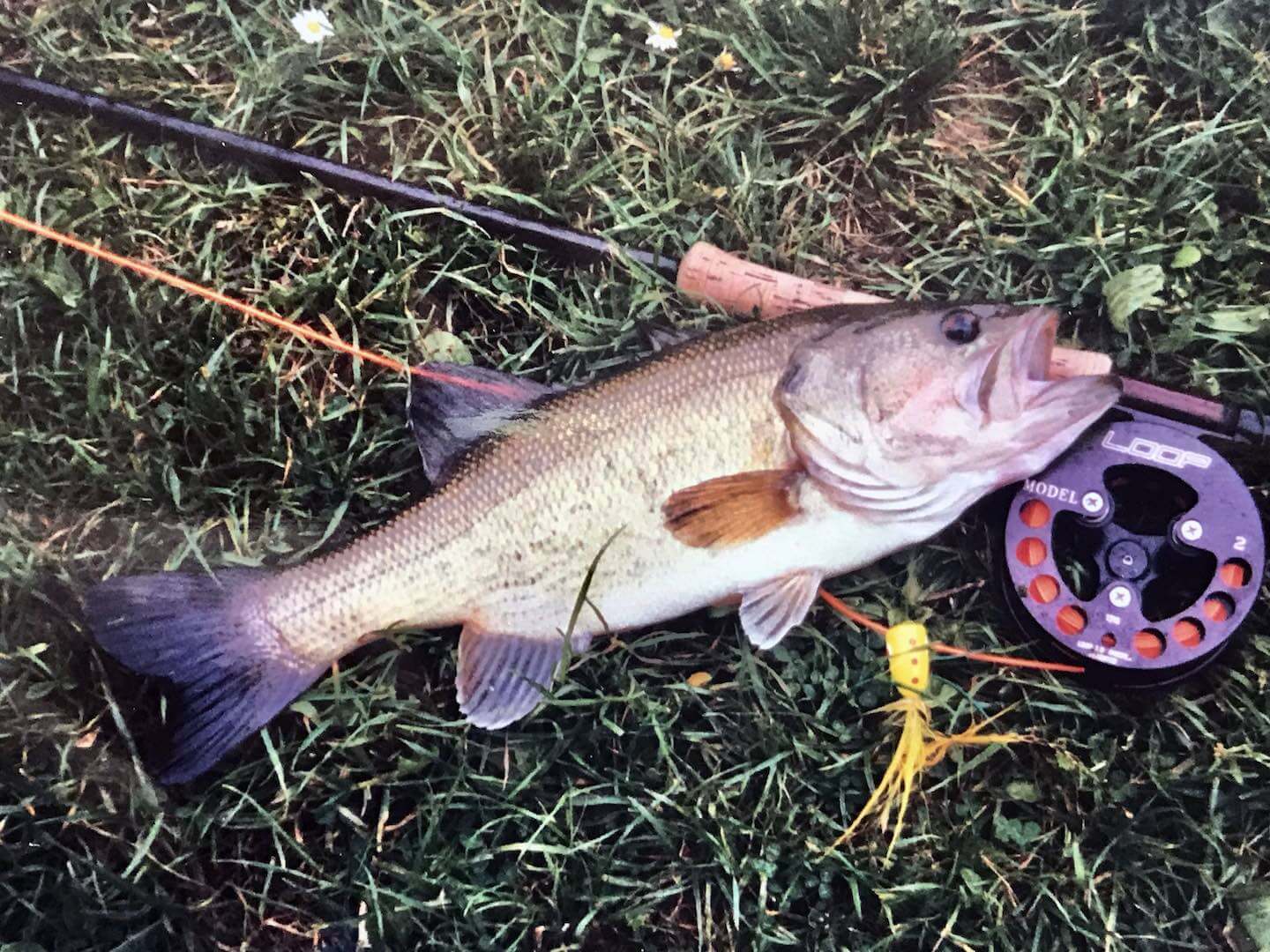
The fly rod weight class for bass is 7 to 9, the same range the AFFTA grain-weight chart assigns to heavy streamers and light saltwater work like bonefish. A 7-weight handles smaller largemouth and smallmouth on light bass fly rods and bass flies, a 9-weight pushes the largest deer-hair poppers and weighted streamers into wind for trophy fish in lily-pad-heavy cover. The 8-weight sits in the middle and is the most common single-rod answer for bass if you only want to own one. The reason the weight class jumps so far above trout gear is mechanical: bass flies are heavy. A 2/0 deer-hair popper or a weighted Clouser Minnow in size 1 has bulk and air resistance well beyond a trout dry fly, and a 5-weight rod cannot load against that mass without the cast falling apart.
Line choice is the second decision. A floating weight-forward bass-taper fly line is the default for surface and shallow subsurface work, designed with a short, heavy front taper to turn over wind-resistant deer-hair flies. An intermediate (slow sink) line is useful for fishing weighted flies just under the surface around weed edges. A full-sink line earns its place for deep summer fishing when bass drop to 8 to 15 feet of water during the heat of the day. Most bass fly fishers run a floating line as their primary and add an intermediate or a sink-tip on a second spool or a second rod when conditions demand it.
Leaders for bass are shorter and heavier than trout leaders. A 7.5-foot leader tapered to 0X or 1X (roughly 12 to 15 pound test in nylon) handles the bulk of largemouth work. Smallmouth in clear water sometimes warrants 2X or 3X to keep the leader from spooking fish in low-pressure conditions, but the rule is to fish heavier than you would for trout. Bass are not leader-shy in the way a tailwater trout is. They are leader-shy enough that fluorocarbon is worth it for the refractive-index advantage, but the diameter step matters far less than the strength margin when you set the hook in a fish that immediately bolts into a stump.
Tippet selection follows the same logic. Fluorocarbon for subsurface flies where invisibility under the water matters and the sink rate is a feature. Nylon monofilament for floating poppers, where you want the tippet to float along with the fly rather than dragging the popper’s head down. The improved clinch knot holds about 85 percent of rated breaking strength in nylon and is the default terminal connection. For heavy weighted streamers and saltwater-strength applications, the Palomar holds 95 percent and seats more reliably in slick fluorocarbon.
Fly selection and what the bass actually eat
Bass diet is broad. Adult largemouth eat baitfish, frogs, mice, crayfish, large insects, smaller fish of any kind they can fit in their mouth, and occasionally birds and snakes. Smallmouth lean more heavily on crayfish and baitfish, with sculpins being a primary food source in rocky rivers. This dietary range translates to a bass fly box that runs from surface poppers down through diving baitfish patterns to deep crayfish imitations.
Surface poppers are the iconic bass fly and earn their reputation. A deer-hair or hard-foam popper, fished on a floating line with a strip-pause retrieve, triggers some of the most violent surface strikes in freshwater fishing. The mechanism is the popper’s concave face throwing water on the strip, which both makes noise and creates a wake that mimics a struggling baitfish or frog. Fish the popper in low-light conditions, around weed edges, lily pads, and shallow cover. The pause between strips is where the strike usually comes; the bass closes on the disturbance during the pop and inhales the fly while it sits still.
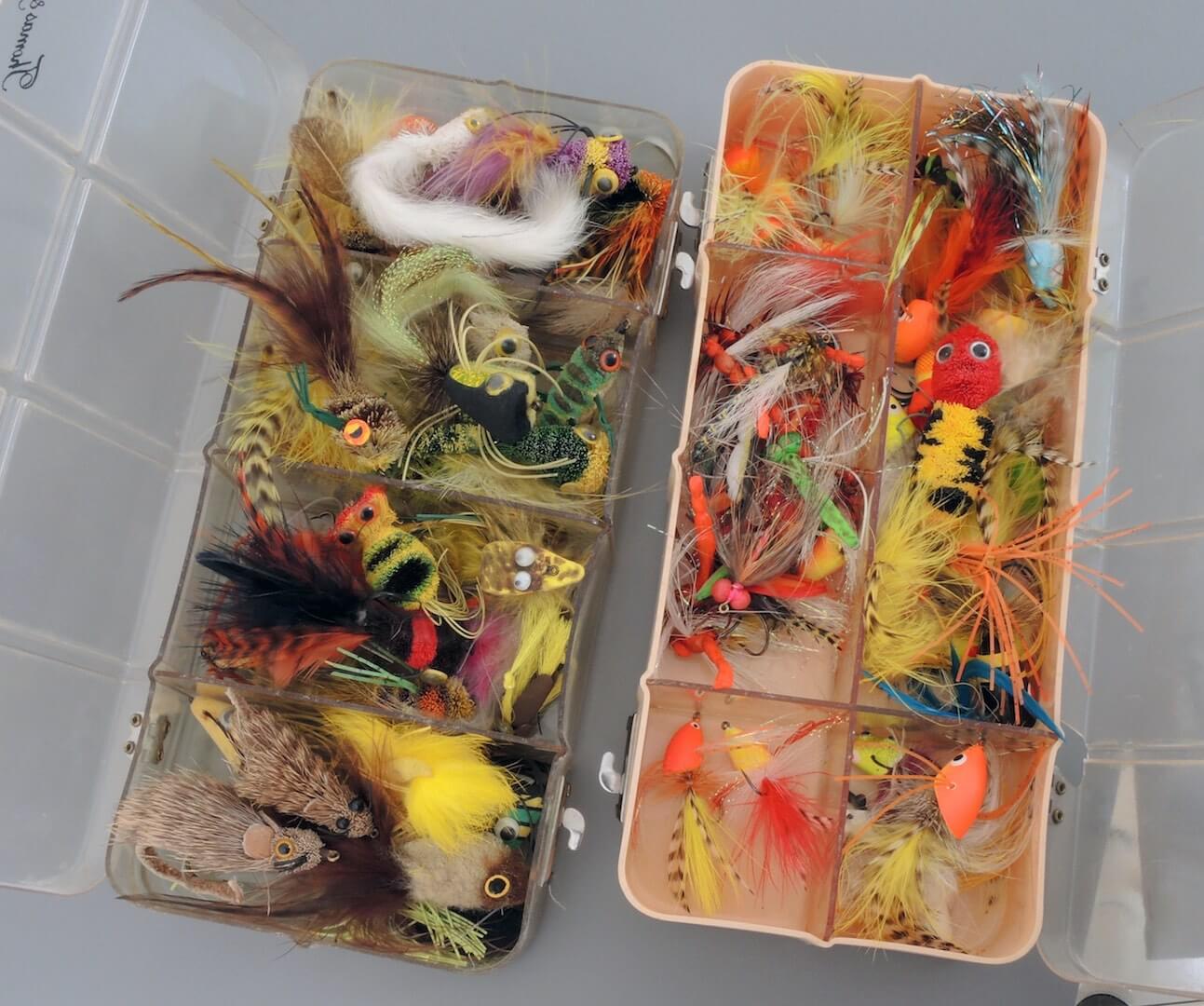
Subsurface streamers cover the rest of the column. The Clouser Deep Minnow, tied with lead or tungsten eyes, sinks fast and jigs on the strip, imitating a wounded baitfish. The Woolly Bugger, in olive or black, works as a generic baitfish-or-leech imitation. The Murdich Minnow and the Game Changer are larger profile baitfish flies that move water and trigger reaction strikes from larger fish. Crayfish patterns, weighted and fished bottom-bouncing in smallmouth water, account for some of the largest smallmouth landed each year on the fly.
Divers and frog patterns sit between the popper and the streamer in the retrieve dynamic. A Dahlberg Diver has a deer-hair head that pushes water on the strip but dives under the surface during the pause, then floats back up. The retrieve creates a swimming-then-stalling motion that triggers strikes from fish that follow a popper without committing. Frog patterns fished across lily pads imitate the prey item that largemouth bass key on more than any other in heavy cover.
The retrieve cadence matters as much as the fly. Bass strike at irregular motion. A steady strip is less effective than a strip-strip-pause, or a long strip followed by two short ones, or a strip and a hard rod-tip twitch. The fly behaves like wounded prey when the retrieve is uneven, and that is what triggers the predatory strike. This is the opposite logic from trout dry-fly fishing, where a dead-drift with zero drag is the goal. Bass want movement.
Seasonal patterns and reading the water
Spring pre-spawn is the most productive bass window of the year. Water warming through the high 50s into the mid 60s pushes fish shallow. They feed heavily to prepare for the spawn, and they hit aggressively. Fish weedlines, shallow flats with structure, the back ends of coves, anywhere a fish can find cover in three to six feet of water that has warmed. A floating line with a streamer or a popper on a short leader covers most of this water effectively.
Summer demands a split approach. Dawn and dusk, fish the surface aggressively. Poppers, divers, frogs on the pads. The hour after sunrise is often the single most productive window of the day in July and August. Midday, the fish are deep or in shade. Drop to a sink-tip or full-sink line and fish weighted streamers along drop-offs, off the ends of points, or down the shaded sides of docks. Smallmouth in moving rocky water hold up better through summer heat than largemouth because the current keeps oxygen high; a river smallmouth fishery often peaks in the 70-degree water that has largemouth dropping deep.
Fall is the second prime window after pre-spawn. Baitfish move into the shallow backs of creeks and bass follow them, feeding heavily to build winter reserves. The take is aggressive and the fish are often in numbers. Streamers that imitate the locally dominant baitfish (shad, alewife, shiner) outproduce attractor patterns in fall. The window runs roughly from the first cooling weeks of September until water temperatures drop through the high 50s, at which point the bite slows toward winter dormancy.
Winter bass fishing on the fly is possible but specialized. Fish are deep, lethargic, and feeding sparingly. The fly must be in the strike zone for a long time, the retrieve must be slow, and the angler must be patient. Most fly fishers shift to other species over winter and pick bass back up in spring.
How to choose your approach on the day
The decision tree at the water is shorter than the gear menu suggests. Start with the species and the water type. Largemouth in a still-water lake or pond fishes differently from smallmouth in a flowing rocky river. If you are throwing at largemouth in cover, the default rig is an 8-weight, floating line, 7.5-foot 1X leader, and a popper or a weedless streamer. Cast tight to structure, let the fly sit, retrieve with irregular pauses, set hard when the fish takes.
If you are on smallmouth in moving water, the default shifts toward subsurface. An 8-weight is still the right call, but the floating line gives way more often to an intermediate or a sink-tip, the leader stays a similar length, and the fly is a Clouser, a crayfish pattern, or a sculpin imitation. Read the river the same way you would for trout: current seams, behind boulders, the slow water alongside the fast water. Smallmouth hold in the same ambush positions a brown trout would.
Then read the day. Bright sun and high pressure push fish deeper and tighter to cover. Overcast and falling pressure draw them out and make them more willing to chase a surface fly. Wind on a bank concentrates baitfish there and brings bass in to feed; fish the windward shore on a windy day, not the calm leeward one. Low light at dawn and dusk is when topwater is most likely to produce. Hot midday in summer is when sinking lines earn their place.
The single most common error new bass fly fishers make is fishing too far from structure. Bass live in cover. A fly that lands a foot from a stump produces; a fly that lands six feet from the same stump rarely does. Cast close enough that you occasionally hang up in the cover. If you are not occasionally losing flies to structure, you are not fishing close enough to where the fish actually hold.
The second most common error is retrieving too steadily. The strip-pause cadence is not optional. The pause is where the strike comes. New bass fly fishers who switch over from trout streamer fishing often default to a continuous strip; slowing down and adding pauses is the single biggest improvement most of them make in their first season.

Leonard Schoenberger is a fly fishing professional and gear specialist with over 20 years of experience on the water. As the manager of Heidarvatn, a world-class sea trout lodge in Iceland, his product recommendations and tactical advice are tested in some of the most demanding conditions on earth. His expertise has been mentioned in The New York Times, the Financial Times, and at the Outdoor Media Summit.