Last updated on May 26th, 2026.
Fish respond more to the rate at which barometric pressure is changing than to the absolute number on the gauge, and the response runs through two linked mechanisms: the physical behavior of the gas in their swim bladder, and the weather system that the pressure change is announcing. The barometer is a leading indicator. A falling reading is telling you a front is on the way, low cloud cover is moving in, light penetration into the water is dropping, wind is about to push baitfish against a shoreline, and prey activity is about to spike. The fish feel the pressure itself faintly, but they read the weather it predicts very well.
The folk wisdom around specific inches-of-mercury thresholds (the “sweet spot between 29.8 and 30.2 inHg” you see repeated across fishing sites) is less rigorous than the writers using it suggest. What is well established is the direction-of-change effect. Prefrontal feeding pushes, post-front slowdowns, and the productive overcast-with-light-rain window are real, observable, and consistent across species. Specific pressure numbers are mostly post-hoc framing wrapped around those weather patterns. Read the trend and the sky, not the decimal.
This page walks the physics first, then the practical bite windows, then the species-specific behavior, and finally the on-water decisions you actually have to make when the barometer starts moving.
The swim bladder mechanism
Most freshwater game fish (bass, trout, panfish, walleye, pike) use a gas-filled swim bladder to maintain neutral buoyancy at depth. The bladder is a balloon of gas suspended inside the body cavity, regulated by either a vascularized gas gland (in physoclistous species like bass and perch) or by a duct that vents to the gut (in physostomous species like trout and salmon). At any given depth, the fish equilibrates the gas volume in its bladder against the water pressure pushing in from outside, so it can hold position without finning. That equilibrium is what makes the fish neutrally buoyant.
Pressure is the variable that breaks the equilibrium. When atmospheric pressure drops, the total pressure pressing on the bladder drops with it, and the gas inside the bladder expands (this is Boyle’s law: at constant temperature, gas volume rises as pressure falls). The fish becomes slightly positively buoyant and has to either expend gas to recompress, or move deeper, where the higher water pressure squeezes the bladder back to neutral. A bass in three feet of water during a sharp pressure drop has a much larger relative volume change to deal with than a bass in twenty feet, because the absolute pressure shift is a larger percentage of the total pressure at shallow depths.
The magnitude of the effect is smaller than most fishing writing implies. A 0.3 inHg drop (a moderately strong front) is roughly a 1 percent change in absolute pressure. The fish’s bladder volume changes by about 1 percent, and the corresponding depth adjustment to recompress is on the order of inches, not feet. That is not enough to push a fish across a lake. What it is enough to do is create a brief period of discomfort and recalibration, during which the fish either feeds aggressively (the prefrontal push) or holds tight in cover until equilibrium returns (the post-front slump).
The species without a functional gas-filled swim bladder respond very differently. Sharks, rays, and most flatfish have no swim bladder at all and are largely indifferent to atmospheric pressure changes. Tarpon, which use their swim bladder as a pseudo-lung that breathes air at the surface, are also relatively insensitive to pressure because they can re-equilibrate by rolling and gulping. The pressure-sensitive species are the closed-bladder freshwater predators that anglers most often target.
What each pressure scenario means for feeding
The four pressure regimes are not equally important. The two that produce a meaningful behavioral signal are falling pressure ahead of a front and the slumping low after the front has passed. The other two (stable readings and rising readings) describe what happens between those events.
Falling pressure is the prefrontal window and the single most productive pressure-driven fishing condition. As a storm system approaches, pressure drops, cloud cover thickens, light penetration into the water decreases, and wind begins to push baitfish toward shorelines. Predator fish key on all of this. Reduced light extends the low-light feeding window that bass and trout naturally exploit at dawn and dusk; cloud cover and wind disturb the surface and reduce visual exposure, which encourages cover-oriented predators to move into shallower water; baitfish concentrate, and so the predators concentrate where the bait is. The feeding push is real and well documented. Plan to be on the water in the hours before a thunderstorm arrives, not after it has passed.
Low and stable, especially after a front has stalled, is the slump. The pressure has bottomed out, the fish have adjusted their depth, and the urgency of the prefrontal push has passed. Cold water often accompanies the system, baitfish have dispersed, and the feeding window narrows to short, location-specific bursts. The classic post-front bluebird-sky day with sharp blue light and no clouds is one of the hardest conditions to fish. Light penetration is high, fish push tighter to cover, and the prefrontal urgency is gone.
Rising pressure is the recovery phase. The system has moved through, the barometer is climbing back to seasonal normal, and the fish are re-equilibrating. Bite quality typically improves over one to two days as conditions stabilize. The first day after a major front is usually slower than the second. By the time pressure has been rising steadily for 36 to 48 hours, fish have re-established their normal feeding routines and the bite returns to the seasonal baseline.
Stable pressure is the baseline state. Whatever the fish were doing before the weather event, they will return to. This is when normal seasonal patterns govern: water temperature, dissolved oxygen, time of day, lunar phase, bait abundance. The pressure is not driving anything, so look elsewhere for the variable that explains the bite.
Species-specific responses
Bass are the species most consistently described as pressure-sensitive in angling literature, and the behavior tracks closely with what their biology predicts. Largemouth bass live shallow in cover, where the relative pressure-change effect on their swim bladder is largest. They respond strongly to falling pressure with a prefrontal feeding push, often crashing surface prey aggressively in the hours before a storm. After the front passes, they hold tight to cover and become difficult to draw out, which is why the lure adjustments described in how to catch bass shift toward slow, vertical, in-the-strike-zone presentations on post-front days. Spawning largemouth are the partial exception. During the spawn, fish on beds are anchored to a specific location for reproductive reasons that override pressure-driven movement. The bass spawn interacts with pressure mostly through what bait they will hit, not where they hold.
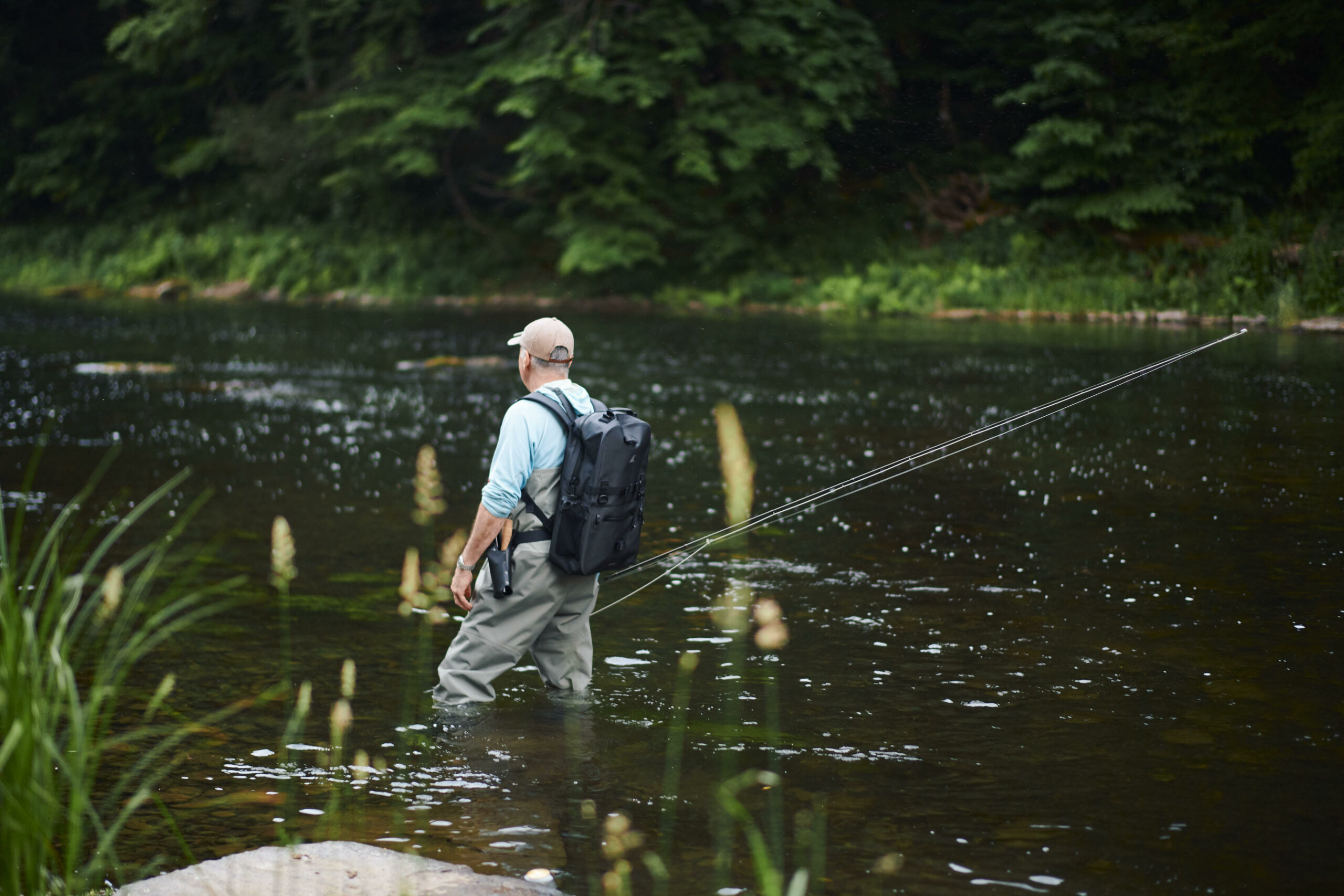
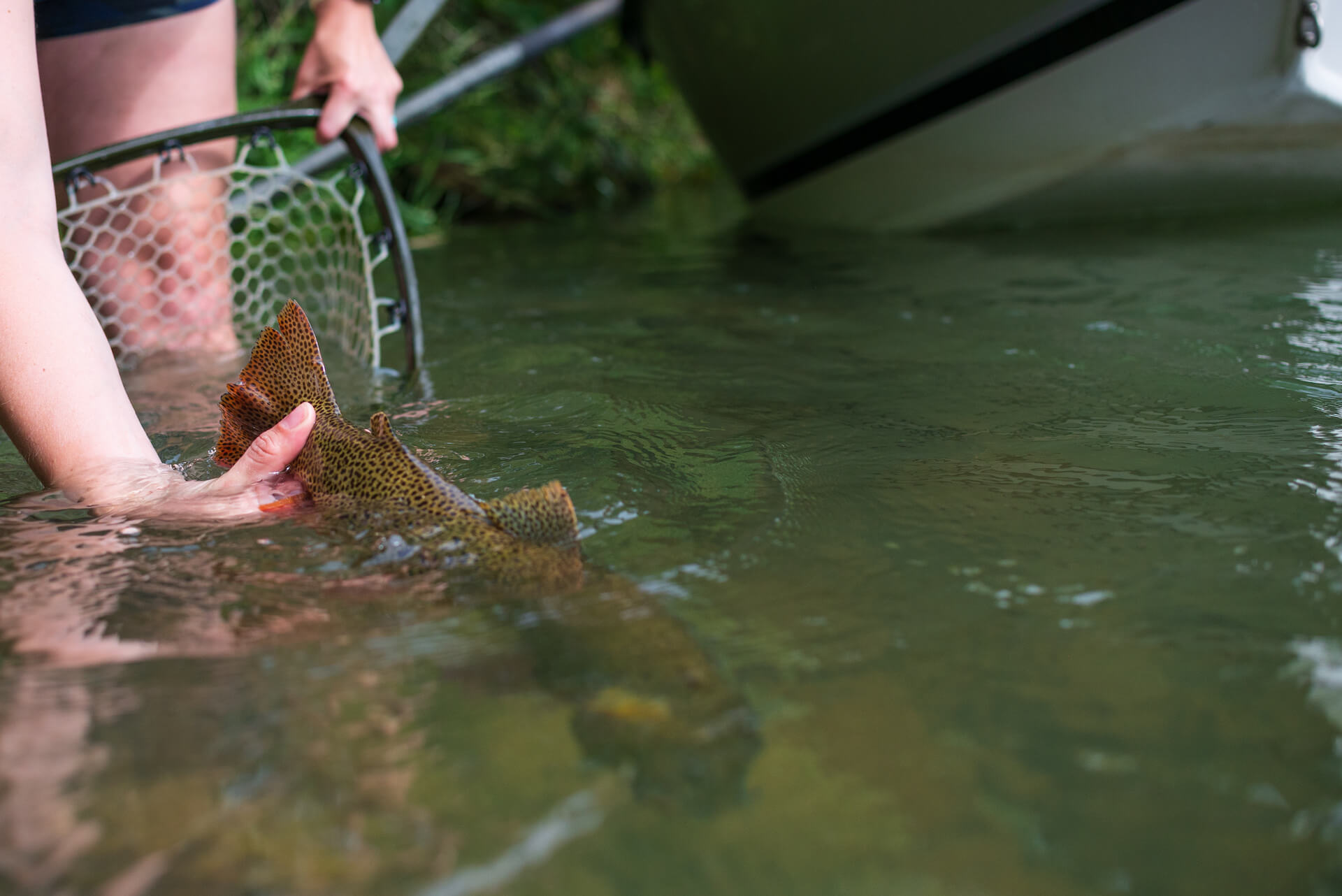
Trout responses to pressure are more variable than bass responses, and the literature is less consistent. The leading hypothesis is that the cloud-cover and low-light correlates of falling pressure matter more to trout than the pressure change itself. Trout are sight feeders with excellent low-light vision, and overcast pre-front conditions extend their feeding window in exactly the way dawn and dusk do. A river trout in moving water lives in a more thermally and atmospherically stable environment than a lake bass, and the moving water buffers some of the pressure-driven behavioral signal. River-dwelling trout in the river-fishing context feed on a much steadier rhythm than lake fish do.
Panfish (bluegill, crappie, perch) sit somewhere between bass and trout. They are physoclistous like bass, so the swim-bladder mechanism applies, but they live in tighter schools at consistent depths and respond more to light and temperature than to pressure shifts. Walleye are an exception, often turning on aggressively in the low-light, low-pressure window that produces less reliable activity in other species.
Saltwater species respond to pressure differently because the water column is deeper and the relative pressure change is smaller as a percentage of total ambient pressure. Inshore species like redfish, sea trout, and striped bass show some prefrontal feeding push, but the effect is muted compared to bass on a shallow lake. Offshore pelagic species are largely indifferent to atmospheric pressure changes at the depths they live in. Tarpon, bonefish, and permit on tropical flats respond more to tide, wind, and water clarity than to the barometer.
Decision logic when the barometer reads X
The practical question is what you do with this information when you actually have a morning to fish. The decision tree is shorter than the gear menu suggests, and it starts with the trend, not the number.
Falling pressure, hours before a front. Be on the water. Fish aggressively. Cover water with searching presentations: a topwater popper on bass water, a streamer through trout runs, a swim-jig along weed edges. The fish are looking up and out, the feeding window is extended by the low light, and bait is concentrating. This is the day to fish big flies, fast retrieves, and large lures. The lure adjustments for bass on this pattern push toward reaction baits and surface presentations rather than finesse.
Low pressure that has stalled, post-front. Slow down. Drop your presentations into the strike zone and hold them there. Drop-shot rigs, slow-rolled streamers, weighted nymphs fished tight to the bottom, jigs worked vertically on the same spot for multiple casts. Move less, fish more carefully, and target specific cover. The fish are there; they just are not chasing. Expect fewer strikes per hour and longer pauses between them.
Rising pressure on the first day after a front. Difficult. The bite is recovering but not back. Fish low-light windows hard (the first hour after sunrise, the last hour before sunset) and accept that midday will likely be slow. Find shaded structure, current breaks, the deepest cover available, and work it carefully.
Stable pressure. Ignore the barometer and focus on the variables that actually govern the day: water temperature, light, time, seasonal bait patterns, location. The pressure is not driving anything, so let the seasonal rhythm tell you what to throw.
Two practical caveats. First, moving water is less pressure-sensitive than still water. A river trout fishery or a smallmouth river will fish more consistently across pressure regimes than a largemouth lake will, because the current keeps oxygen high, the fish are positioned by flow rather than by depth-equilibrium, and the prefrontal-bait-concentration effect is dampened. The decision logic above applies most strongly to lake and pond fishing.
Second, the barometer is one input among many. Wind direction, cloud cover, water temperature, recent precipitation, time of day, and seasonal pattern all matter more on most days than the absolute pressure reading. If the trend is stable and the other variables are good, fish. If the trend is stable and the other variables are bad, stay home. The barometer earns its place as a decision input when it is moving sharply, in either direction, in the hours around a weather front. The rest of the time, watch the sky and the water, not the gauge.

Leonard Schoenberger is a fly fishing professional and gear specialist with over 20 years of experience on the water. As the manager of Heidarvatn, a world-class sea trout lodge in Iceland, his product recommendations and tactical advice are tested in some of the most demanding conditions on earth. His expertise has been mentioned in The New York Times, the Financial Times, and at the Outdoor Media Summit.