Last updated on September 30th, 2026.
Trout are cold-water salmonids, and how you catch them depends on which species you are after, the kind of water that species lives in, and whether you are presenting an imitation of what they are actually eating. The “trout” word covers five fish that most North American anglers chase: brown trout (Salmo trutta), rainbow trout (Oncorhynchus mykiss), brook trout (Salvelinus fontinalis), Arctic char (Salvelinus alpinus), and cutthroat trout (Oncorhynchus clarkii). The first two are true trout, the next two are char, and the fifth is a Pacific salmon-line trout. The biology of each one dictates where it lives, what temperature range it can tolerate, what it feeds on through the season, and how it responds to a fly.
This page is written from the fly-fishing angle. The mechanics are the same whether you are a bait fisher on a stocked pond or a Euro-nympher on a tailwater, but the precision of fly presentation is what turns “how to catch trout” from a luck question into a craft question. The single most important variable in catching trout consistently is matching the food the fish are actually eating, presented at the depth they are eating it, with no drag in the drift. Everything below is mechanism toward that outcome.
The five trout species and where each one lives
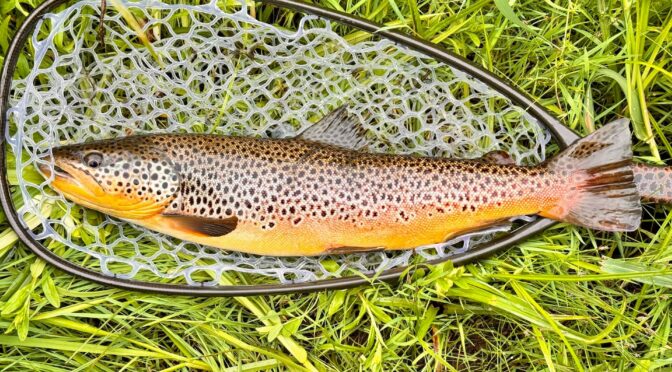
Brown trout (Salmo trutta) are native to Europe, West Asia, and North Africa, and were introduced to the United States in 1883. They express three main ecotypes: riverine, lake-dwelling, and sea-run. Brown trout tolerate warmer water than the native North American chars, holding up to around 65°F (18°C) before serious thermal stress. As browns grow past about 14 inches their diet shifts heavily toward eating other fish, which is why streamers become the dominant approach for large browns. They feed most actively at low light. A 4-pound brown in a tailwater at noon and the same fish at dusk are functionally different animals.
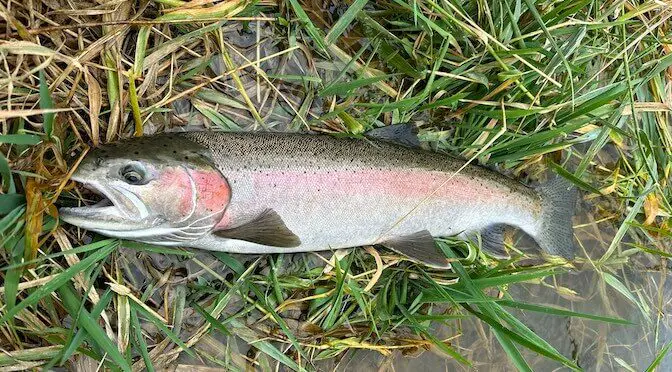
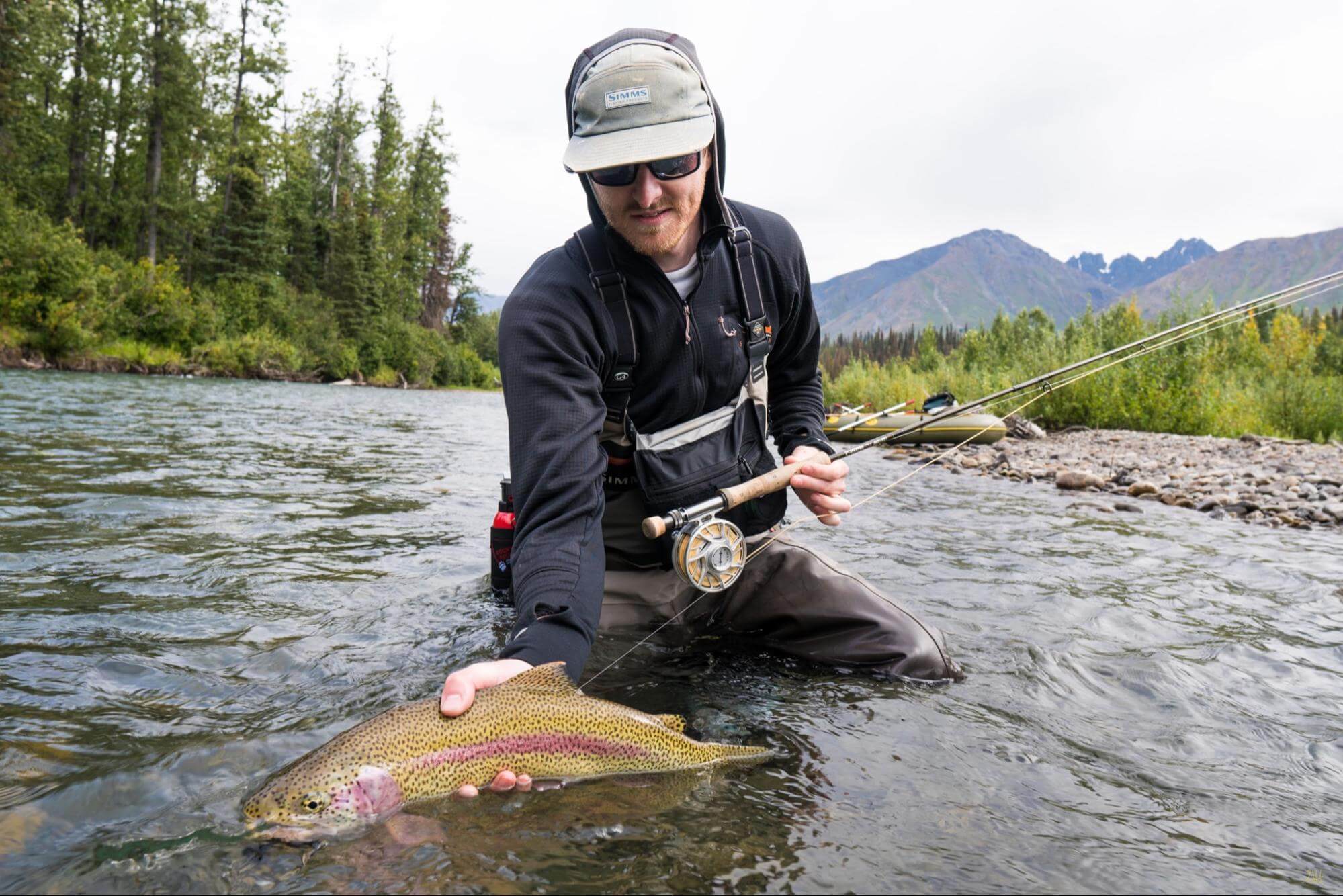
Rainbow trout (Oncorhynchus mykiss) are native to cold-water tributaries of the Pacific Ocean in North America and Asia. Unlike fall-spawning browns and brooks, rainbows spawn in spring. The sea-run form is the steelhead, which leaves freshwater for one to four years in the ocean and returns as a chrome-silver fish two to three times the mass of the resident form. Stream-resident rainbows are the most commonly stocked trout in North America and the fish most anglers learn on. They tolerate slightly warmer water than brook trout but less than browns, with the productive feeding window in roughly the 50 to 65°F band.
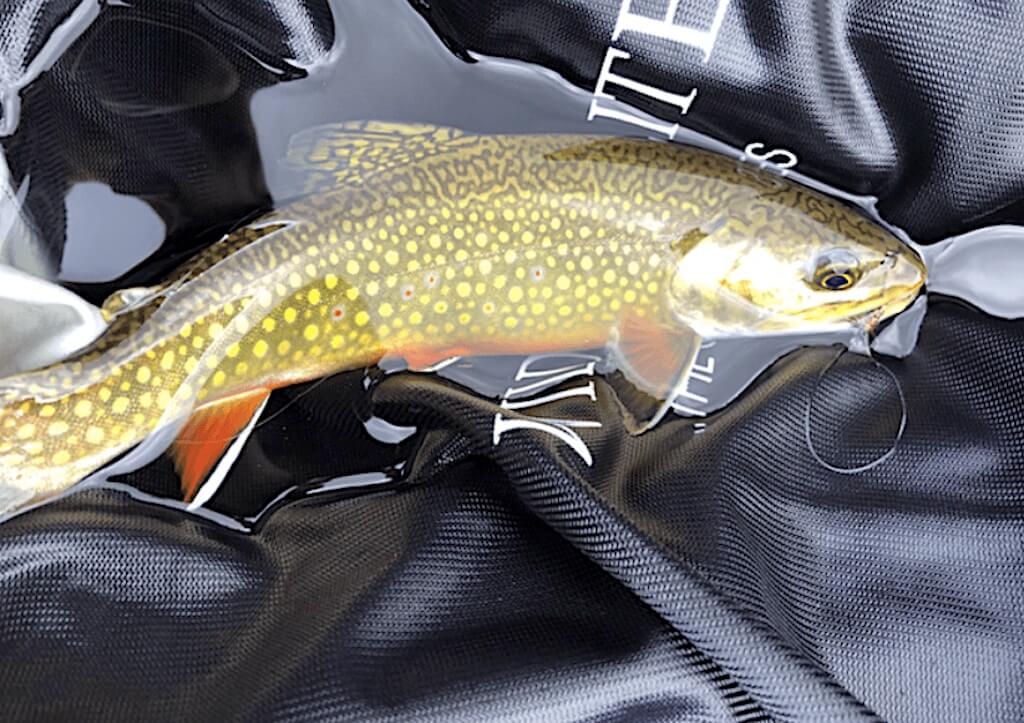
Brook trout (Salvelinus fontinalis) are not technically trout but char, native to Eastern North America. They are identified by light spots on a dark background, red spots with blue halos, and white leading edges on the lower fins. Brook trout require the cleanest, coldest, most oxygenated water of any common salmonid. They are highly sensitive to habitat degradation and acid rain, which is why finding wild brook trout in headwater streams is often the indicator that the water itself is in good shape. Most wild brook trout stay small, eight to twelve inches in much of their range, though the lake-dwelling “coasters” of Lake Superior and the sea-run “salters” of the Northeast coast push well past that.
Arctic char (Salvelinus alpinus) live in the coldest water of any salmonid, from sub-arctic lakes in Iceland, Scandinavia, Canada, and Alaska through cold mountain lakes at lower latitudes where they survived the last glaciation. Char prefer water in the high 30s to mid 50s. In my Heidarvatn rotation in Southern Iceland, the lake holds Arctic char alongside sea-run brown trout in the same water, and both feed in roughly the same band on a stillwater chironomid hatch in early summer. Char in shallow flowing water hit harder than their size suggests.
Cutthroat trout (Oncorhynchus clarkii) are native to western North America, recognized by the red or orange slash marks under the lower jaw. The species splits into four clades: Coastal, Westslope, Lahontan, and Rocky Mountain. Cutthroats hybridize easily with introduced rainbows, producing fertile “cutbows” that have diluted native strains across much of the Rocky Mountain West. The Coastal cutthroat is the only subspecies with a semi-anadromous life history, moving into estuaries to feed but staying much closer to natal streams than steelhead.
The fly-fishing gear class for trout
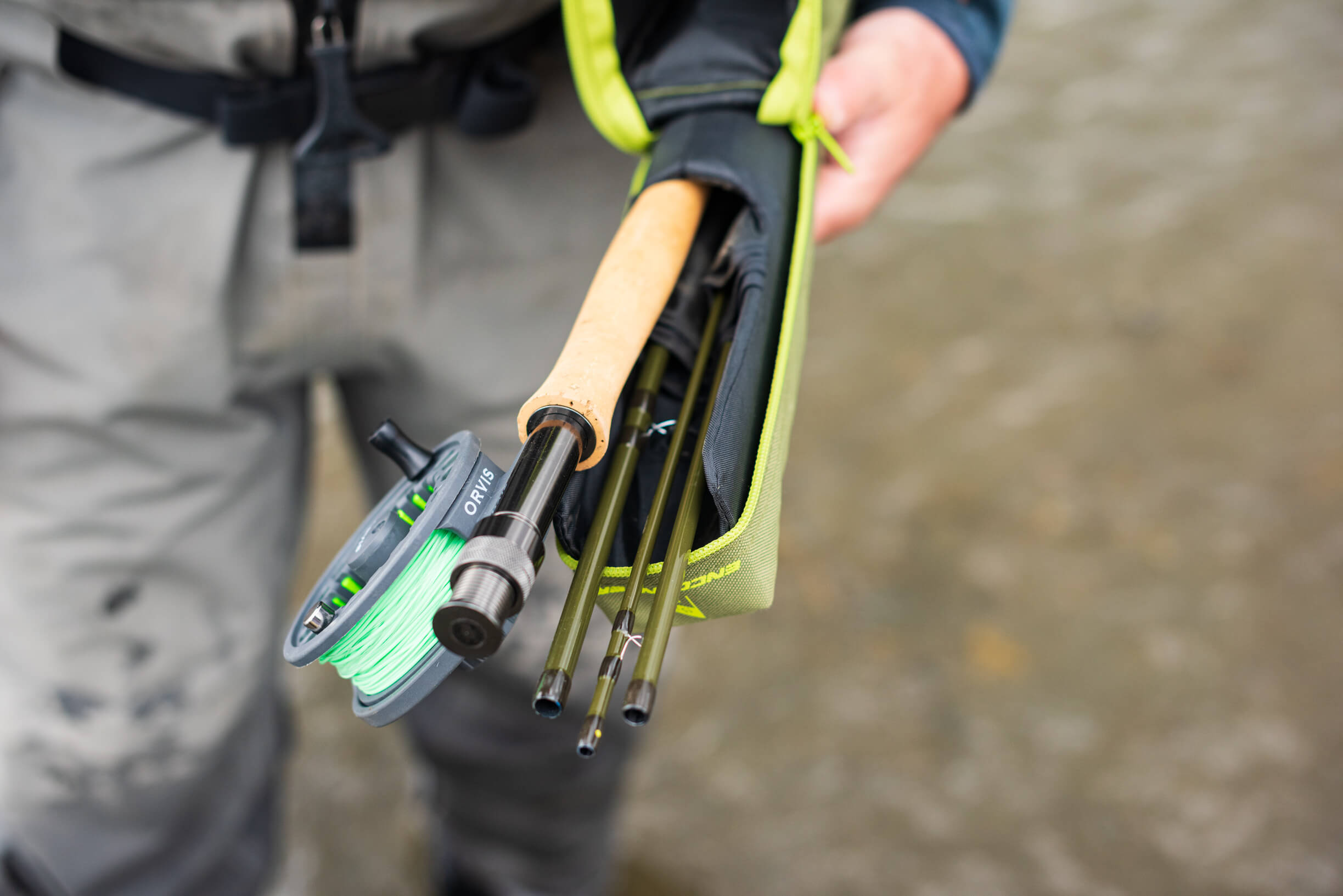
The single answer to “what gear catches trout” is a 9-foot 5-weight fly rod. That setup covers about 80 percent of the trout fishing most anglers will ever do. It loads at standard casting distances (20 to 50 feet), handles a 9-foot 4X leader and a size 14 dry or moderately weighted nymph, and has the backbone to land a 16-inch fish without breaking light tippet. If you own one trout fly rod, this is it. Mid-priced 5-weights from Orvis, Sage, Echo, and Redington all cast better than the high-end gear of fifteen years ago.
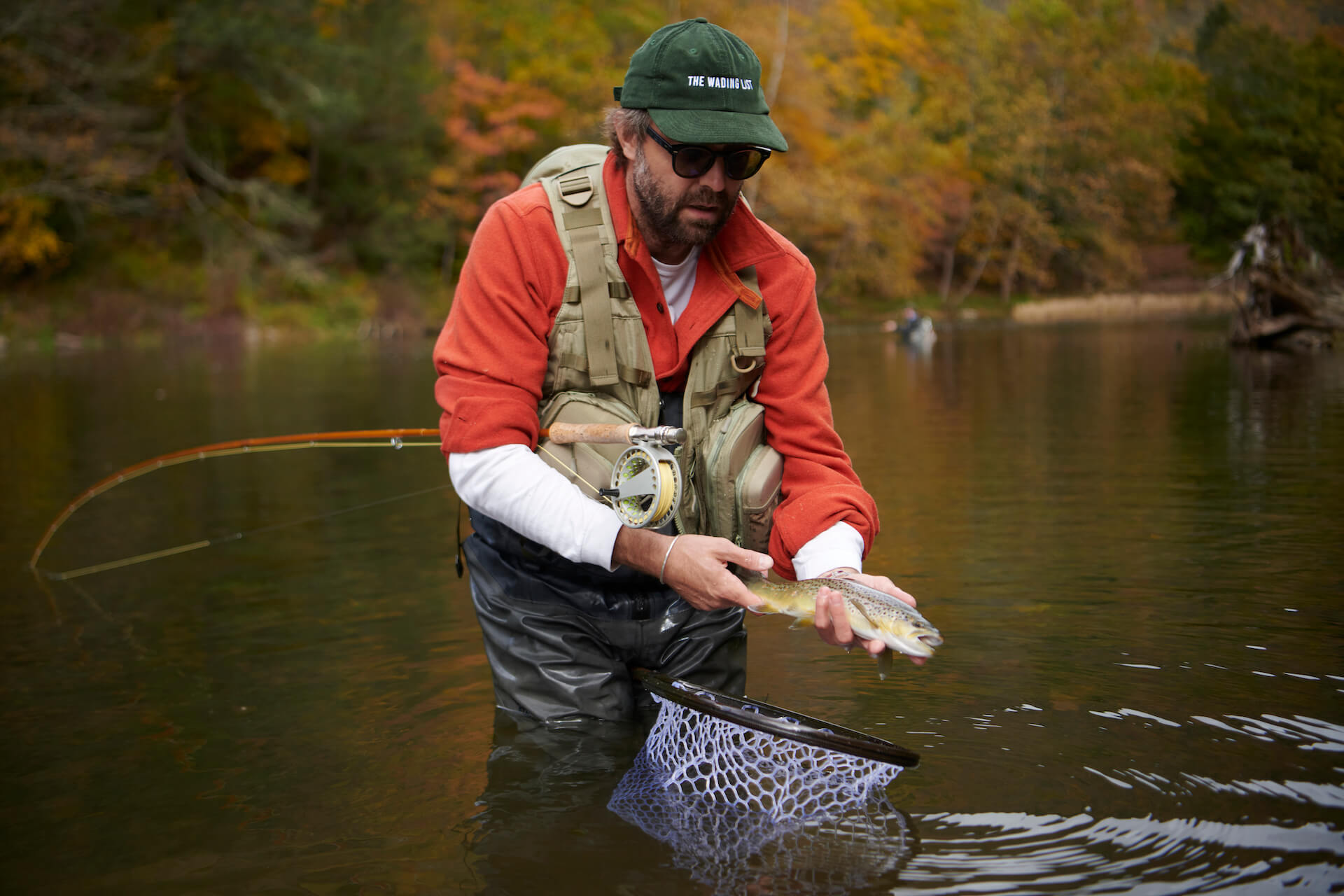
Step down from there for delicate work on small streams. A 3-weight or 4-weight in 7.5 to 8.5 feet is the right call for brook trout creeks, spring creeks with selective fish on tiny dries, and any water where the cast is under 25 feet and the fly is small. The lighter line lands softer, the shorter rod fits under tree canopies, and the slower action protects the 6X or 7X tippet you need to fool a wary fish in clear shallow water.
Step up from the 5-weight for streamers, big-water nymphing, and large fish. A 6-weight or 7-weight in 9 to 10 feet handles weighted streamers for browns, articulated patterns for steelhead, big nymph rigs in heavy water, and the wind that comes with bigger rivers. A 7-weight is also the default for sea-run brown trout and Arctic char in stillwater, where you are casting heavier flies on intermediate or sink-tip lines and fighting fish that pull harder than their resident-trout cousins.
The leader is more important than most beginners realize. A 9-foot tapered leader is the trout default, with the X-rating chosen to match fly size: divide the hook size by three to get the tippet X. A size 12 fly takes 4X, a size 18 takes 6X, a size 22 midge takes 7X. The taper transfers energy from the fly line down to the fly so that the fly turns over and lands straight rather than piling up in a tangle. Fluorocarbon tippet sinks faster and is significantly less visible underwater than nylon monofilament, which matters for nymphs and streamers but not for dry flies (where you want the tippet to float along with the fly).
Reels for trout are a storage device most days. Click-and-pawl drags work fine for resident trout. Sealed drag fly reels matter when you chase larger sea-run fish or saltwater, where sand and salt destroy unsealed mechanisms. Large-arbor designs retrieve line faster, which matters when a fish runs toward you and you need to catch up.
What trout eat and how to match the hatch
Trout in moving water eat aquatic insects for most of their caloric intake, with the dietary share shifting toward small fish as the trout grows past about a foot. The four major insect orders are mayflies (Ephemeroptera), caddisflies (Trichoptera), midges (Diptera), and stoneflies (Plecoptera). Each one has a life cycle that progresses from nymph or larva to emerger to adult, and trout key on the most vulnerable stage of whichever insect is currently abundant.
A Pale Morning Dun (PMD) hatch is a mid-morning summer event on many Western rivers, with size 16 to 18 pale yellow mayfly duns coming off in steady numbers from late June through August. Blue-Winged Olives (BWO) hatch on cool overcast drizzly afternoons, often in shoulder seasons (April through June, then September through November), in sizes 18 to 22. Tricorythodes (Tricos) provide a prolific tiny mid-morning hatch from July through October in size 20 to 24, often with spinners falling in mating swarms within an hour of emergence. The Hexagenia limbata (Hex) is a massive size 4 to 8 mayfly that hatches in fading light from late June through July on slow rivers and lakes in the Midwest and parts of the Northeast.
March Browns (Rhithrogena and Maccaffertium) are an early-spring size 12 mayfly that triggers some of the first major dry-fly fishing of the year. Caddisflies hatch throughout the season, with the Mother’s Day caddis on Western rivers producing visible adult activity in early May. Stoneflies, including the famous Salmonfly (Pteronarcys californica) on rivers like the Madison and the Big Hole, are size 4 to 6 hatches that turn large trout aggressive in early summer. Midges hatch year-round, including through winter, and become the dominant insect in cold months when other orders are dormant.
Trout reveal which stage they are eating through the shape of the rise. A porpoising rise, where the fish shows its dorsal fin and back but not its mouth, is a fish taking emergers just below the surface film. A splashy aggressive take usually indicates an adult caddis skittering on the water. A gentle barely visible sip means the trout is eating spent spinners trapped in the film. A head-and-tail rise indicates a fish feeding on nymphs in the middle of the water column. Identifying the rise form tells you whether to fish a dry, an emerger, a soft-hackle, or a nymph.
When no hatch is on, nymphs do the work. The Pheasant Tail in size 16 to 18 covers most mayfly nymphs. The Hare’s Ear in 14 to 16 is the general impressionistic nymph that catches fish everywhere. The Copper John adds weight and flash for getting deep fast. The Zebra Midge in 18 to 22 is the cold-water and tailwater workhorse. Two-fly nymph rigs (an attractor up top, a small mayfly or midge as the dropper) cover the most water efficiently.
Reading the water and getting a drag-free drift
Trout hold where caloric intake exceeds caloric expenditure. The fish wants to spend as little energy as possible while sitting where the maximum number of insects drift past. Current seams (the visible lines where fast water meets slow water) are prime holding lies: the fast water acts as a conveyor belt delivering insects while the adjacent slow water lets the fish hold position with minimal swimming effort. Trout also rest behind boulders, in the cushion of slow water in front of boulders, under undercut banks, in the deeper slot below a riffle, and at the head of pools where the current first slows.
Water temperature governs all of this. Trout feed actively between 50°F and 65°F. Below 40°F their metabolism slows dramatically and they move to deep slow pools to conserve energy. Above 68°F dissolved oxygen levels drop and the fish become stressed; in those conditions they move to highly oxygenated riffles or seek thermal refuge at the mouths of cold tributaries. Fishing for trout in water above 68°F is widely discouraged because the stress of being caught is frequently lethal even if the fish is released. Carry a stream thermometer and check the water before you fish; in summer, fish dawn and dusk and let the water warm without you in it.
Freestone rivers, fed by snowmelt and rain, swing through dramatic seasonal flow and temperature changes. Tailwaters, which release from the bottom of deep dams, hold consistent cool temperatures year-round and develop massive insect populations and selective fish. Spring creeks, fed by underground aquifers, offer similarly stable temperatures and the clearest water of any trout habitat, requiring the most technical and stealthy presentations.
The central challenge of fishing flies in a river is drag. When the fly lands, the current between you and the fly is rarely uniform. Faster current grabs the belly of the line and pulls it downstream faster than the fly is drifting, which creates a small V-wake behind the fly and signals to the trout that the insect is attached to a string. The dead drift, where the fly moves exactly at the pace of the current with no tension on it, is the goal.
Mending is the technique of lifting the rod tip after the cast lands and flipping the belly of the line upstream so the current has to catch up before it can pull the fly. Reach casts (sweeping the rod upstream just before the line lands) build that mend into the cast itself. Parachute casts drop slack into the tippet, letting the fly drift naturally while the slack unfurls. The goal of all three is the same: keep the fly drifting at current speed for as long as the line will stay in the seam.
Seasonal patterns through the year
Spring trout fishing opens with March Browns and Blue-Winged Olives in many regions, the first major dry-fly opportunities after winter. Streamflows are high with snowmelt, water is cold, and the fish are slowly waking up. Nymphing is more productive than dries through much of spring because insect activity is still ramping up. The pre-runoff window before snowmelt really hits is one of the most productive of the year on Western freestones.
Summer is the peak hatch window. PMDs, caddis, and Tricos drive most Western dry-fly fishing from June through August. The Salmonfly hatch on rivers like the Madison and Yellowstone is a brief two- to three-week event that produces some of the most explosive surface fishing of the year. Dawn and dusk are the productive windows; midday in July and August often slows because of temperature, and on warm-water rivers it shuts down entirely. The Hex hatch on Midwest and Northeast slow rivers and lakes is a fading-light event that draws large browns to the surface for size 4 to 6 mayflies.
Fall brings the BWO back, often in heavier numbers than spring, on cool overcast drizzly days from September into November. Brown trout become aggressive ahead of their fall spawn, which is when streamers earn their keep. The biggest browns of the year are caught in October and November on swung streamers in tailwaters and large freestone rivers. Brook trout in their fall spawning colors are the most visually striking fish of the year, with males developing deep orange bellies and intensified spotting.
Winter is midge season. On tailwaters with stable temperatures, midges hatch through January and February in sizes 20 to 26. Fishing is slow, fish are tight to the bottom, and presentations need to be deep and dead-drifted. The reward is solitude on rivers that are crowded in summer. Most fly fishers shift to other species or other pursuits over winter; those who fish through it learn to read the smallest rises and dial in on the finest tippet they will ever use.
Choosing your approach on the day
The decision tree at the river is shorter than the gear options suggest. Start with the water type. On a freestone river or a tailwater in standard summer conditions, the default is a 9-foot 5-weight with a 9-foot 4X leader and either a hatch-matched dry fly (if fish are rising) or a two-nymph rig under an indicator (if they are not). Cover the seams first, work close to shore before wading deep, and read each piece of water before stepping into it.
On a small brook trout stream, drop to a 3- or 4-weight in 7.5 feet and fish a high-floating attractor dry (a Royal Wulff, a Stimulator, an Elk Hair Caddis) in size 12 to 16 on a 7.5-foot 5X leader. Work upstream, present the fly above the suspected holding lie, and let it drift back through. Brook trout in small water are not selective; they are spooky, which is a different problem, solved by stealth and short accurate casts rather than perfect imitation.
For sea-run browns and Arctic char in stillwater (Heidarvatn, the Connecticut salters, Patagonia lake systems), go to a 7-weight with an intermediate or sink-tip line, a 9-foot leader to 2X or 3X, and a streamer or large nymph on a slow figure-eight retrieve. The fish hold in shallow water along weed edges and drop-offs, and they hit hard.
For large browns and streamer fishing on big freestone water in fall, the call is a 7-weight, a sinking-tip line, a short heavy leader (5 to 7 feet, 1X to 2X), and an articulated streamer fished close to the bank with a strip retrieve. Cast tight to structure, strip in long pulls with pauses, and set hard. The strike is usually a heavy thump rather than a visible take.
Verify water temperature before you fish. If the water is above 68°F, do not fish that water; find a higher-elevation stream or a tailwater outflow. Carry a thermometer; the right one weighs nothing and saves fish.

Leonard Schoenberger is a fly fishing professional and gear specialist with over 20 years of experience on the water. As the manager of Heidarvatn, a world-class sea trout lodge in Iceland, his product recommendations and tactical advice are tested in some of the most demanding conditions on earth. His expertise has been mentioned in The New York Times, the Financial Times, and at the Outdoor Media Summit.