Last updated on September 5th, 2026.
With the amount of fly rods in the market, it can be increasingly overwhelming to select the best saltwater fly rod.
Not to mention, this is a pretty broad topic. That’s essentially why we’re going to discuss how you should select the best fly rods considering all the features and elements to make an informed decision.
Disclaimer: All products in this guide are independently researched by our team. We only recommend products we believe in and never get paid for the reviews. Learn more about our review process here.

Best Saltwater Fly Rods Quick Answer List
However, when it specifically comes to saltwater fishing, one of the most important factors you must always consider is buying new fishing tools and gear that can withstand the elements. Saltwater is quite corrosive, which means if you don’t get a fly rod that features anti-corrosion materials, you’ll soon be in the market for a new rod. And no, you can’t use freshwater fishing gear for saltwater fishing. Hence, it’s vital to go for a fly rod that explicitly features anti-corrosion properties to ensure your gear always remains in excellent condition.
Apart from that there’s one other important factor that you shouldn’t overlook or neglect. Because you’ll be fishing in saltwater, except to target heavier fish species. This means you should opt for a fly rod with higher drag power because you’ll be catching fishes such as redfish, tarpon, bonefish, etc.
Table of contents:
Best Saltwater Fly Rods Quick Answer List
Things to consider before buying a saltwater fly rod
Best Entry Level Fly Rods for Saltwater
Best Mid-Range Fly Fishing Rods for Saltwater
Best Fly Rod and Reel Combos for Saltwater
Best Entry Level Saltwater Fly Rods
Considering the above mentioned features, let’s dive into the best types of saltwater fly fish rods in terms of price and features.
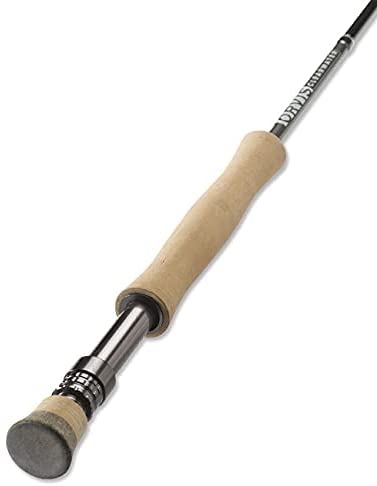
Orvis Clearwater
Why we picked it:
I’ve been fishing the new Orvis Clearwater for a while now, and it’s one of those rods that just feels right the moment you pick it up. The olive-and-grey design looks sharp, but what really sold me is how smooth and accurate it casts—tight loops and great control in that 20–60 foot range where I spend most of my time.
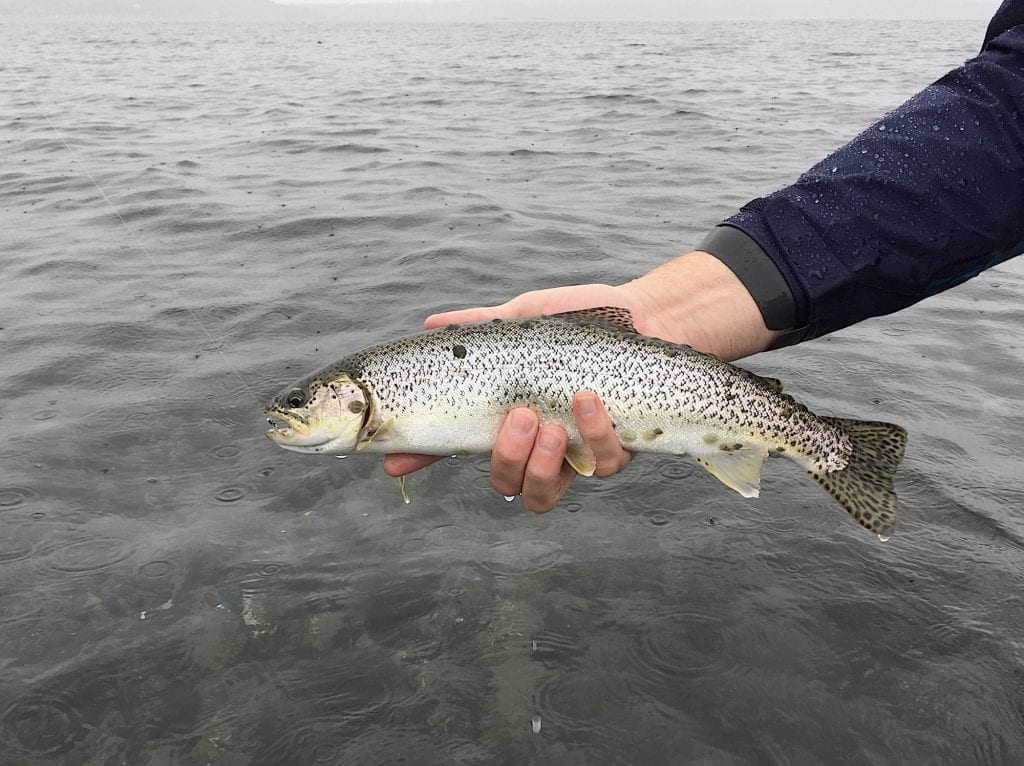
I fish the 5-weight the most since it’s such a versatile all-around rod and great for sea run cutthroat, though I’ve tried the 7-weight too when I wanted extra backbone. The upgraded cork handle is a noticeable improvement and stays comfortable during long days on the water. Combined with the durability of the graphite build, it’s a rod I don’t have to baby, and it’s quickly become one of my favorites to bring along.
Diamondback Aeroflex Saltwater
Why we picked it:
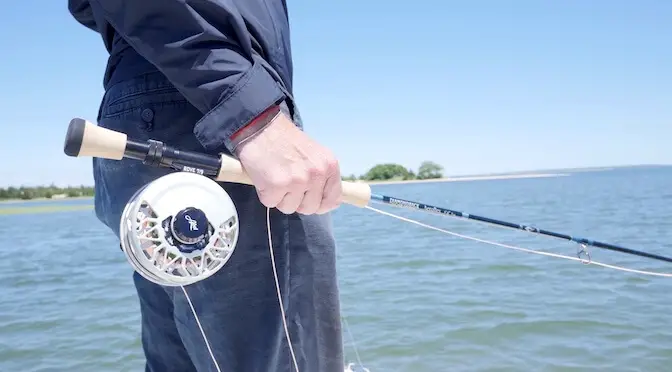
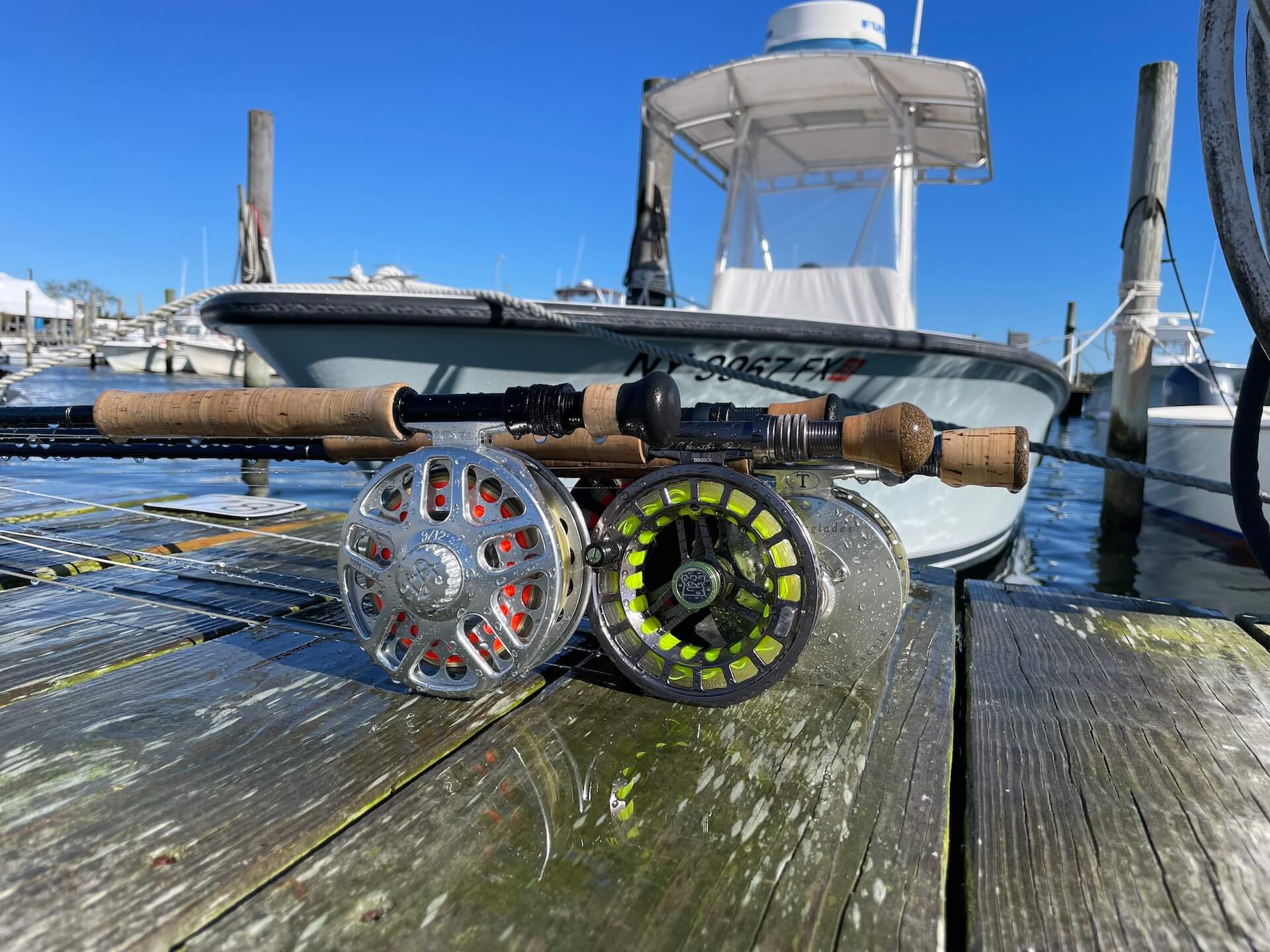
Just recently I had the chance to test a mid-range (when it comes to price) saltwater fly rod that turned out to be a great allrounder and real standout in terms of design: the Diamondback Aeroflex Saltwater (read our in-depth review). I went for the #9 (that comes in at 9ft as all other versions of this rod ranging from #7 to #11) as I went on a striped bass fishing trip in the Hamptons on Long Island, NY.
The Aeroflex Saltwater that comes in at $600, features a stunning greenish/blue blank color, a full wells grip and a fighting butt from EVA foam. I’d describe the action as medium fast. This rod really excells in windy conditions when casting a streamer patter to stripers and bluefish. Precise casts to feeding fish are no problem and playing them isn’t either thanks to the backbone of the Aeroflex Salt. If you want a great looking and performing saltwater fly rod from a US manufacturer with a long tradition that performs great on the water, take a closer look at the Diamondback Aeroflex Saltwater.
Best Mid-Range Saltwater Rods
Atlas Signature
Why we picked it:
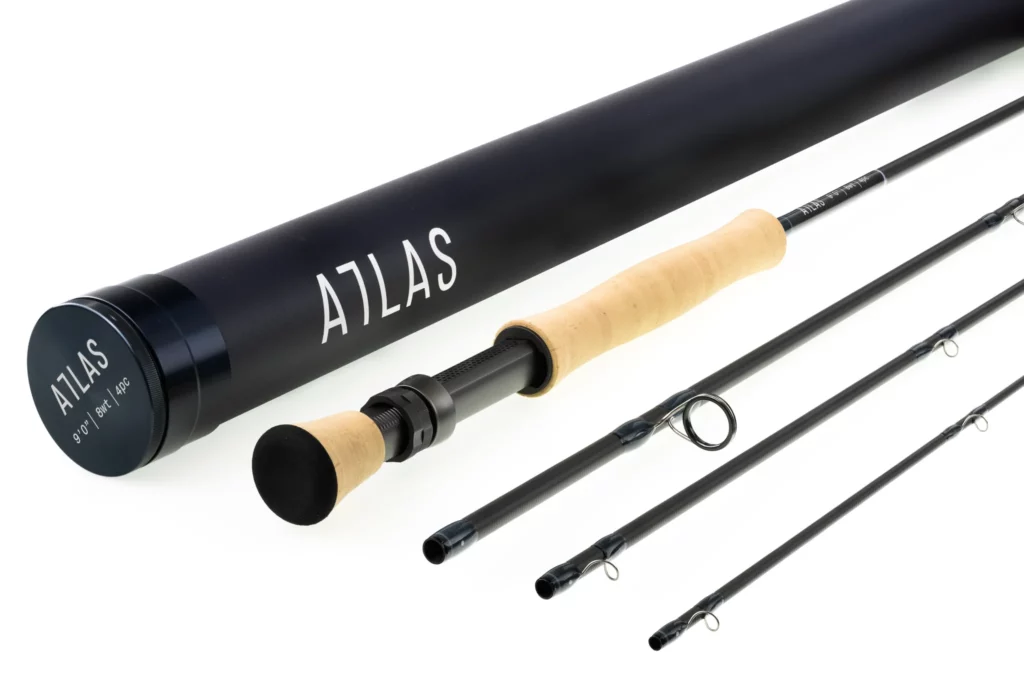
The Atlas Signature series (read our in-depth review here) is a newcomer on the saltwater rod market. Founded by Ben Freeman of Trident Fly Fishing, Atlas aims at offering premium performance at a mid-level price. We were quite impressed by this rod’s punch and precision when we took it out for some saltwater fishing for stripers and albies in Long Island, NY.
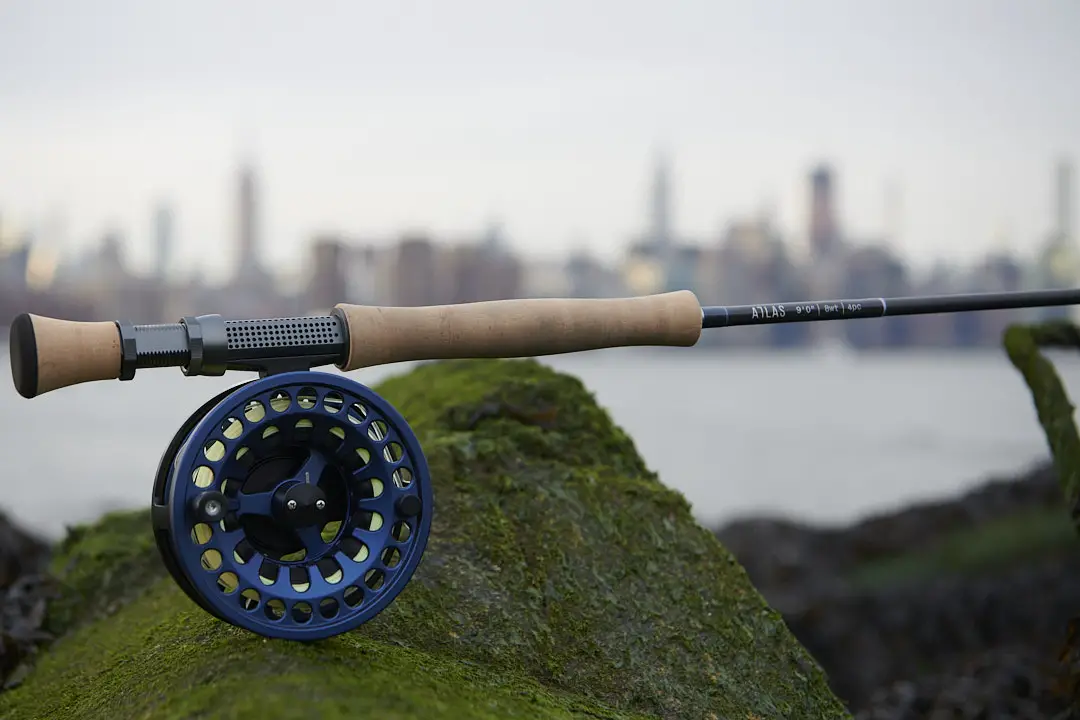
This rod easily has enough backbone to cast even bigger streamers into a breeze. It also has the looks to underline its premium ambition featuring a beautiful dark grey/blue blank and comes with only the finest components. A three year warranty rounds off the excellent package. Last but not least you get a three year warranty on the Atlas that comes as an #8, #9 and #10. All of that for only half the price that a rod with this performance would cost from the big brands.
SAGE Maverick Saltwater
Why we picked it:
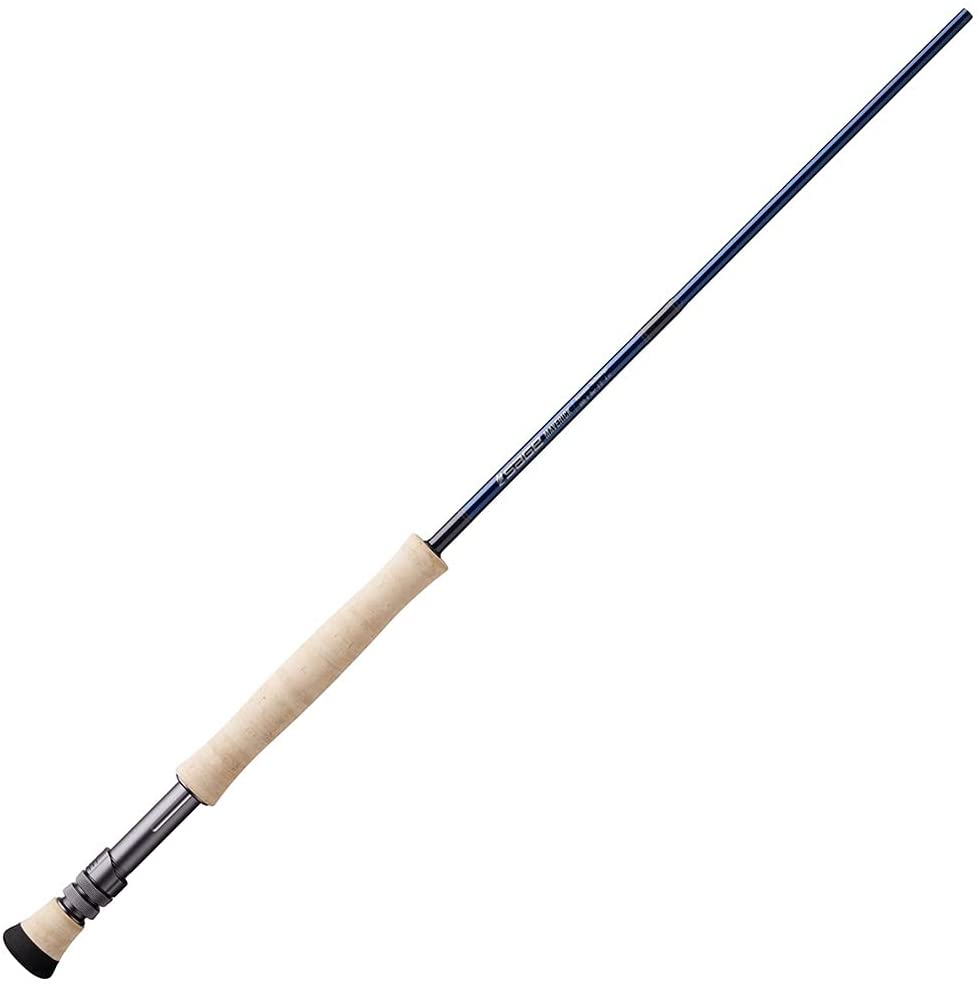
I’ve had the chance to fish the Sage Maverick, and it’s a rod that really feels built for saltwater. The fast action makes line shooting effortless, and the lifting power gives you confidence when a striper or redfish digs in hard. I like that Sage also offers smaller models, which are a blast for bonefish and other quick, feisty species. The Konnectic blank technology keeps the rod light but tough, and you can feel the precision in every cast—tight tracking with very little wobble. The Fuji ceramic stripping guides are another touch I appreciate, since they make casting smoother and hold up well against the salt. It’s a rod that combines strength, accuracy, and durability in a way that makes long days on the flats a lot more fun.
Best High-End Saltwater Fly Rods
Winston Air Salt
Why we picked it:
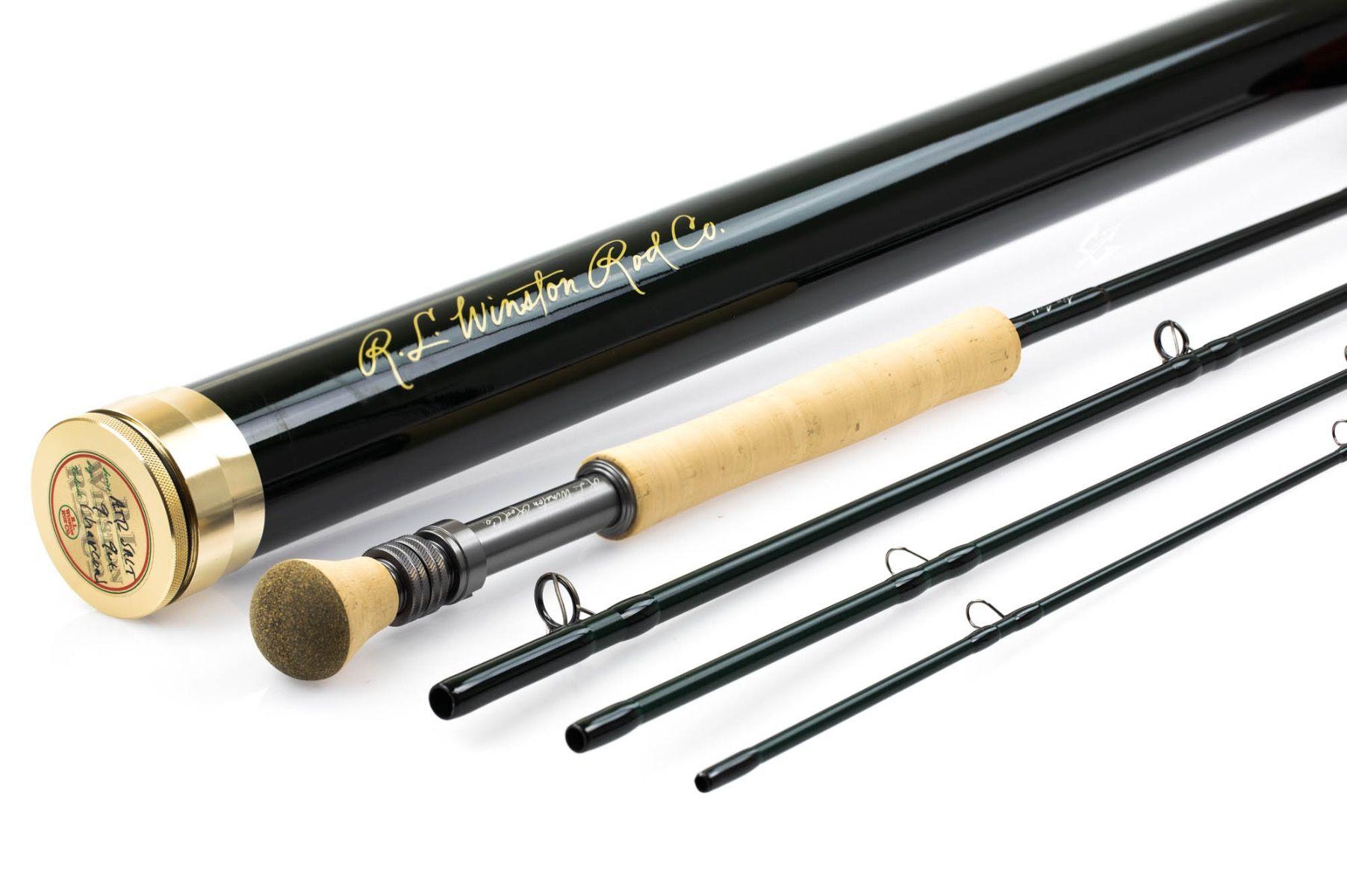
The Winston Air Salt (read our in-depth review here) is a fantastic high-end saltwater fly rod that combines the subtle elegance of Winston with a lot of power and casting stability. The rod delivers a high degree of precision no matter whether you’re casting heavier streamers on sinking lines to feeding stripers or are in need of a more delicate presentation for bonefish at a longer range.
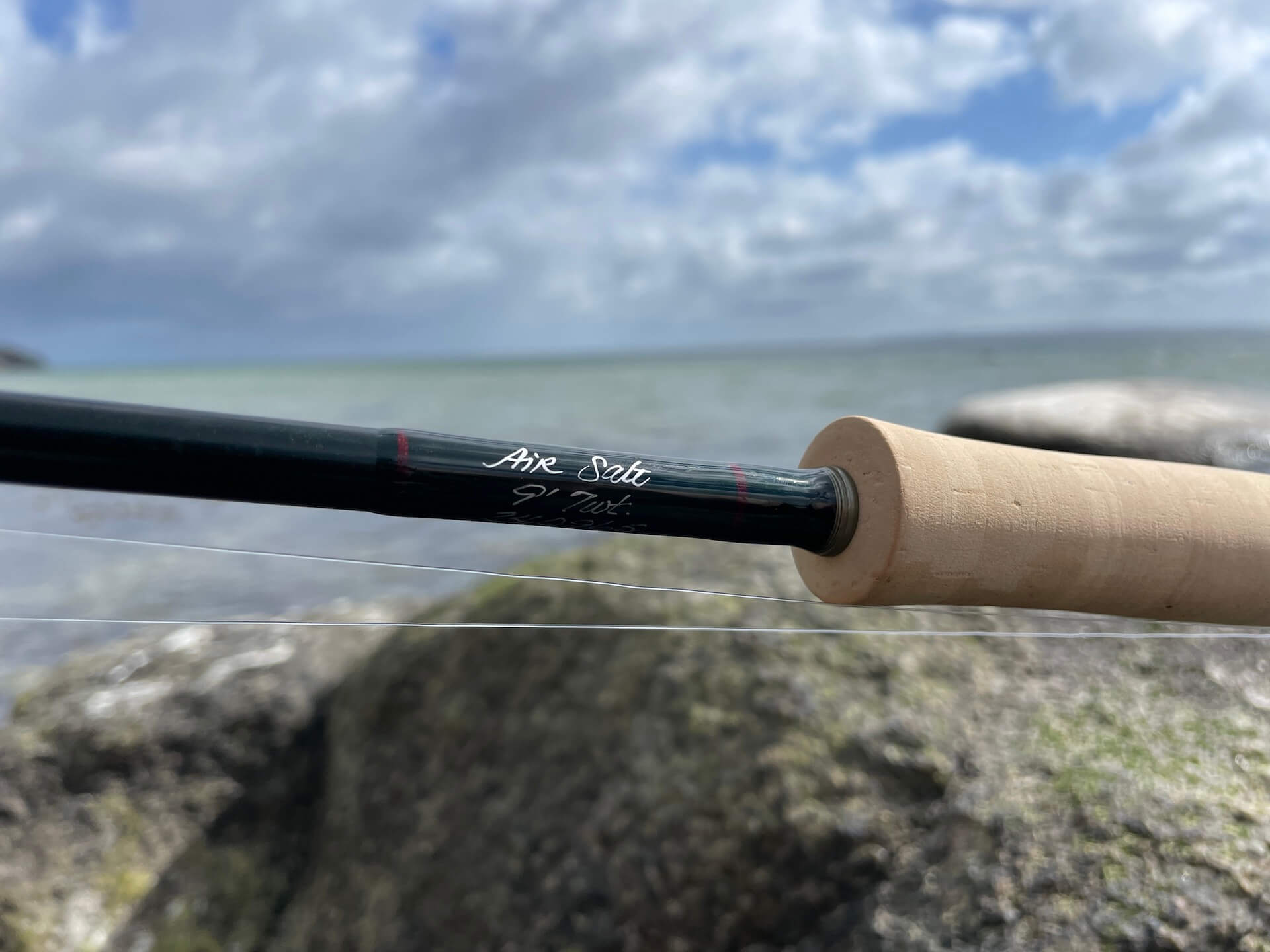
The Winston Air Salt is one of those rods that feels every bit as refined as it looks. It has that classic Winston elegance, but underneath is plenty of backbone and casting stability—whether I’m throwing heavy streamers on sinking lines for stripers or trying to make a softer presentation to spooky bonefish. The Boron technology makes it impressively strong without adding weight, and it’s reassuring to know it can hold up against hard-running saltwater fish. The chrome nanolite guides handle salt conditions beautifully, and the attention to detail is pure Winston—the rod tube matches the blank, and the embroidered rod sock adds a touch of luxury. It’s a rod that not only performs at a high level but also feels special every time you take it out of the case.
Hardy Ultralite
Why we picked it:
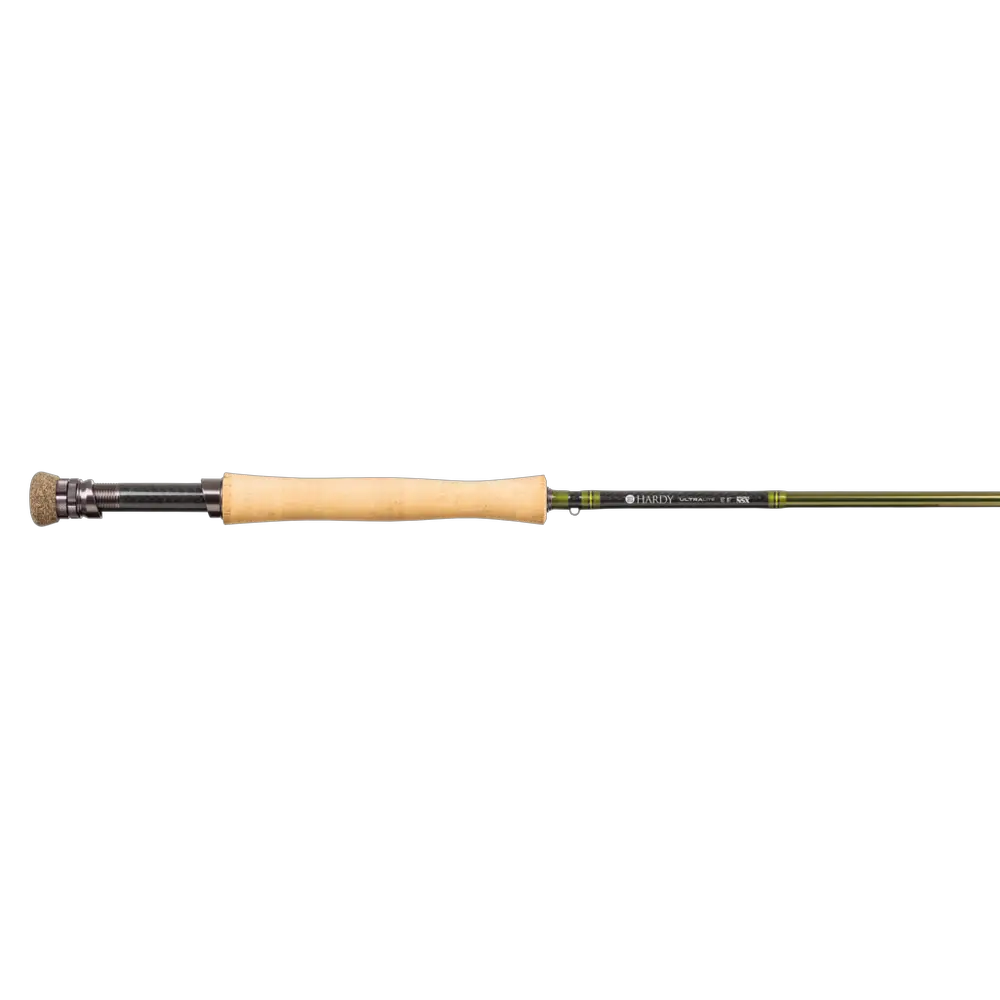
If you’re a traditionalist, chances are high you’ve come across (House of) Hardy. The British manufacturer is one of the oldest players in the game, looking back at more than 125 years of making fly rods. This doesn’t stop them from being at the forefront of innovation, as their Hardy Ultralite fly rod (read our in-depth review here) goes to show.
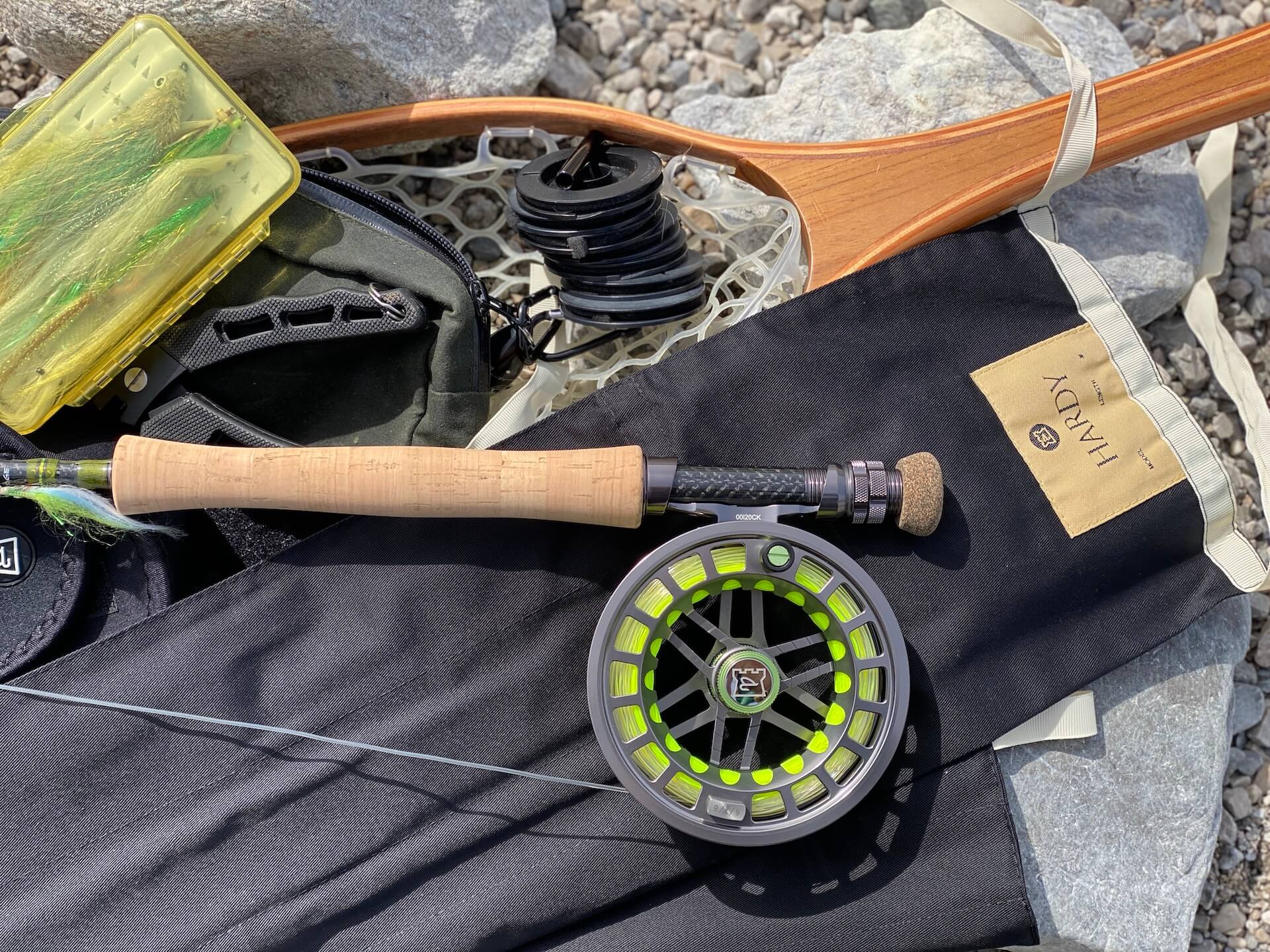
We got our hands on it as an #8 which make this rod a great allrounder to pursue predators, no matter whether it’s in freshwater or the salt. Since the Ultralite is made from the finest components, it has to problem handling the harsher conditions of saltwater environments. What I like in particular about the Ultralite is the low weight (as the name suggests) but also the attention to detail (wait til you see the dark green blank in the sun and the carbon fiber accents). At almost $900, the Ultralite doesn’t come cheap but a 30 year warranty makes sure you can fish that rod for a long time…
The Best Saltwater Fly Rod and Reel
Now that you’ve been introduced to some of the best saltwater fly rods on the market, we’ll also take a closer look into fly rod and reel combos for saltwater. These sets are a great choice for fly fishermen who want to make sure their setup is going to work. The great things about these fly rod combos for saltwater is the fact that they have been put together by the brand’s experts and hence you can rest assured that the saltwater fly reel and rod will work together perfectly. These fly rod and reel combos for saltwater also make for a fantastic gift.
Penn Battle
Why we picked it:
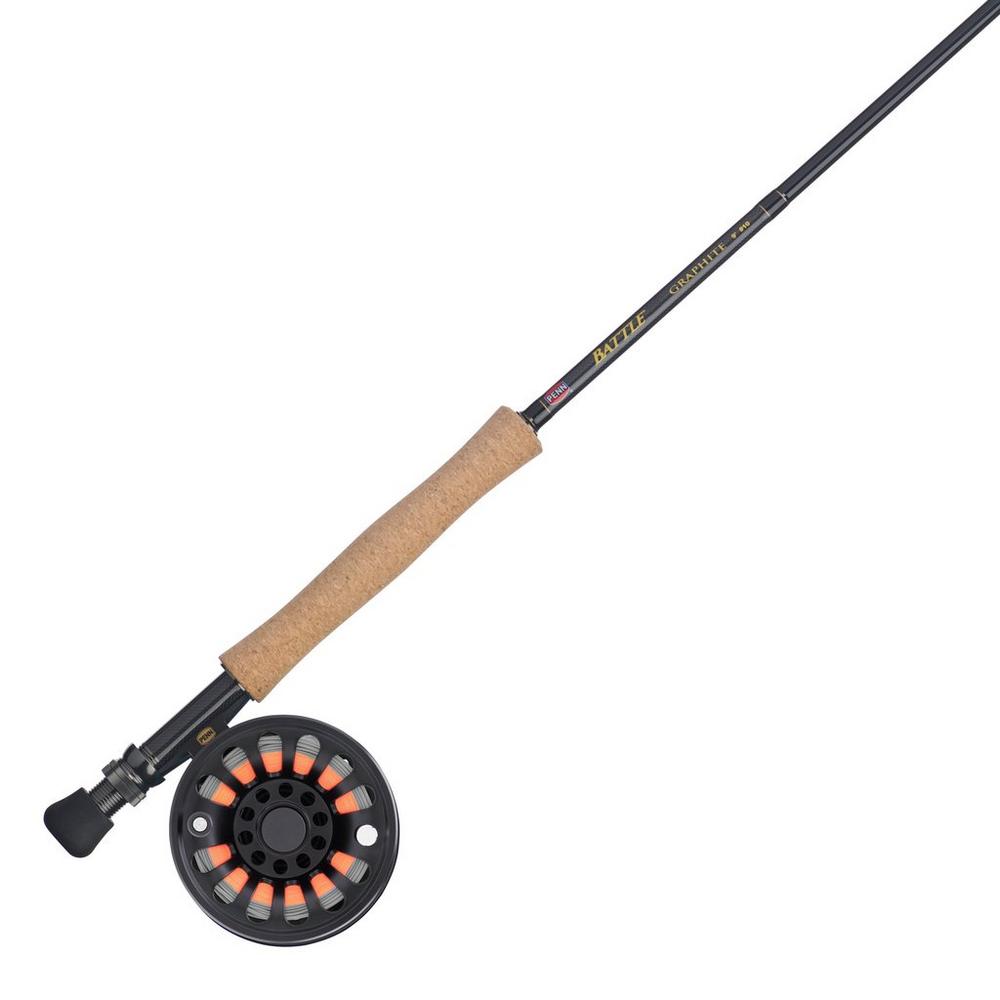
The Penn Battle Fly Rod Outfit (read our in-depth review here) is a great fly rod combo for the saltwater that won’t break the bank. You can choose between an #8 which is great for pursuing predators such as striped bass or smaller redfish. If you’re after bigger fighters such as albacores, go for a #10. The Penn comes in a nice cordura rod and reel case which facilitates bringing the set on a trip.
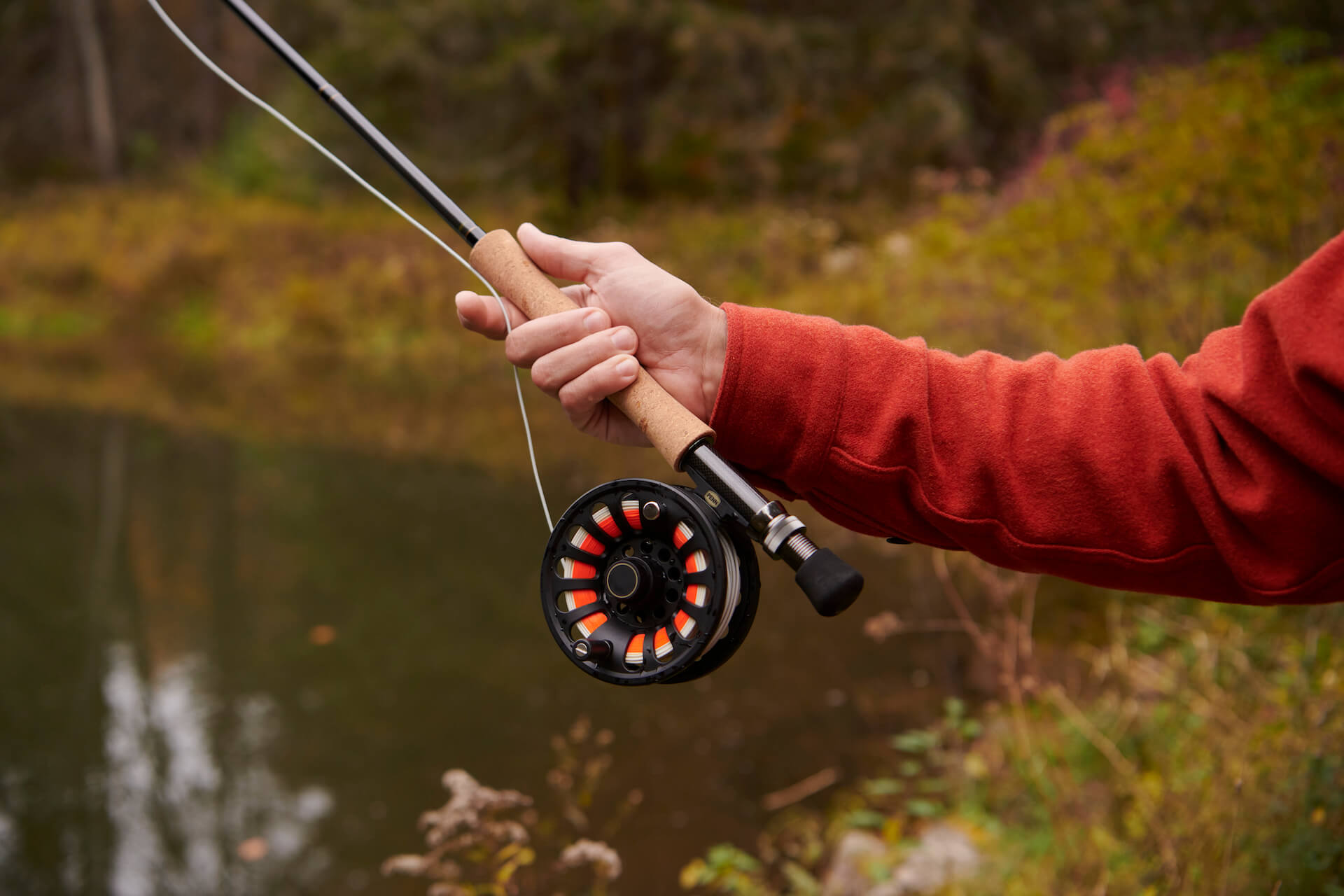
During our testing we found rod and reel to work together nicely with the line that’s included in this outfit. The WF line has no problems casting even bigger streamers into the wind. The reel on this combo is a large arbor for quick line pickup (which is of particular importance in the salt since these species are often fast swimmers). All in all this is a great medium-level set for beginners and intermediates alike.
Redington Tropical Saltwater Field Kit
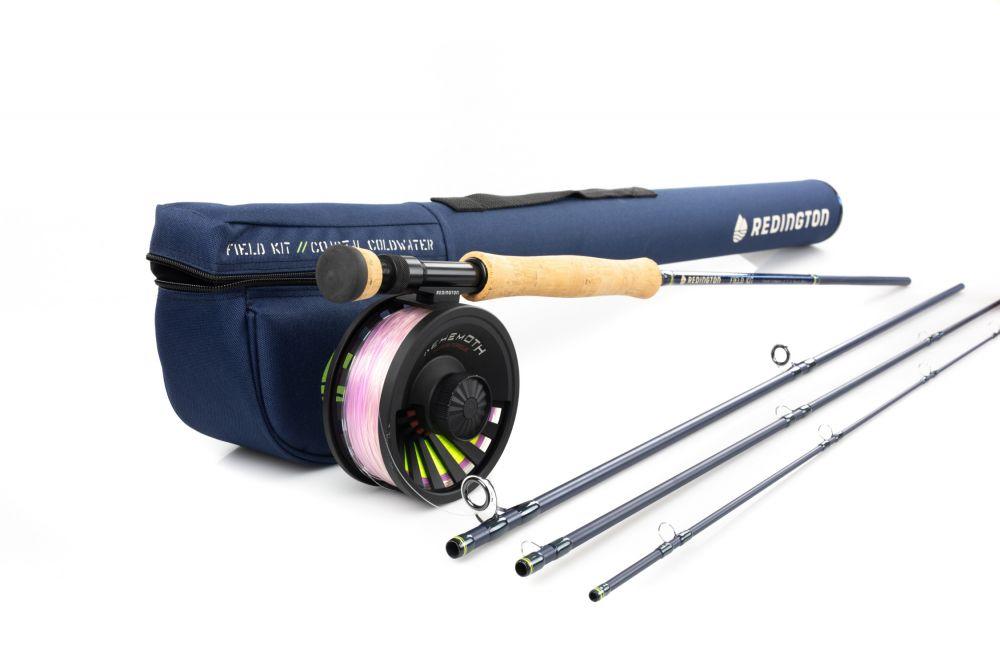
Why we picked it:
The Redington Field Kit really surprised me with how capable it is right out of the box. The medium-fast action makes casting feel smooth and forgiving, but when it’s time to put the brakes on a strong fish, the Behemoth reel’s carbon drag kicks in with serious stopping power. I love the confidence that gives me when something big digs in. The butt section has the strength to lean on stubborn fish without wearing me out, and the anodized aluminum reel seat feels tough enough for any conditions. The deep-V spool and oversized arbor on the Behemoth are smart touches too, giving you extra capacity and quick line pickup when you need it most. For a ready-to-go saltwater setup, it’s one of the most well-rounded and powerful combos I’ve fished.
Rinsing and Cleaning your Saltwater Fly Rod
Experienced and avid fisherman and anglers know the importance of rinsing and spraying their fly rods with freshwater after fishing in saltwater. But people often forget to clean their rods too. This is why you should always make a mental note to clean your fly rod as soon as you come back from the trip.
Cleaning the rod is simple, you can hose it down with freshwater, generously apply some soap, and rinse it again. To be thorough you can always take your fly rod apart and wash every component individually making sure there is no salt accumulation or build-up left. After washing everything, use a microfiber cloth to wipe everything down.
Top Features to Look for When Buying a Saltwater Fly Rod
When choosing the best saltwater fly rods, it’s critical to first understand and decide the type of fishing you would like to do. While there are a different types of rods available, keep in mind that every fly rod is uniquely designed to suit different fishing styles and types. There aren’t any fly rods made to suit all types of fishing. This is why a fly rod for saltwater can’t be used for freshwater fishing and vice versa.
However, selecting a fly rod will also depend on various features that you would like to have in it. Some basic features you should consider when buying a saltwater fly rod include:
The Right Weight
It’s important to go for the right fly rod weight. Buying a light rod line will cause frustrating problems in drag control and precision, especially if you’re targeting heavy saltwater fish such as tarpon, redfish, etc. Saltwater fly rods come in different weight categories – labelled 1 to 15. It’s better to opt for a fly line in 8 weight category as they’re designed for catching larger fish.
The Right Length
You need to make a note of the amount of length you require. Fly rods come in different lengths, designed for different fishing landscapes. However, for saltwater fishing, it’s recommended to stick with an 8.5-ft rod length. For longer casting in windy conditions or bigger river streams, go for a 9-ft rod.
The Right Rod Action
The right flexibility and durability of the fly rod is also an important factor. That’s because there are fly rods designed to bend right at the top while some can bend throughout the rod. There are essentially three categories of fly rod action – fast, medium, and slow-action. Fast action is suitable for when you’re fishing in windy conditions or if you want to cast longer lines. Medium action rods provide overall flexibility for all types of fishing conditions. Lastly, slow action rods are best for learning how to cast. For saltwater fishing, it’s best to go for a medium action rod.
The Right Material
Fly rods are made with a myriad of materials such as fiberglass, bamboo, graphite, etc. If you want an all-purpose fly rod, go for ones made from graphite. They’re more durable, lightweight, and flexible. For freshwater fishing, it’s better to go for fiberglass rods as they’re softer and offer more flexibility. Bamboo rods are durable but are quite pricey.
Notice: We take part in the Amazon Associates Program and earn a small commission at no extra cost for you if you end up making a purchase. We only recommend products we are convinced of and use ourselves. This helps support our business – thank you.
Conclusion on the Best Saltwater Fly Rods
So there you have it – a comprehensive buying guide to help you make an informed decision on the type of saltwater fly rod you should buy. But remember that your decision will always be based on preference. If you aren’t looking to spend a lot of money and are just getting into saltwater fishing, we recommend that you go for the Orvis Clearwater fly rod, it offers a great balance between durability and performance and offers great value for money.
Author Bio
Author Bio:
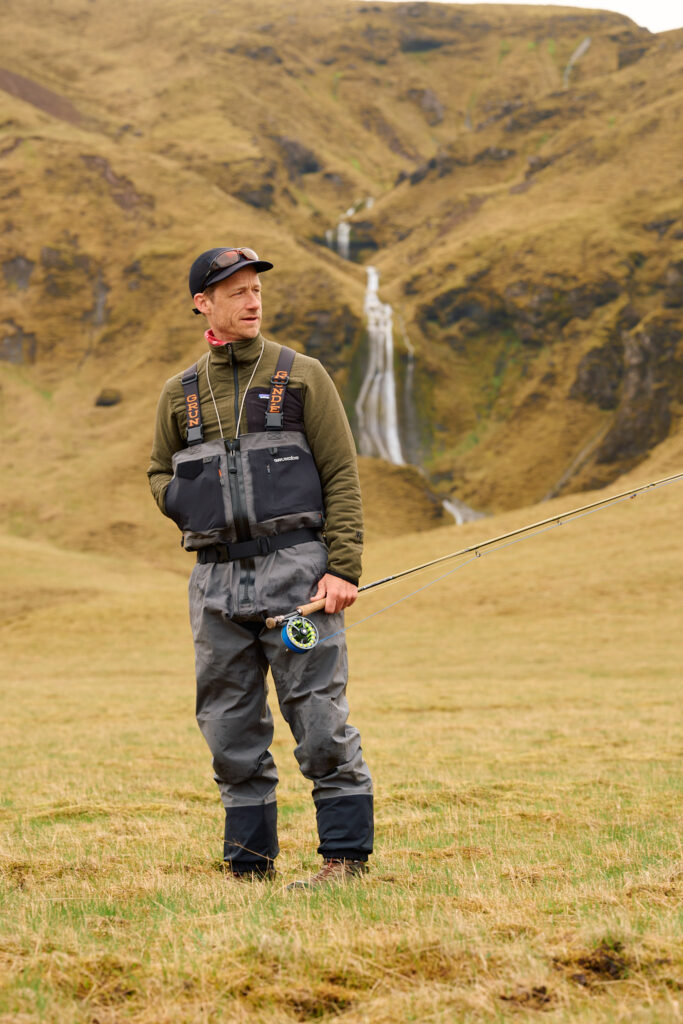
Leonard Schoenberger is a fly fisherman with decades of experience in the field. Since he was a kid he had a passion for fly fishing and turned that into founding the magazine The Wading List. He’s written articles for publications such as Forbes, produced a radio program for the BBC and interned at CNN in Paris.
Best Saltwater Fly Rod: FAQs
What features should I look for in a saltwater fly rod?
Look for a saltwater fly rod with corrosion-resistant materials, a strong backbone for battling powerful fish, and versatile line weight options suitable for different saltwater species.
What is the ideal line weight for saltwater fly fishing?
The ideal line weight depends on the species you’re targeting. Generally, a 9wt to 12wt rod is suitable for a range of saltwater applications, from smaller inshore species to larger offshore game fish.
Is there a specific rod length recommended for saltwater fly fishing?
Rod length is often a matter of personal preference and the fishing environment. However, most saltwater anglers find 9 to 10 feet rods to be versatile for various saltwater conditions, providing both casting distance and accuracy.
How important is saltwater reel compatibility with the fly rod?
It’s crucial. Saltwater reels need to be durable, corrosion-resistant, and appropriately sized for the rod. Ensure that the reel balances well with the rod and has a strong drag system to handle powerful saltwater species.
Can I use a freshwater fly rod for saltwater fishing?
While it’s possible, it’s not recommended. Saltwater conditions can be harsh on gear due to the corrosive nature of salt. A dedicated saltwater fly rod is designed with materials and features to withstand these conditions.
What action is preferable for saltwater fly fishing?
Fast to medium-fast action rods are often preferred for saltwater fly fishing. These rods provide the power needed for long casts and the ability to handle larger flies while still offering some sensitivity for accurate presentations.
Are there specific brands known for producing high-quality saltwater fly rods?
Several reputable brands specialize in saltwater fly rods, including Sage, Orvis, G. Loomis, Scott, and Redington. Researching reviews and seeking recommendations from experienced saltwater anglers can help narrow down the options based on individual preferences and fishing styles.
Read more of our Gear Guides here:
Ultimate Guide: Best Wading Jackets
Buyer’s Guide Best Wading Boots
A Guide to the Best Sling Pack
A Guide to the Best Fly Fishing Starter Kits
Notice: We take part in the Amazon Associates Program and earn a small commission at no extra cost for you if you end up making a purchase. We only recommend products we are convinced of and use ourselves.
The first thing that breaks when a freshwater fly rod meets coastal wind is the loop. A 5-weight trout rod throws a tight loop at 30 feet of carry; the same caster on a flats skiff in 18 knots of wind, throwing an 8-weight crab pattern at 60 feet, will see that loop collapse before the fly turns over. The mechanical reason is in the AFFTA grain-weight standard: saltwater rods are built around heavier line classes (8 through 12) and stiffer high-modulus graphite blanks (40-60 Msi) so the rod can store enough energy in the tip to punch a wind-resistant fly through air that’s moving against you.
Saltwater rods also have to survive the salt itself. The chrome on a stripping guide that lasts decades on a trout stream will pit and fail in a season of bonefishing if it’s not titanium-framed with a corrosion-stable ceramic insert. The same logic runs through every component: anodized aluminum reel seats, sealed-bearing assemblies on the matching reel, cork density on the fighting butt. The rod that wins on a flat is not the most expensive one; it is the one that loads correctly for the species you’re targeting, casts cleanly into wind, and doesn’t degrade in a salt environment. The picks below are organized around those three criteria, plus the tier split between mid-priced rods that cover most inshore fishing and flagship rods built for the demanding edge cases.
A standard 5-weight line carries 140 grains in its first 30 feet of head section (plus or minus 6 grains, per the AFFTA standard). An 8-weight line carries 210 grains in the same head length. The rod blank is engineered to flex correctly under that grain load, which is why an 8-weight saltwater rod is not just a heavier 5-weight; it is a fundamentally different blank with a stiffer wall section, a more aggressive taper toward the tip, and a high-modulus graphite layup that resists buckling under the strain of casting a Clouser Minnow or a tarpon toad.
The casting consequence is line speed. A fast-action rod flexes primarily near the tip, which means it accelerates the line at the stop more aggressively and pushes the loop forward at higher velocity. High line speed is what cuts through wind. A medium-action rod, which flexes down into the middle of the blank, will load beautifully for delicate freshwater presentation but loses its forward energy fast in a 15-knot crosswind because more of the casting stroke is being absorbed by the rod’s mid-section bend instead of being transferred into the loop. This is why the Sage Salt R8, G. Loomis Asquith, Scott Sector, T&T Exocett, and Hardy Marksman Z are fast or extra-fast action.
There is a tradeoff, and it’s worth saying out loud. A fast-action rod gives you line speed at the cost of close-in feel. If most of your saltwater fishing happens at 30 feet (mangrove edges, jack crevalle in the surf, redfish in shallow pockets), a slightly softer mid-fast action rod is more forgiving and lands the fly more delicately. The rods that earn flagship reputations among guides are usually the ones that hold a fast-action backbone for the 60-foot wind-cast but recover enough mid-section flex to land a clean fly at 25 feet. That’s a hard engineering compromise, and it’s a big part of what separates a $1,100 rod from a $400 rod.
The “saltwater rod” category spans rod weights 6 through 16 in the AFFTA system. Picking the right weight is not optional; an 8-weight will not lift a 100-pound tarpon, and a 12-weight will spook every bonefish on the flat with its line-landing slap.
A 6-weight or 7-weight is the small-fly inshore tool: redfish on shrimp patterns in calm conditions, juvenile bonefish, small jacks, schoolie striped bass on light flies. The blank is light enough to feel a take and protect a 12-pound tippet, but it lacks the backbone to drive a heavy crab pattern in any real wind.
An 8-weight is the classic flats rod. It covers adult bonefish, redfish in any normal wind, school-sized striped bass with weighted streamers, small permit in calm water. The 210-grain head section punches a #2 or #4 shrimp or crab pattern at 50 to 70 feet with authority. If we had to pick one saltwater rod for a generalist angler, this is the slot.
A 9-weight or 10-weight steps up to the species that pull harder or hold deeper. Big bonefish (the 8-pound class), permit in normal conditions, large striped bass on big streamers, false albacore on heavy flies, baby tarpon in the 20-to-40-pound range. The 9-weight is increasingly the guide’s preferred all-day flats rod when wind is consistently present.
A 10-weight through 12-weight is tarpon country. tarpon fishing on the fly Adult tarpon range from 60 to 150 pounds, the flies are large baitfish or toad patterns at 4 to 6 inches, the leader is a complex shock-tippet rig to handle the abrasive jaw structure, and the lifting power required to turn a fish away from a piling or a coral head is substantial. An 11-weight or 12-weight is also where heavy permit fishing lives, and where the giant trevally and milkfish destinations operate.
A 12-weight and above (13 through 16) is bluewater territory: sailfish, billfish, large tuna, large GTs from the boat. This is a small segment by query volume but a high-CPC one. Most TWL readers will not need this tier, but the page should name it so it ranks for the queries that surface it.
Useful cross-links for readers narrowing to one species: our deeper dives on bonefish setups, tarpon rods, and the classic 8-weight cover the rod-weight question at the species level. (Operator note: these URLs need a redirect or stub when those pages aren’t live yet; see Operator hand-off below.)
A saltwater fly rod’s hardware is doing two jobs at once. It has to perform under the load of large fish and heavy flies, and it has to survive a chemical environment that will destroy ordinary metals in a season.
Stripping guides take the most abuse. Salt-spec rods use titanium frames with silicon-carbide or aluminum-oxide ceramic inserts; chrome-plated steel pits within months. The line passes through these guides under high velocity and high tension during a long cast, so the ceramic insert also has to be polished to a low coefficient of friction. Snake guides further up the blank are usually titanium or coated with a corrosion-resistant finish (REC’s Recoil titanium is the common high-end spec). A pitted snake guide will shred a saltwater line in a single fight.
The reel seat is the other critical metallurgy. Anodized aluminum is the baseline; the better builds use double-anodized aluminum or even type-III hard anodization, which forms a thicker oxide layer that resists pitting. The seat threads should engage cleanly under sand and salt residue, and the locking hood should have a positive cam-lock so it doesn’t back off mid-fight. Cheap saltwater rods cut corners here; look for a manufacturer that names the alloy and anodization spec, not just “saltwater-grade aluminum.”
The cork grip and fighting butt are doing real mechanical work. The grip needs high-density Portuguese flor cork to resist compression after thousands of casts; lower grades will deform and lose their shape inside two seasons. The fighting butt is not cosmetic. When you have a tarpon or a permit on the reel, you wedge the butt against your forearm or hip bone for leverage, and the butt geometry (length and taper) determines how cleanly you can apply lift. Most flats rods run a 1.5 to 2 inch EVA foam butt with a slight outward taper; tarpon rods often run longer (2.5 inches) with a more pronounced flare.
Hookkeepers, ferrules, and wraps are smaller items, but the same logic applies. Ferrules should be unsanded for tight fit retention; epoxy wraps should be UV-resistant; the hookkeeper itself should be stainless or titanium, not chrome. Saltwater flies are heavy and sharp, and a corroded hookkeeper that snaps under a heavy fly’s weight will mean a lost fish and a rusted hole in your blank.
A note on leader geometry, because the rod alone does not solve the wind problem. Saltwater leaders are 6 to 9 feet long (shorter than the 9-foot freshwater standard) with heavy 40 to 60-pound butt sections that transfer the rod’s energy efficiently into a large, weighted fly. A trout leader’s long, soft butt section will collapse before it turns over a permit crab. Pairing the right leader to the rod is part of what makes the rod cast well; pairing it wrong is one of the most common reasons a perfectly good saltwater rod feels “stiff” or “lifeless” in someone’s hands.
The mid-tier saltwater market (roughly $400 to $800) and the flagship tier (roughly $900 to $1,300) cover the same species and the same conditions on paper. The honest difference is in the edges.
A mid-tier rod (Sage Maverick at $600, Scott Wave at $695, G. Loomis IMX-PRO V2S at $650, Diamondback Aeroflex Saltwater at $600, Atlas Signature at $475) will cast cleanly to 60 feet in 12 knots of wind, lift a healthy bonefish or a slot redfish, and hold up to several seasons of normal use. Most inshore anglers cannot tell the difference between a well-built mid-tier rod and a flagship at 30 to 50 feet of carry.
The flagship tier (Sage Salt R8 at $1,100, G. Loomis Asquith at $1,200, Scott Sector at $995, Winston Air Salt at $1,050, Hardy Marksman Z at $1,200, T&T Exocett at $895) buys you the last 20% of performance: cleaner loop stability at 80 to 100 feet, faster line recovery from a haul, sharper tracking under wind, and lighter swing weight that matters after a full day of sight-casting. The blanks use the highest-modulus graphite available with proprietary resin systems, and the hardware specs are typically the best in production.
If you fish saltwater 10 to 20 days a year, a mid-tier rod is the rational choice; the marginal flagship performance does not pay back at that frequency. If you fish 40-plus days a year, are a guide, or are routinely fishing the edges (permit on bad days, tarpon in real wind, GTs on a budget-shattering trip), the flagship is what you’ll appreciate when you actually need it. The rods in the picks below cover both tiers explicitly.

Leonard Schoenberger is a fly fishing professional and gear specialist with over 20 years of experience on the water. As the manager of Heidarvatn, a world-class sea trout lodge in Iceland, his product recommendations and tactical advice are tested in some of the most demanding conditions on earth. His expertise has been mentioned in The New York Times, the Financial Times, and at the Outdoor Media Summit.