
Last updated on May 25th, 2026.
A fillet knife is a crucial tool when you decide to process the fish you caught.
Disclaimer: All products in this guide are independently researched by our team. We only recommend products we believe in and never get paid for the reviews. Learn more about our review process here.
When it comes to trout, I keep things pretty simple. I don’t stockpile fish in the freezer anymore—it just doesn’t feel right. Part of the beauty of trout fishing is knowing I can step into a stream just about any month of the year and bring home a couple fresh fish for dinner. That way my wife and I enjoy them at their best, and if I’ve got friends coming over, I’ll keep enough to make a bigger meal.
I’m not out there filling coolers. I keep what we’ll eat in a week, and the rest go right back into the water. Over the years, though, I’ve cleaned more trout than I can count, along with plenty of other species, and I’ve tried just about every fillet knife on the market. Keeping a sharp blade handy is second nature at this point, and it makes the whole process easier and more enjoyable. After all that time on the water and at the cleaning table, I feel pretty confident recommending knives that fit any budget and still get the job done.
OUR PICKS FOR BEST FILLET KNIVES of 2026
-
Best Overall: u003ca href=u0022https://amzn.to/37jMnELu0022 target=u0022_blanku0022 aria-label=u0022 (opens in a new tab)u0022 rel=u0022noreferrer noopener nofollow sponsoredu0022 class=u0022ek-linku0022u003eu003cmark style=u0022background-color:rgba(0, 0, 0, 0)u0022 class=u0022has-inline-color has-vivid-cyan-blue-coloru0022u003eBubba 9 Inch Flexu003c/marku003eu003c/au003e
-
Best For Daily Use: u003ca href=u0022https://amzn.to/39aSzBnu0022 target=u0022_blanku0022 aria-label=u0022Rapala4 Fish’n Fillet (opens in a new tab)u0022 rel=u0022noreferrer noopener nofollow sponsoredu0022 class=u0022ek-linku0022u003eu003cmark style=u0022background-color:rgba(0, 0, 0, 0)u0022 class=u0022has-inline-color has-vivid-cyan-blue-coloru0022u003eRapala4 Fish’n Filletu003c/marku003eu003c/au003e
-
Best Professional: u003ca href=u0022https://amzn.to/3y1sbqbu0022 target=u0022_blanku0022 aria-label=u0022 (opens in a new tab)u0022 rel=u0022noreferrer noopener nofollow sponsoredu0022 class=u0022ek-linku0022u003eu003cmark style=u0022background-color:rgba(0, 0, 0, 0)u0022 class=u0022has-inline-color has-vivid-cyan-blue-coloru0022u003eZwilling Pro 7u0022u003c/marku003eu003c/au003e
-
Best Electric: u003cmark style=u0022background-color:rgba(0, 0, 0, 0)u0022 class=u0022has-inline-color has-vivid-cyan-blue-coloru0022u003eu003ca href=u0022https://amzn.to/2Z2Dnjnu0022 target=u0022_blanku0022 aria-label=u0022 (opens in a new tab)u0022 rel=u0022noreferrer noopener nofollow sponsoredu0022 class=u0022ek-linku0022u003eu003cmark style=u0022background-color:rgba(0, 0, 0, 0)u0022 class=u0022has-inline-color has-vivid-cyan-blue-coloru0022u003eBubba Electric Cordedu003c/marku003eu003c/au003eu003c/marku003e
-
Best Classic Foldable: u003ca href=u0022https://amzn.to/3Erkprsu0022 target=u0022_blanku0022 aria-label=u0022 (opens in a new tab)u0022 rel=u0022noreferrer noopener nofollow sponsoredu0022 class=u0022ek-linku0022u003eu003cmark style=u0022background-color:rgba(0, 0, 0, 0)u0022 class=u0022has-inline-color has-vivid-cyan-blue-coloru0022u003eOpinel Slim No 12u003c/marku003eu003c/au003e
-
Best Saltwater: u003ca href=u0022https://alnk.to/fHohMObu0022 target=u0022_blanku0022 aria-label=u0022 (opens in a new tab)u0022 rel=u0022noreferrer noopener nofollow sponsoredu0022 class=u0022ek-linku0022u003eu003cmark style=u0022background-color:rgba(0, 0, 0, 0)u0022 class=u0022has-inline-color has-vivid-cyan-blue-coloru0022u003eGerber Controller Foldingu003c/marku003eu003c/au003e
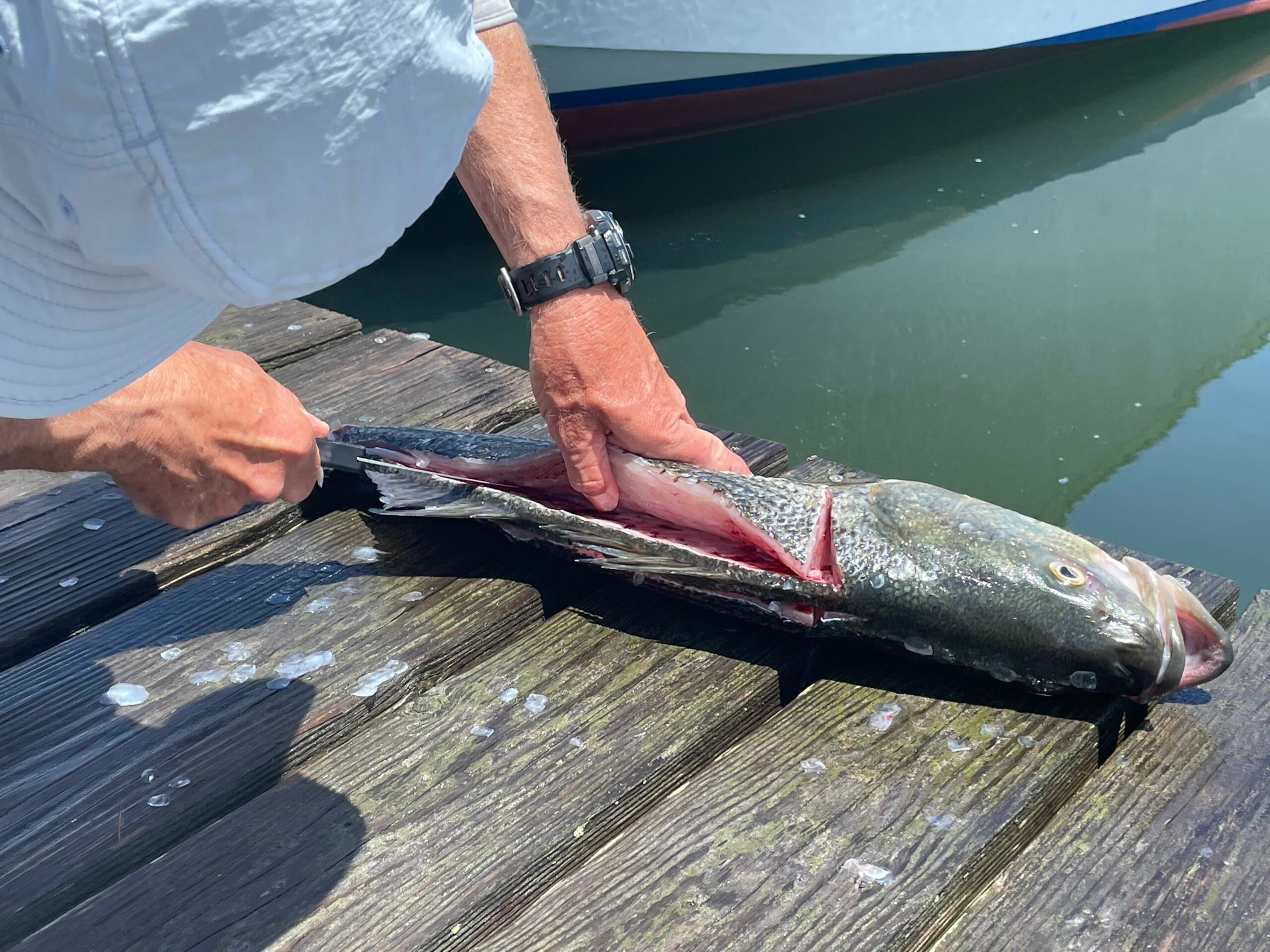
Best Overall Fillet Knife
Bubba 9 Inch Flex

Why we picked it:
The Bubba 9 Inch Flex is my top choice when it comes to the best filet knife for a certain reason: its grip. The trigger grip where the handle meets the blade adds another level of security. The blade is highly flexible and allows you to make very precise cuts. I found the Bubba’s blade to stay sharp even after filleting multiple big fish over a span of several weeks.
My favorite aspects of the Bubba:
– Extra sharp tip of the Bubba 9 Inch Flex that makes starting the cut a piece of cake.
– The Bubba is also a great choice if you want to take your knife to the water.
– Features a lanyard hole at the end of the handle and comes with a synthetic sheath for easy transport.
My Verdict: Fantastic all-around fish knife that is well equipped and thought through. Due to its outdoorsy design not the first choice for the kitchen.
Pros & Cons
PROS:
-
Fantastic, non-slip grip
-
Highly flexible blade
-
Sheath and lanyard hole included
CONS:
-
Not the most elegant for a high-end kitchen
-
Blade is not as delicate as the Wüsthof
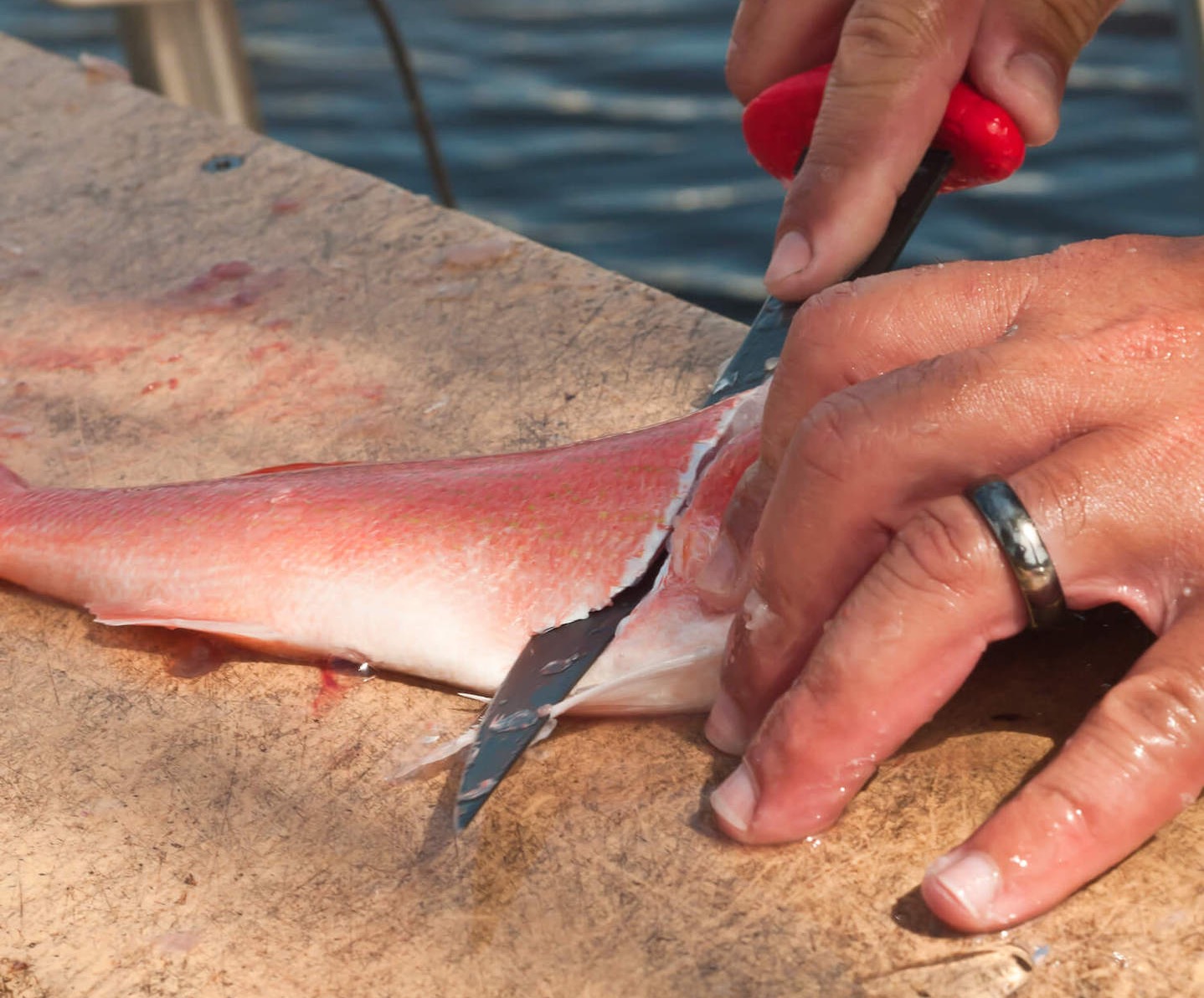
Best for Daily Use
Rapala4 Fish’ Fillet Knife
Why we picked it:
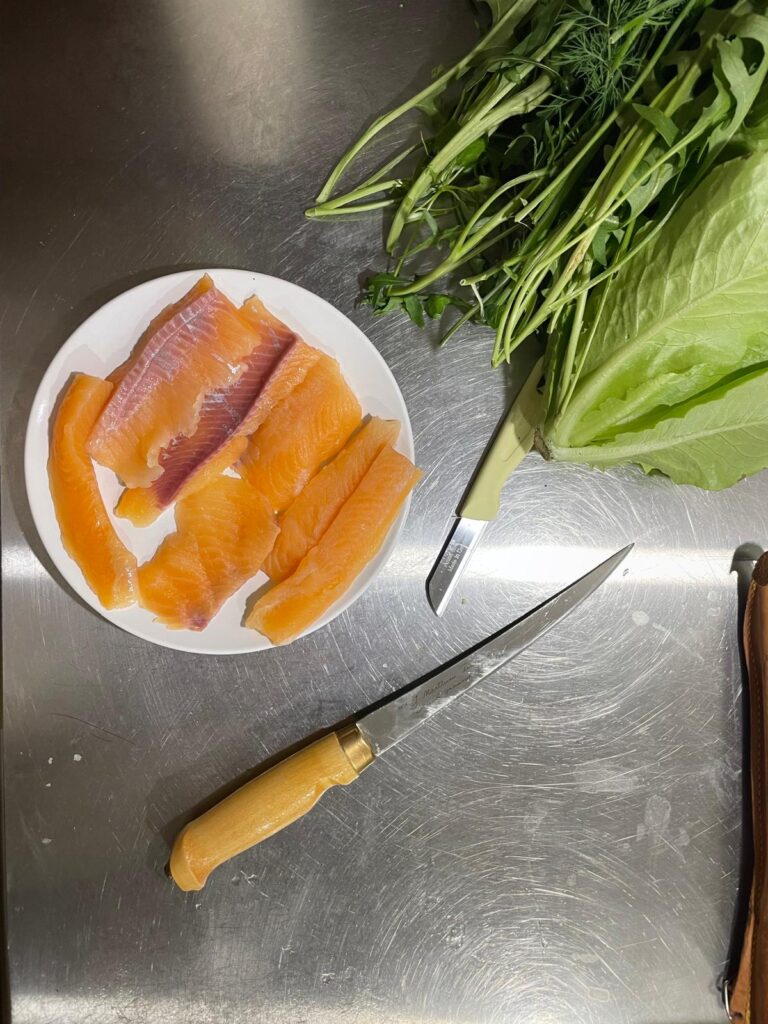
The Rapala4 Fish’n fillet knife is the right choice if you are looking for a knife to put into your tackle box. I have found the stainless steel blade by Martiini Finland to be rock solid. I have used the Rapala 4 as my go to fillet knife for many seasons and it’s still going strong. Thanks to the leather sheath it’s a great knife to bring along on any trip.
I love the highly flexible blade on the Rapala which allows me to make very precise cuts. With a little love and some occasional sharpening, this knife will last you a long time.
My Verdict:
– Best fish filet knife for everyday (outdoor) use.
– Not the one you would add to your kitchen equipment.
Pros & Cons
PROS:
-
Excellent non-slip grip
-
Set includes sheath and sharpener
CONS:
-
Outdoorsy look and feel, not ideal for elegant kitchen environment
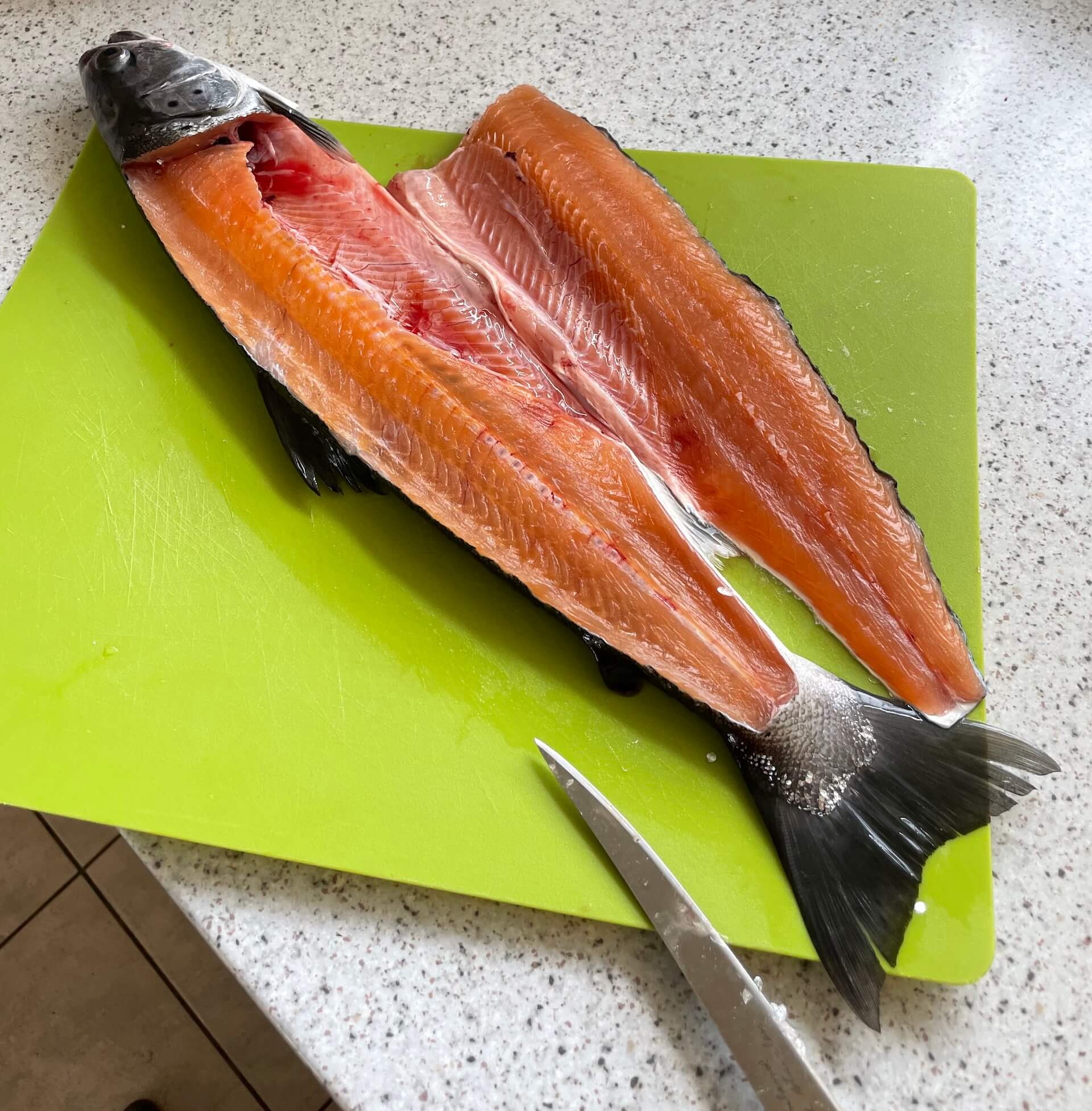
Best Professional
Zwilling Pro 7″

Why we picked it:
Zwilling has a long tradition of high quality kitchen knives: The Zwilling Pro 7″ (read our in-depth review here) is no exception to this rule. Its stainless steel blade is incredibly flexible. The knife is forged from a single piece of steel making it incredibly durable and long lasting.
The Zwilling Pro 7″ is available in multiple variations. If you’re a traditionalist, I recommend the version with the wooden handle. It comes as a 7″ or 8″ depending on your personal preference. I found the 8″ version to be a great choice if you tend to fillet bigger fish often as it makes handling larger fillets a little easier.
My Verdict:
– Elegant design with beautiful transition from blade to handle.
– Trusted by professionals and amateur chefs around the globe.
Pros & Cons
PROS:
-
Most elegant blade
-
Beautiful wooden handle
CONS:
-
Doesn’t come with a sheath
-
Knob at the end of the blade can be a bit obstructive at times
Best Electric Filleting Knife
Bubba Electric Fillet Knife Corded

Why we picked it:
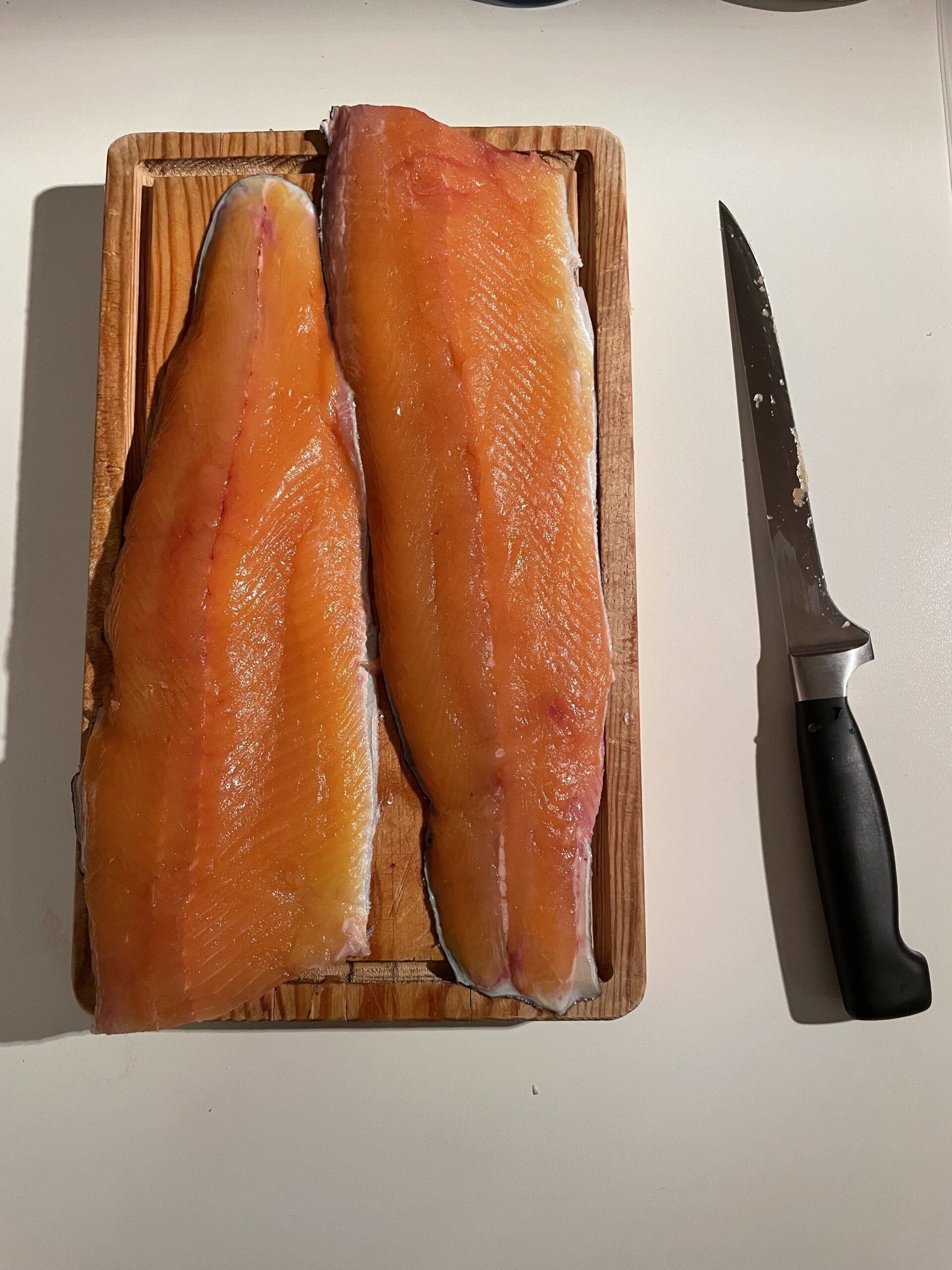
The Bubba Corded has become one of my go-to knives when I’m cleaning a good pile of fish. What I really like about it is the versatility—you get four blades with different lengths and stiffness, so whether I’m working on a smaller trout or a thick-shouldered brown, I’ve got the right blade ready to go. The whole set fits neatly into the case it comes with, which makes it easy to keep organized and grab when I’m heading out for a trip.
The handle is another big plus. It’s super grippy and feels comfortable even when I’m filleting fish back-to-back. Add in the safety lock and trigger guard, and you’ve got a knife that’s not just effective but also feels secure to use. For me, it’s a solid choice if you’re leaning toward a corded electric fillet knife.
My Verdict:
– The Bubba Electric is the best electric filet knife out there in our eyes.
– If you are often filleting multiple fish, there’s no better choice.
Pros & Cons
PROS:
-
Powerful engine
-
Blades are removable
CONS:
-
Set including protective case takes up quite a bit of space
Best Foldable
Opinel Slim No 12
Why we picked it:
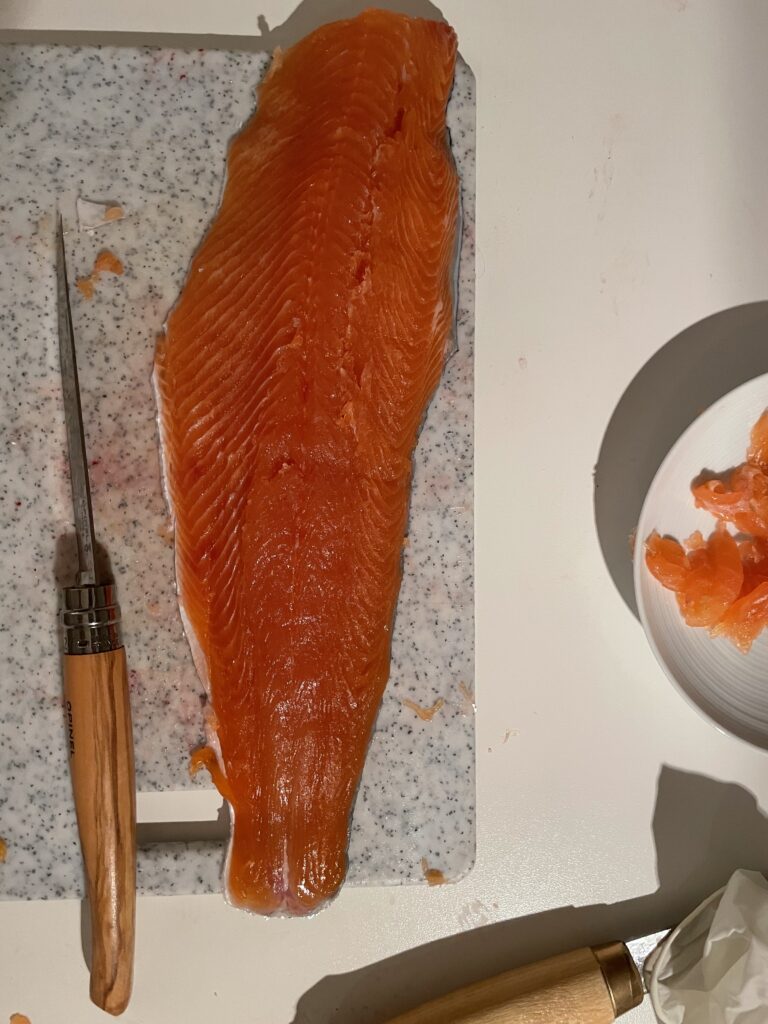
I’ve always had a soft spot for French-made knives, and Opinel is one of those brands that just gets it right. They’ve been making affordable, reliable blades for decades, and the Opinel No. 12 Slim Line (read our full review here) has become one of my favorite “on-the-go” trout knives. The fact that it folds up means I can toss it in my vest or pack without worrying about it, and when it’s time to clean a fish, it’s ready to go in seconds.
The locking mechanism gives me peace of mind too—it keeps the blade from folding in while I’m working, which matters when you’re cleaning fish by the river or around a campfire. It’s not quite as flexible as my full kitchen fillet knives back home, but it’s plenty nimble for a fresh trout on the water. If you pick one up, I’d suggest the olive wood handle. Not only does it look beautiful, but it also holds up much better to water and doesn’t soak as easily. For me, it’s the perfect blend of function, tradition, and style in a knife I can carry anywhere.
My Verdict:
– Fantastic versatility and classy looks combined.
– The No 12 size is just right for bigger fish and still folds away to a compact size.
Pros & Cons
PROS:
-
Excellent packability
-
Classy looks
CONS:
-
Blade is not as flexible as a full on kitchen fillet knife
Best Saltwater Filet Knife
Gerber Controller Folding Fillet
Why we picked it:
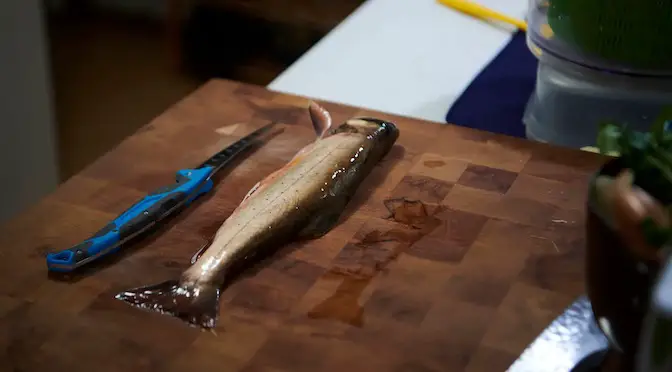
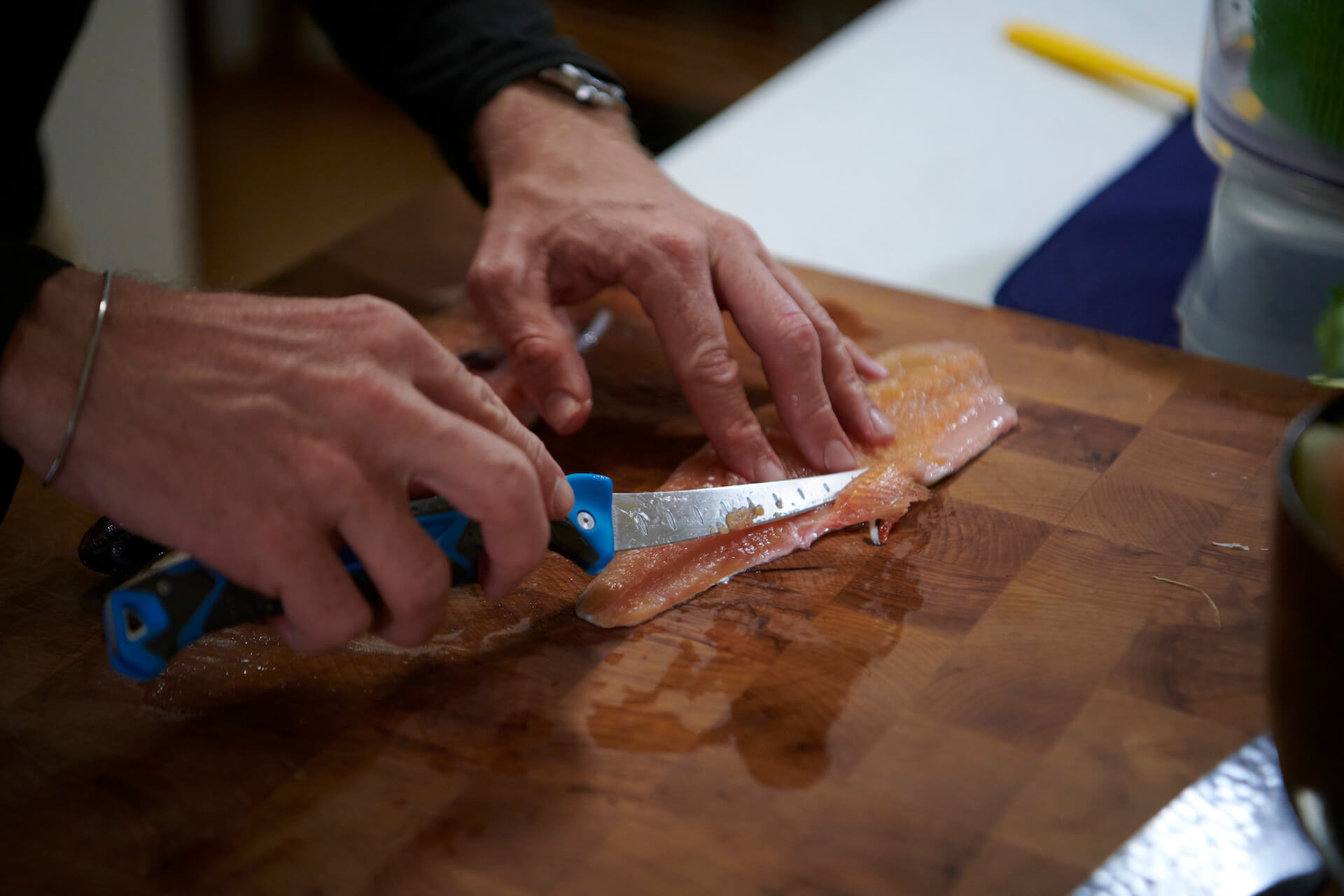
If you are a fan of saltwater species and love to fillet them on the boat or dock, make sure to check out the Gerber Gear Controller Folding Fillet (read our in-depth review here). With a folding mechanism for easy stowaway and a 6″ blade this knife ticks all the boxes of a great saltwater filet knife with an increased degree of corrosion resistance.
The handle has a smart, ergonomic shape that feels secure in my hand, even when I’m putting a little extra pressure into a cut. I like that I don’t have to worry about slipping, especially if things get wet and slimy. Another thoughtful touch is the hole at the end of the handle—you can clip on a leash so if you drop it mid-clean, you’re not watching your knife sink away. For me, that kind of detail makes it a solid all-around folding fillet knife for anglers who want something reliable and easy to carry.
My Verdict:
– Excellent choice for the saltwater fly angler due to its features
– Specifically aimed at stronger species and the availability to fold it away easily.
Pros & Cons
PROS:
-
Excellent grip that provides a lot of protection
-
Hole to attach a leash
CONS:
-
Look and feel is very outdoorsy
-
A foldable version with an 8u0022 blade would be a great addition to the lineup for bigger saltwater species like tuna
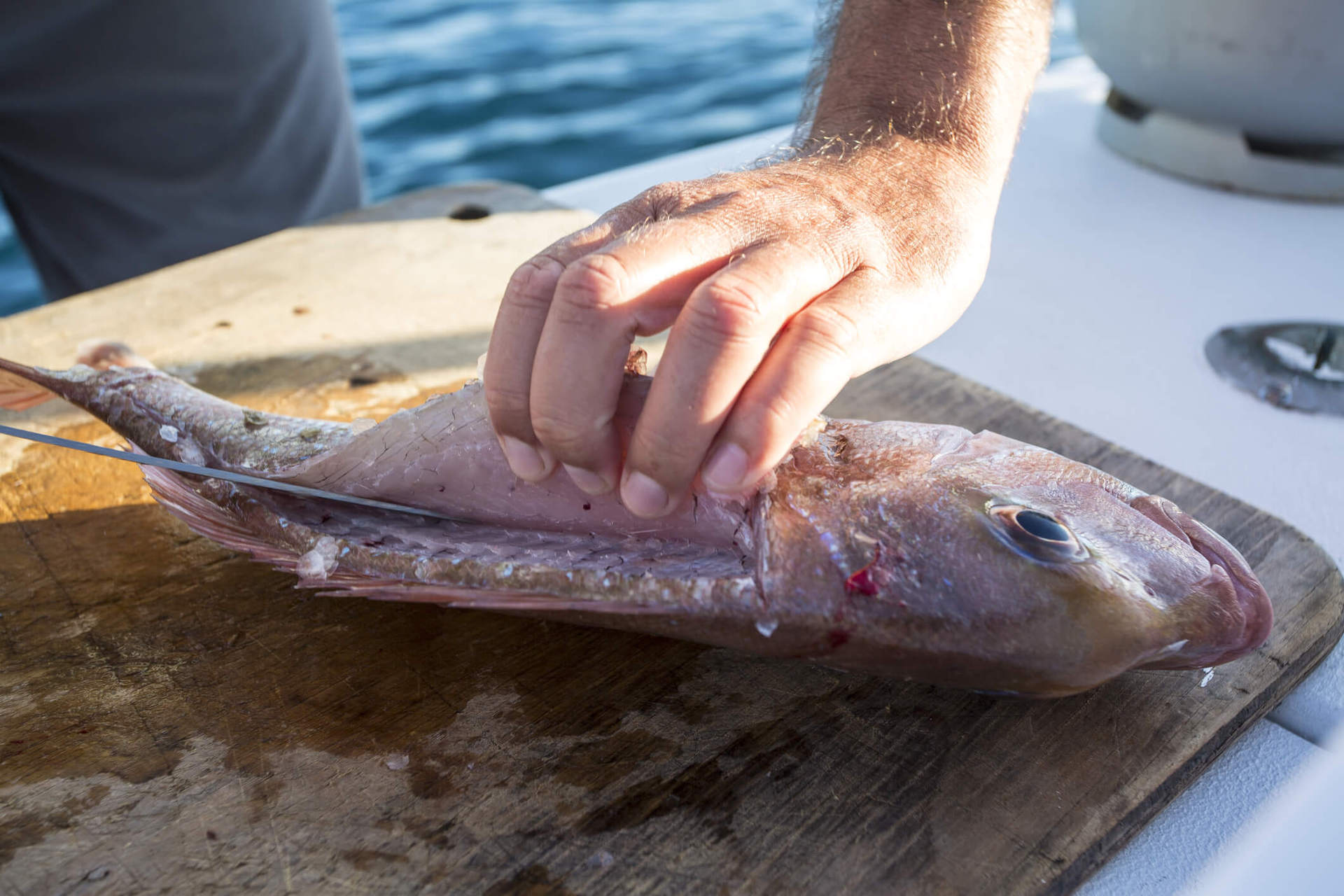
What to Look for in a Quality Fillet Knife for Fish
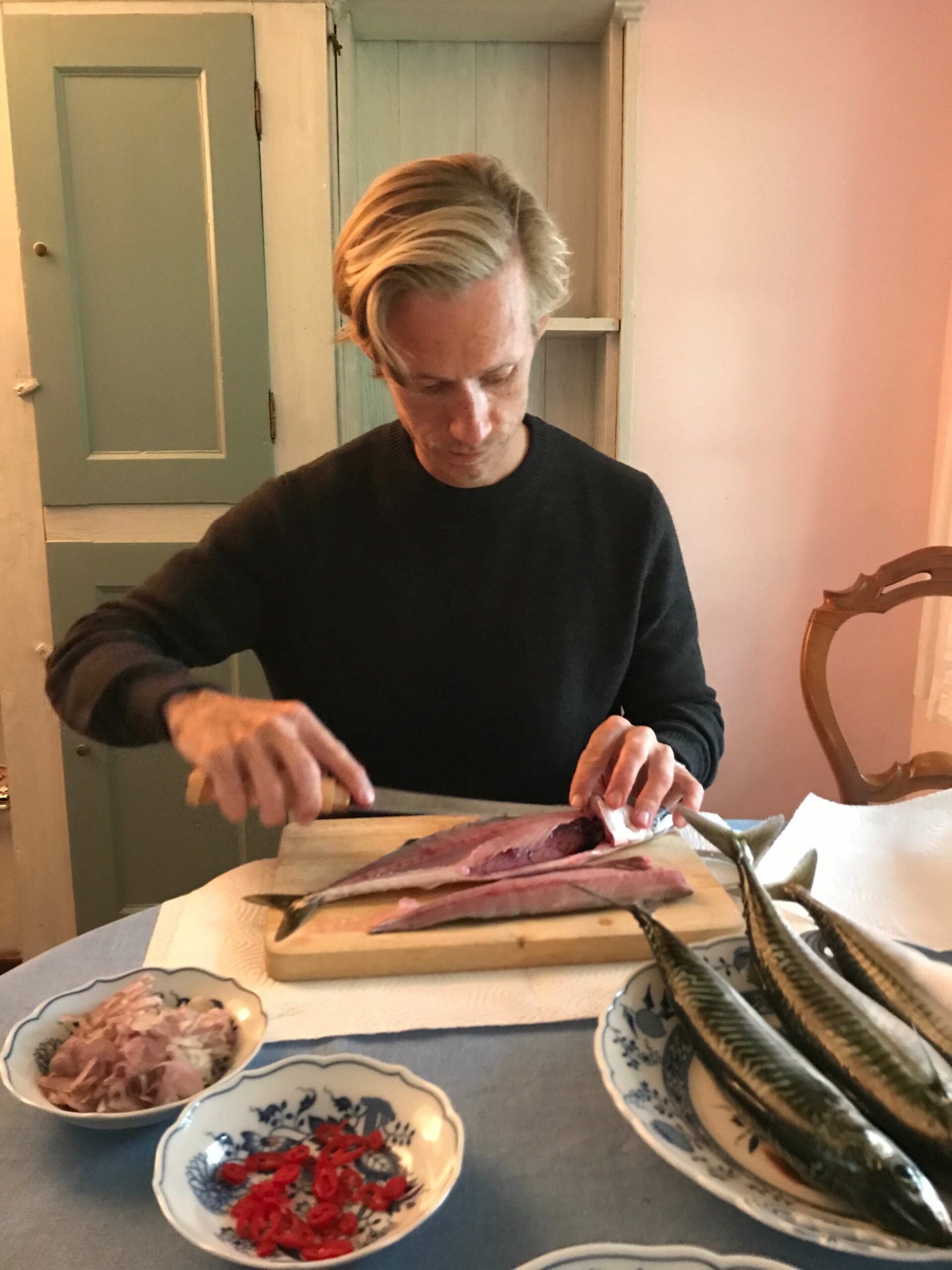
Sharpness and Blade Retention
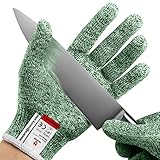
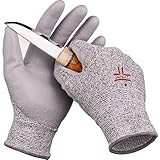
In order to make precise cuts it is essential that the blade is sharp at all times. Funnily enough a sharper blade is also less dangerous than a blunt blade because the cuts can be performed more easily. If you feel insecure using razor sharp blades consider getting a filleting glove. Here are a couple of filleting gloves you can’t go wrong with:

Last update on 2026-06-04 / Affiliate links / Images from Amazon Product Advertising API
Blade retention is another crucial factor. It defines a knife’s ability to stay sharp over a certain amount of time. A quality one should stay sharp for a while. But over time you will eventually have to sharpen your knife using a knife sharpener. In the following paragraphs we want to give you an overview of the best knife sharpeners on the market and different options for filet knife sharpeners.
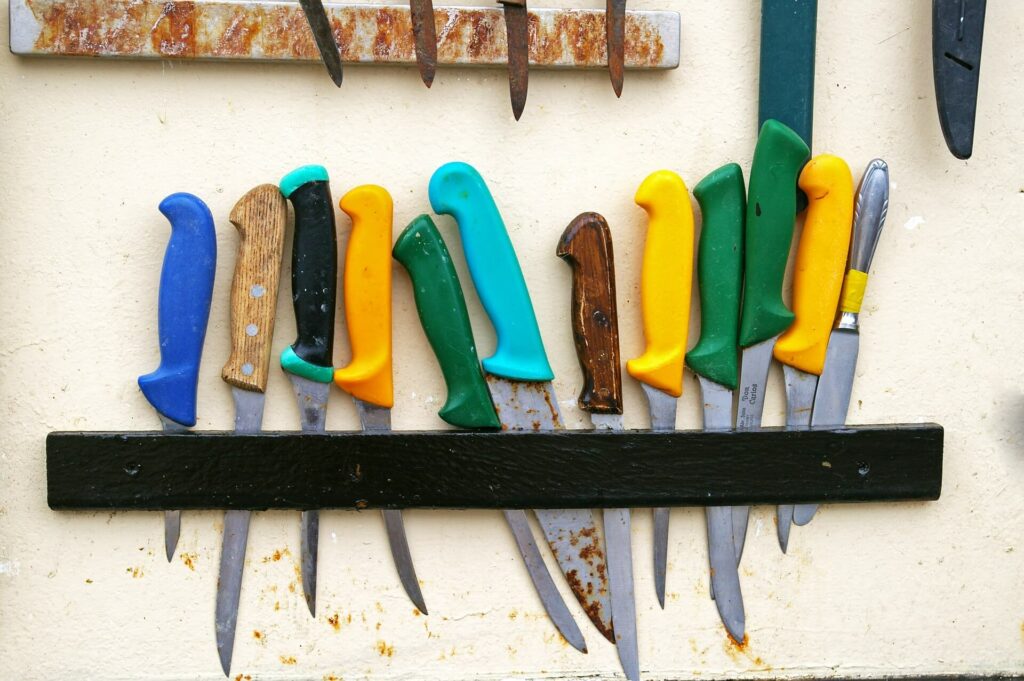
Construction of Filleting Knives
There are three characteristics that a quality filet knife blade has to fulfil: it needs to be thin, strong and yet flexible. A high quality steel (often made in Japan or made in Germany) ensures a thin and sharp blade.
Another aspect you should pay attention to is the handle. Some filleting knives are made from one piece of steel, others have handles made of plastic or wood. An ergonomic shape of the handle will ensure a tight fit and safe cutting.
Guarantee and Price
The price range of filleting knives is big. You can get started with around $25 and spend several hundred dollars if you want to. It comes down to taste and exclusivity in the end. You should look for a guarantee as fillet knives can break despite being flexible. Quality manufacturers often offer a lifetime guarantee.
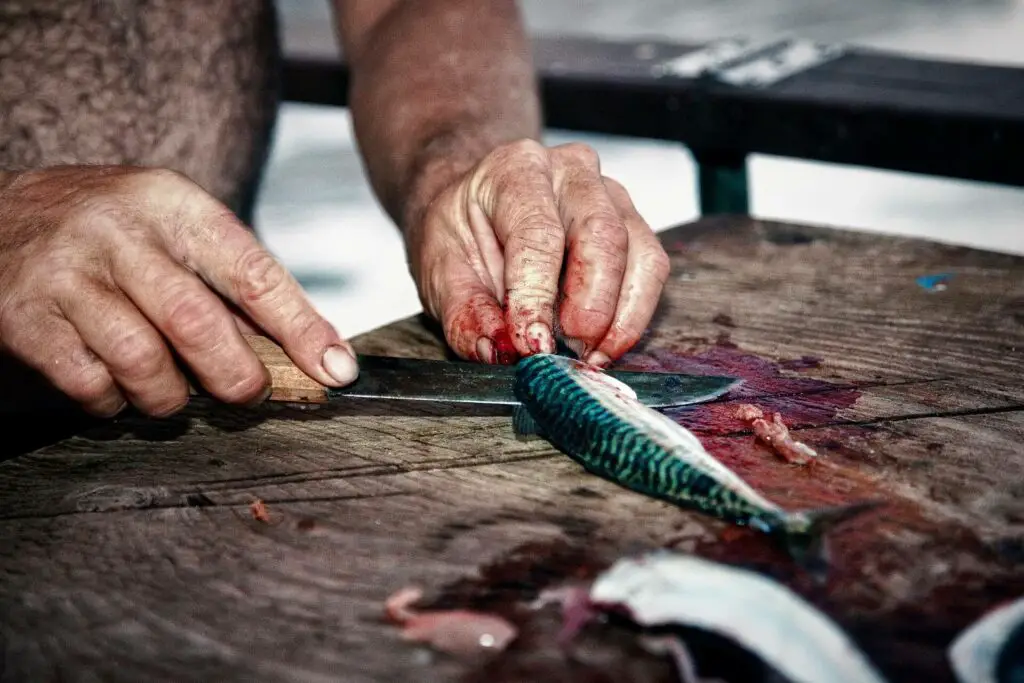
Taking Care of your Knife
Taking care of your knife is easy. Clean and dry it after every use. Store in a dry place and prevent it from dropping. Don’t use it for other purposes than filleting, it will get blunt faster. Do not put a quality knife in the dishwasher. Water and some soap is enough – dry it with a towel.
Conclusion on the Best Fillet Knives
As you can see from our test, fillet knives come in all sorts of makes, forms and shapes. You might be looking for a different type of filet knife if you are looking for one to use on a trip or outdoors.
You might be looking for a high-end knife to use in your kitchen on special occasions. No matter which one you choose in the end, all the knives in our test promise quality and longevity.
Why Trust our Expertise

Editor in Chief Leonard Schoenberger has been fly fishing all his life. After studying journalism at Columbia University and working for publications such as Forbes and Vice Magazine, he decided to found The Wading List in 2017 to cover all things fly fishing.
Frequently Asked Questions: Fillet Knives FAQs
u003cstrongu003eWhat is a fillet knife used for?u003c/strongu003e
A fillet knife (often also called filet knife or filleting knife) is used to fillet fish or meat such as poultry. Its slimmer and more flexible blade (when compared to a kitchen knife) makes it easier to make precise cuts along bones. On average a fillet’s knife blade is between 6 and 11″ (15-28cm).
u003cstrongu003eu003cstrongu003eDo you need a filet knife to fillet fish?u003c/strongu003eu003c/strongu003e
A filet knife is a great tool to cut fish such as salmon or trout. The difference between a filet knife and a normal kitchen knife is the thickness and flexibility of the blade. A fillet knife is thinner and more flexible and hence makes it easier to make precise cuts along the spine of a fish.
u003cstrongu003eu003cstrongu003eu003cstrongu003eIs a fillet knife the same as a carving knife?u003c/strongu003eu003c/strongu003eu003c/strongu003e
No, a fillet knife and a carving knife are different. A fillet knife has a thin, flexible blade designed for precision in filleting fish, while a carving knife has a longer, rigid blade suitable for slicing cooked meats like turkey or ham.
u003cstrongu003eu003cstrongu003eu003cstrongu003eWho uses a fillet blade?u003c/strongu003eu003c/strongu003eu003c/strongu003e
Fillet knives are commonly used by anglers, chefs, and individuals who prepare fish regularly. Anglers use them to fillet caught fish, and chefs use them in professional kitchens for precise filleting.
u003cstrongu003eu003cstrongu003eu003cstrongu003eWhat are the two most common knives used in fish?u003c/strongu003eu003c/strongu003eu003c/strongu003e
The two most common knives used in fish preparation are the fillet knife and the boning knife. The fillet knife is ideal for removing skin and bones, while the boning knife is designed for separating meat from bones.
u003cstrongu003eu003cstrongu003eu003cstrongu003eDo you need a sharp knife to fillet a fish?u003c/strongu003eu003c/strongu003eu003c/strongu003e
Yes, a sharp knife is crucial for filleting fish. A sharp blade ensures clean and precise cuts, making the filleting process more efficient and reducing the risk of injury.
u003cstrongu003eu003cstrongu003eWhat knife do the Japanese use to fillet fish?u003c/strongu003eu003c/strongu003e
In Japanese cuisine, a traditional knife called the “Deba” is commonly used for filleting fish. The Deba knife has a thick, durable blade that excels at cutting through fish bones.
u003cstrongu003eCan you fillet fish with a regular knife?u003c/strongu003e
While it’s possible to fillet fish with a regular kitchen knife, using a dedicated fillet knife is recommended for better results. Fillet knives have a specialized design, including flexibility and sharpness, which makes the filleting process smoother and more efficient.
u003cstrongu003eCan you sharpen a fillet knife?u003c/strongu003e
Yes, fillet knives can be sharpened. Regular maintenance, such as honing the blade with a sharpening steel or using a sharpening stone, helps keep the edge sharp. It’s important to follow the manufacturer’s guidelines for sharpening to maintain the knife’s effectiveness.
Disclaimer: If you click on one of the links in this article and end up purchasing a product we earn a small commission at no extra cost for you. Thank you!
How a fillet knife actually cuts a fish
Filleting is not slicing through flesh, it is separating flesh from a skeleton without leaving meat on the bone. The cut traces the ribcage and the lateral spine, and the blade has to bend with that geometry rather than fight it. Three properties of the steel and the grind decide whether the blade follows the bone or wanders off it: how thin the spine is rolled, how the edge is ground, and how much the blade flexes under hand pressure when you push it along a rib.
The fish itself sets the requirement. A trout pulled from cold, oxygenated water has fine bones, soft flesh, and a rib cage that sits close to the lateral line. The blade has to be flexible enough to ride that rib cage at a shallow angle without skipping. A saltwater fish like a striped bass, a snapper, or a mackerel has tougher skin, denser muscle, and a heavier skeleton. The same delicate blade that follows a trout rib will deflect off a snapper rib. That is why a six-pick lineup like the one above covers a spread of blade lengths and flex profiles rather than chasing one universal knife.
Why electric is its own category, not a faster knife
An electric fillet knife is two reciprocating blades stacked back to back, moving against each other on a short stroke at hundreds of cycles per minute. The cut is delivered by the motion of the blades, not by hand pressure. That changes what the tool is good for. A traditional knife scales with the angler’s skill on each individual fish. An electric scales with throughput. When you have come off the lake with a limit of walleye, or you are working through a cooler of striped bass on the dock at the end of the day, hand-filleting fifteen or twenty fish back to back is a wrist-fatigue problem before it is a sharpness problem. The reciprocating motion absorbs that load.
The trade-off is precision at the rib cage. The reciprocating stroke is fast and forgiving on through-cuts and skinning, but a fixed blade in a trained hand still wastes less meat on a delicate trout. The four-blade interchangeable set on the corded Bubba below is the design answer to that trade-off, short stiff blades for small panfish, long flexible blades for filleting alongside the spine of a larger fish.
Sharpness and Blade Retention
A sharp edge cuts because the apex of the bevel is so narrow that the steel parts flesh under almost no normal force. A dull blade requires you to push, and the push is where accidents happen. The geometry that delivers that fine apex is the edge angle, measured per side. Western kitchen fillet knives (the Zwilling Pro, the Wusthof Classic) are typically ground at 15 to 18 degrees per side, which gives a durable working edge for kitchen use. Japanese-style fillet blades grind down to 10 to 12 degrees per side, cutting more easily through soft flesh but chipping faster against bone. Outdoor fish knives like the Bubba and the Rapala sit in the middle, ground for a balance between edge retention through repeated cuts and survival through occasional contact with rib bones and cleaning boards.
A sharper blade is also a safer blade. Cuts on a dull knife happen because the hand is pushing hard and the blade skips off the surface in an unpredictable direction. A sharp blade tracks. If you feel uncertain working at the apex, a filleting glove is the right insurance:
Edge retention is how long the steel holds that apex through cutting cycles. Two variables drive it: the carbon content of the steel and the heat treatment. Higher carbon means harder steel, measured on the Rockwell C scale. A standard Western kitchen knife sits at Rockwell 56 to 58 HRC. A premium Japanese blade reaches 60 to 62 HRC. Harder steel holds an edge longer but is more brittle, chipping if it contacts bone at the wrong angle. The outdoor-grade knives above use mid-range stainless alloys (often 420 or 440 grade variants, or proprietary blends like the Bubba’s stainless) that trade some peak hardness for corrosion resistance and forgiving impact behavior. That trade is the right one for a knife that lives in a tackle box, on a boat deck, or by a streamside cleaning station.
Construction of Filleting Knives
Fillet blades are thin, long, and flexible by design. The thickness at the spine is usually 1.5 to 2 millimeters, against the 3 to 4 millimeters of a chef’s knife, and the blade tapers further toward the tip. That cross section is what makes the blade bend without snapping. Flex is not a single property, it is distributed along the length. A blade that flexes evenly along its full length lets the angler ride the contour of a curved rib cage; a blade that flexes only at the tip is built for delicate skinning work; a stiffer blade is built for power cuts through tougher saltwater fish. The Bubba 9 Inch Flex sits at the long-and-flexible end of that spread, the Opinel No 12 at the shorter and stiffer end.
Steel chemistry decides the corrosion behavior, which matters more for fillet knives than for any other kitchen blade because of where they get used. A blade that spends an afternoon on a saltwater dock is exposed to chloride ions that drive pitting corrosion in unprotected steel. Stainless alloys add chromium (10 percent and up) to form a passive chromium-oxide layer that resists that attack. The Gerber Controller saltwater pick above is built around that requirement; the Rapala stainless from Martiini Finland is the equivalent for freshwater use where chloride exposure is lower but the knife still spends time wet. Full-tang construction, where the blade and the handle core are forged from a single piece of steel, as on the Zwilling Pro, adds balance and eliminates the failure point where a partial tang meets a fitted handle.
Handle material matters for two reasons. Grip security under wet, slimy conditions is the safety variable: a rubberized, textured handle (the Bubba) outperforms a polished wood handle (the Zwilling, the Opinel) when your hand is wet with fish slime. Hand fatigue is the second variable: the ergonomic shape and the weight balance distribute load across the hand when you are working through more than two or three fish, which is why the trigger-guard contour on the Bubba reduces wrist strain on a long cleaning session.
Guarantee and Price
The $30 to $300 spread on fillet knives is real, but the differences across that range are not always linear. The jump from a $30 utility blade to a $50 to $60 outdoor-grade knife buys you better steel, a rubberized grip, and a sheath. The jump from there to the $130 to $150 range buys you forged full-tang construction, finer edge geometry, and a handle that lasts decades with care (the Zwilling Pro, the Wusthof Classic). Above $200 you are paying for hand-finishing, premium Japanese steel (VG-10, AUS-10, blue or white paper steel), and aesthetics. A lifetime guarantee is standard from German and Japanese kitchen brands and from Bubba; outdoor and budget brands typically offer one-year warranties.
Taking Care of your Knife
Stainless steel resists corrosion, it does not prevent it. Chloride ions from salt water and from fish slime drive pitting under sustained wet contact, and a dishwasher cycle combines salts, heat, and detergent in exactly the wrong way. Wash by hand with mild soap, dry the blade and the handle joint thoroughly with a towel, and store the knife dry. After saltwater use, rinse with fresh water before the salt has time to dry on the blade. For carbon-steel blades (rare in fillet knives, but they exist in some Japanese imports) a thin food-grade mineral oil film on the blade prevents flash rust. Use the knife only for filleting and processing, boards, bones, and frozen flesh all dull the edge faster than fish ever will.
Conclusion on the Best Fillet Knives
Match the knife to the fish and to where you process it. For trout on a kitchen counter, a forged full-tang blade like the Zwilling Pro is the right tool. For a tackle-box knife that lives in a sheath and gets used streamside or on a boat, the Rapala or the Bubba is the call. For a saltwater dock with chloride exposure, the Gerber Controller’s corrosion-resistant build earns its place. For a folding blade you can pocket, the Opinel No 12 has been doing the job for more than a century. The electric Bubba is the answer when throughput is the constraint rather than precision.
Sharp blade, dry storage, the right edge angle for the steel you are running. Those three habits matter more over the life of the knife than the price you paid for it.
—

Leonard Schoenberger is a fly fishing professional and gear specialist with over 20 years of experience on the water. As the manager of Heidarvatn, a world-class sea trout lodge in Iceland, his product recommendations and tactical advice are tested in some of the most demanding conditions on earth. His expertise has been mentioned in The New York Times, the Financial Times, and at the Outdoor Media Summit.

![10 Best Fly Fishing Hip Packs of [year]](https://www.thewadinglist.com/wp-content/uploads/2021/04/Fly-Fishing-Hip-Pack-Preview-Small-1-672x372.png)
![10 Best Waders for Fly Fishing – [year] Buyer’s Guide](https://www.thewadinglist.com/wp-content/uploads/2020/11/10-Best-Fly-Fishing-Waders-Preview-672x372.jpg)
![Best Fly Fishing Sling Pack – [year] Buyer’s Guide](https://www.thewadinglist.com/wp-content/uploads/2020/11/Best-Fly-Fishing-Sling-Packs-P-.jpg)