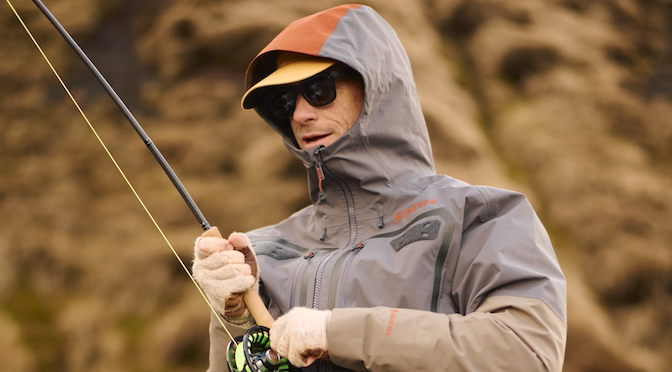
I have just returned from another fantastic week guiding a great team of clients in Iceland.
We were fishing a river in the northwest, famous for its big salmon, and the guys had an incredible time, enjoying that rare, confident anticipation of contacting fish during every single session. Every angler in the group was an experienced hand, and everyone caught fish.
However, one session perfectly illustrated a dynamic that our policymakers consistently fail to grasp when using catch data as a method to classify rivers.
During that session, the river’s owner—who has guided these waters for more than 30 years—joined us. While our highly competent clients were catching one or two fish per session, this local expert landed five. He was incredibly gracious and shared the water beautifully; had he been fishing strictly for himself, he could have easily landed eight.
This means the local expert outperformed excellent visiting anglers by at least 60%. Hold onto that figure because it exposes the fundamental flaw in how wild salmon populations are currently assessed back home.
The Illusion of Catch Statistics
When people ask me what the single biggest mistake we make when managing salmon fishing in Scotland is, my answer is straightforward: The methodology used by the Marine Directorate (MD) to classify our rivers is fundamentally disconnected from the practical realities of most rivers.
The primary tool for these classifications remains raw catch data. But on any salmon river, catches are a variable metric heavily influenced by human skill, local conditions, weather conditions, and angling pressure—not simply fish abundance.
Like our man above, if a master of the water like Bob Kindness on the River Carron fishes, his intimate, decades-long knowledge ensures he will consistently out-catch the average rod by that same 60%+ margin, regardless of overall stock levels. In the past, regulatory bodies often dismissed these ground-level observations from ghillies and long-term anglers as “anecdotal.” Today, however, we have sound scientific data proving that treating raw catch stats as a direct proxy for total fish numbers is a mathematical fallacy.
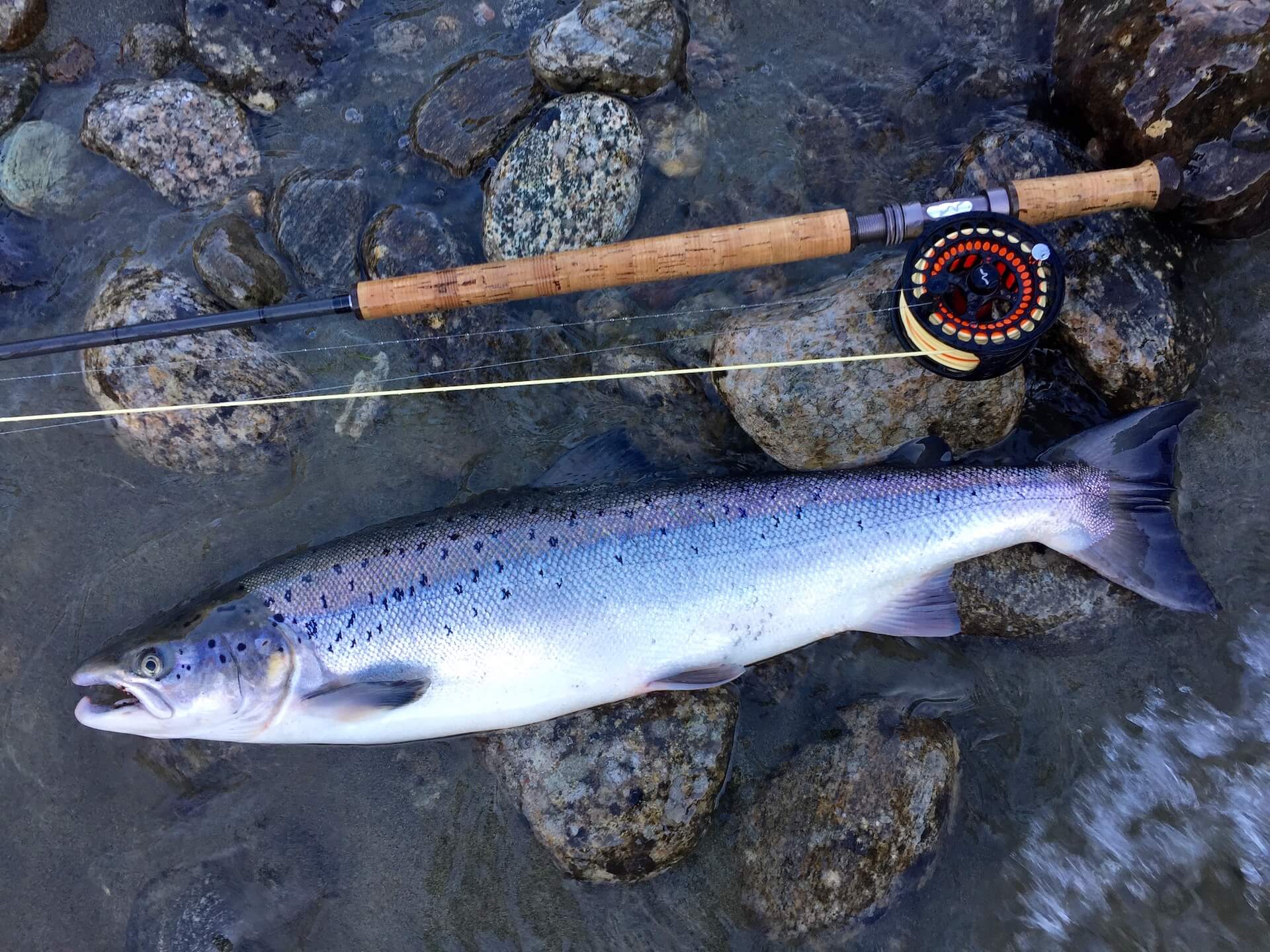
The Spate River Reality & The “Perfect Water Window”
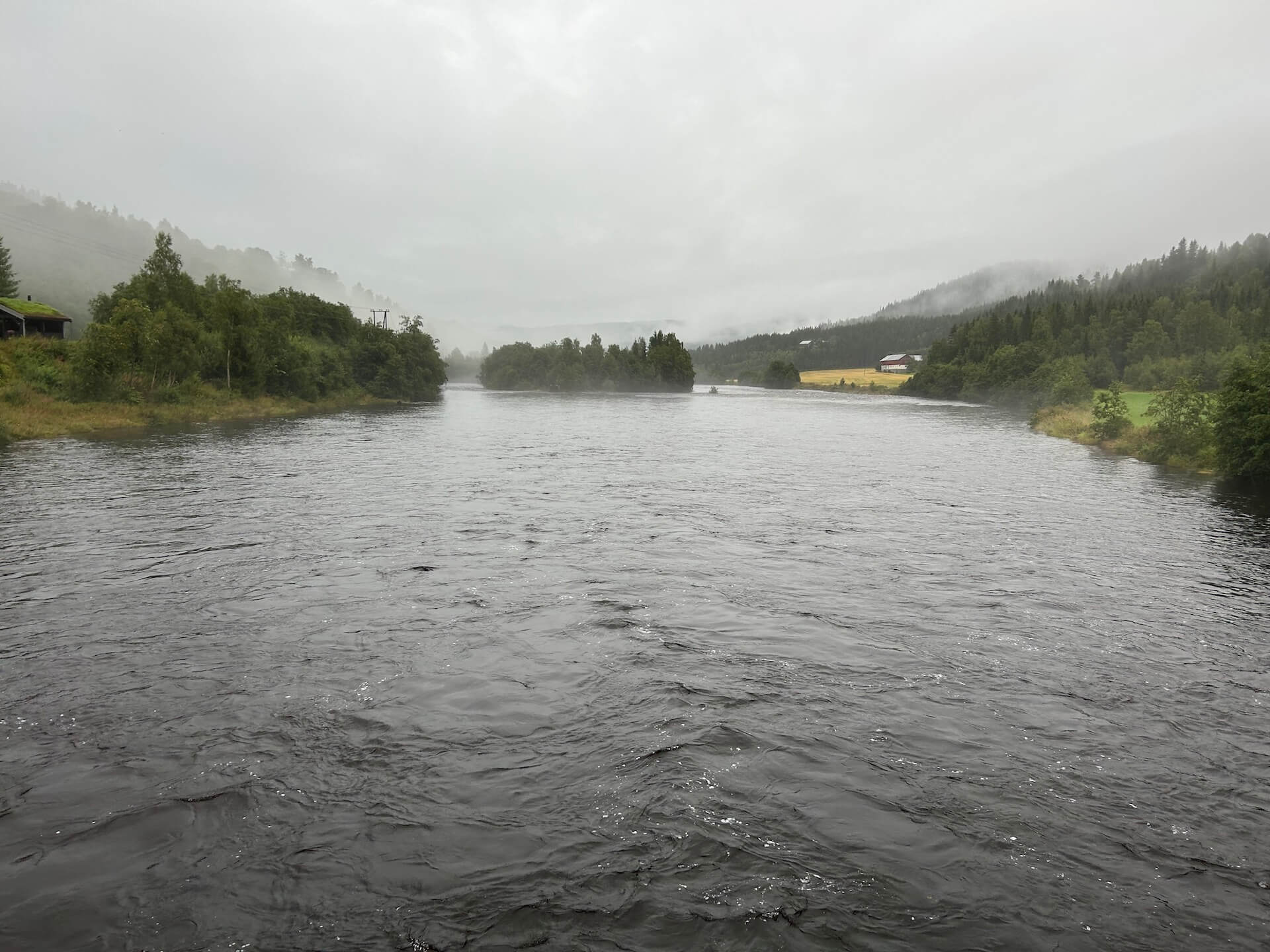
The River Carron is a classic spate river, introducing a level of environmental volatility that standard classification models simply aren’t equipped to handle. Spate rivers do not have a steady, predictable flow; they rely entirely on rain, creating a highly fickle “perfect water window.”
The Carron is relatively shallow and feeds from a loch seven miles upstream. This topography creates two distinct data-skewing scenarios:
- High Water: When the river rises, salmon do not linger; they run straight through to the safety of the loch. Because they rest in the lower river pools for such a short time, unless people are fishing at this exact moment, these fish vanish from the river’s catch records.
- Low Water: During droughts, fish simply hold position and refuse to run at all.
Last year, the Carron recorded a catch of 79 salmon and grilse. While this is lower than its recent historical peaks, we must remember this occurred during a severe drought year on a river with no ghillies or guides to assist visiting rods. The key on those rivers is having them fished at exactly the right time.
To put that in perspective, the total annual catch for the entire Carron on a good year mirrors what a single, six-rod beat on the Spey might produce. Yet last year—the same drought year—several legendary beats on the Spey that historically expected 250 fish were delighted if they managed to scratch up 80. When you analyse the data pro-rata, the Carron’s stock is holding up remarkably well. Given slightly more favourable water levels, it would be outpacing sections of the Spey, Dee, or Findhorn.
Overlooking Catch Per Unit Effort (CPUE)
Another critical metric missing from official assessments is Catch Per Unit Effort (CPUE), alongside a nuanced understanding of fishing pressure.
- Iceland: Measuring CPUE is highly regulated and uniform; rods are legally capped at fishing 12 hours per day.
- Scotland (Standard Beats): A typical four-rod beat sharing pools might see individuals fishing a maximum of 8 hours a day. When multiplied across the group, that equals 32 hours of intense, continuous fishing pressure concentrated over key pools.
- Scotland (Spate Rivers): On a spate river like the Carron, fishing pressure is entirely different. For large portions of the season—either during extreme lows or massive highs—there are very few people on the water. The actual fishing pressure might drop to as low as 6 hours.
Compounding a river’s classification without weighting it against these wildly divergent levels of rod effort means working with deeply flawed data.
Rethinking the Hatchery Debate: The DNA Evidence
Perhaps the most glaring policy disconnect involves localised conservation and enhancement efforts. In recent years, the MD restricted Bob’s proven and successful broodstock program, forcing a drop in stocked fish from 200,000 to 50,000. This decision rests on the long-held institutional dogma that wild-born fish always outperform hatchery-reared fish in the wild.
However, recent science has fundamentally challenged this assumption:
- New Genetic Findings: Definitive results from five years of DNA research show conclusively that this is not a universal truth. In fact, within specific populations, carefully managed hatchery fish were shown to outperform their 100% wild siblings (with the key word being some).
- Selective Rearing Methods: Just as the late Peter Gray brilliantly demonstrated on the River Tyne, Bob Kindness achieved success through a rigorous process of trial and error. By developing a specific methodology of selective rearing via his broodstock program, he focused on sending the fittest possible hatchery-reared fish to sea. This is a world away from the generalised hatchery practices of the past, which were often governed by outdated/incomplete data and designed with a high margin of failure.
The Tyne, the Carron, and successful operations in Iceland prove that a tailored, modern hatchery program can actively succeed, and recent DNA studies support this.
Furthermore, if the massive rise in adult salmon returning to the Carron during its peak years had been down to a broader environmental shift—such as improved marine survival or changes in aquaculture—then every neighbouring river would have shown the exact same positive trend. They didn’t. While the Carron was enjoying historic returns and favourable fishing conditions, almost every other river in Scotland was experiencing a clear decline. It was an isolated success story that standard official theories simply cannot explain.
A Diplomatic Look at Coastal Waters
This localised success brings us to the highly sensitive debate surrounding aquaculture and sea lice. Why, during those years, did a river system surrounded by aquaculture buck the downward trend? This is a question I’d love to hear properly debated by those on each side of the argument—talking always leads to clarity and better understanding.
When conducting sampling for sea trout and finnock in the Carron’s estuary, Bob’s consistent observation has been notable: he has not encountered fish carrying an excess number of sea lice, or numbers that would trigger immediate biological concern. Those are the observations of someone on the ground who has seen it over a long period. However, this is not to say there is no problem elsewhere; it simply records what he has personally witnessed.
Rather than allowing this to become another polarising battleground between conflicting agendas and theories, it should be treated as an open invitation for collaborative field science:
- Transparent Sampling: Join practical experts on the water to sample finnock and smolts in specific coastal areas or around sea nets, documenting data transparently as one unified team.
- Isolating Variables: This data collection aims purely at ascertaining how many fish are lost specifically to sea lice infestation. It should not be confused with the deeper, separate debates surrounding broader aquaculture practices.
The Flaw in Egg Deposition Models
The current regulatory framework places immense weight on theoretical egg deposition to forecast future juvenile recruitment. On the Carron, this approach completely misses the physical reality of the changing riverbed.
Since 2009, severe winter spates all over Scotland have physically altered our river systems, washing thousands of tonnes of gravel downstream every winter. When the structural fabric of the riverbed shifts on that scale, most eggs deposited simply cannot survive to become fry—regardless of how many fish spawned (a trend obvious on the Dee, Derwent, Spey, and Deveron).
Basing conservation policies on the sheer volume of eggs laid while ignoring the physical destruction of spawning habitat by intensifying winter weather achieves nothing.
Moving Forward
For thirty years, management by theoretical modelling has failed to reverse the broader decline of wild Atlantic salmon, while simultaneously creating friction with the rural communities, ghillies, and local managers who protect these waters.
If we genuinely want to safeguard the future of our rivers, our regulatory bodies must evolve past primary-school metrics. It is time to move away from rigid bureaucratic guesswork and integrate true environmental variables, physical river dynamics, and peer-reviewed DNA evidence into a classification system that reflects the scale of the crisis in the 21st Century.
A Final Thought: Please don’t read this article as an argument that hatcheries are a complete panacea for the restoration of wild salmon—I understand the problem enough to know that isn’t the case. However, as proven on the Carron, Tyne, and rivers across Iceland, targeted hatcheries maintain angler interest, inject vital cash into rural communities, and keep ghillies employed. Those pointing fingers at Bob Kindness and the legacy of Peter Gray need to take a step back and examine their own tangible achievements in these conversations.

Ian Gordon
Ian Gordon is one of the most respected salmon fly fishermen and spey casting instructors in the game. He guides on his Scottish home rivers, just as well as abroad in countries such as Norway, Canada or Iceland. Learn more about Ian.