Most of the season, a trout reel has one job:
hold the line and stay out of the way.
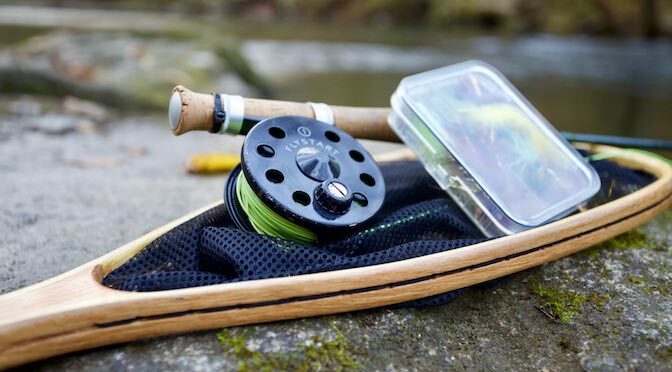
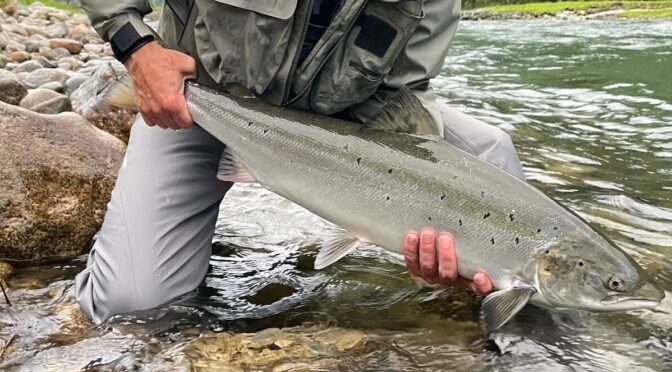
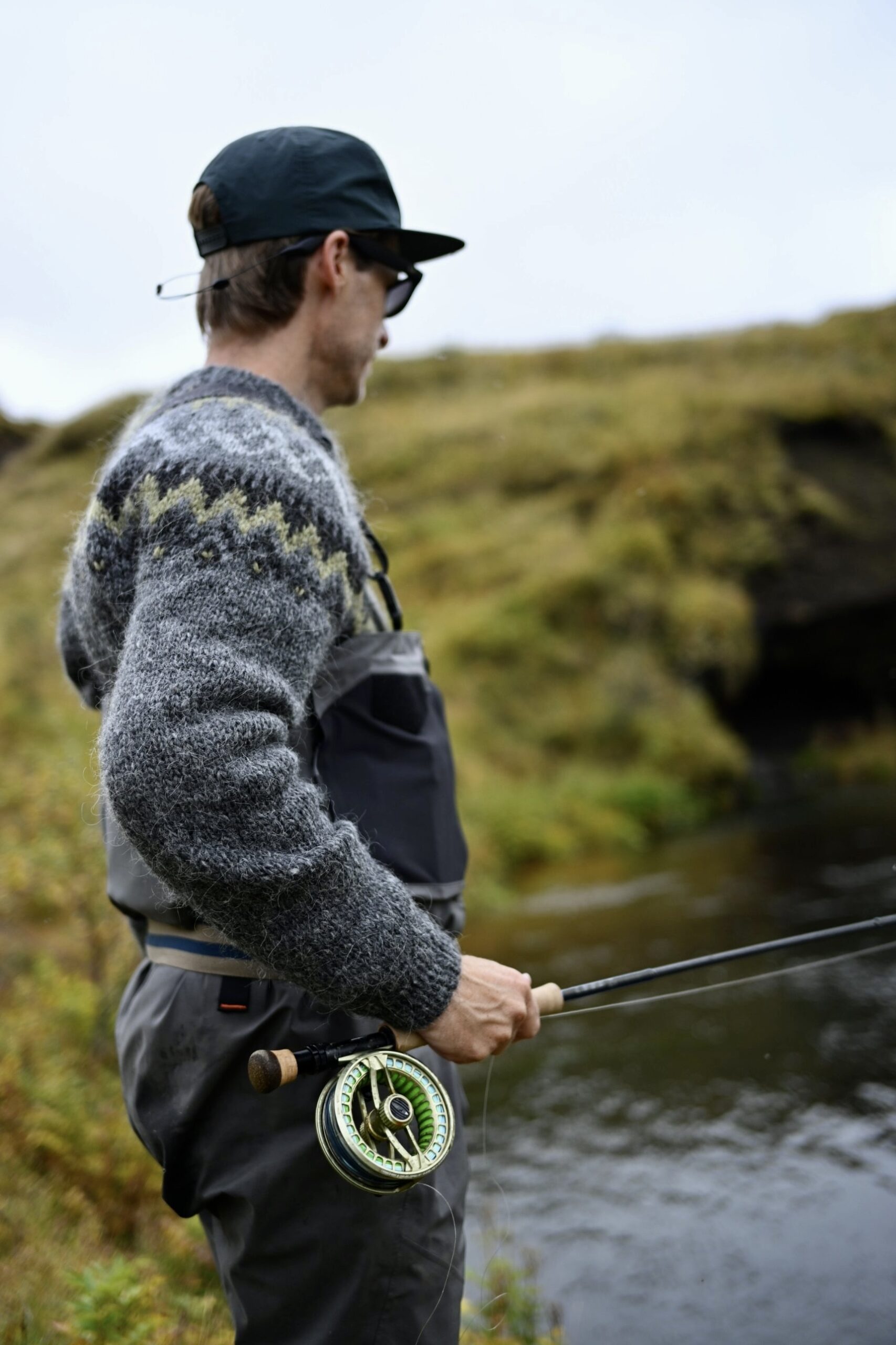
In Iceland, it has a second one. A fresh sea trout that has spent the summer feeding in the Atlantic doesn’t fight like a resident brown – it runs, turns and runs again, usually just as you’ve started thinking about the net. Then the reel ends up in the water, in the moss, and strapped to the outside of a wet backpack for the walk home. Guideline built the Fario as a light, large-arbor reel for brown trout, char, grayling and rainbows, and pitches it at fine leaders and hard-fighting fish. We’ve fished the ±6 in Champagne through the autumn in Southern Iceland to find out whether it holds up.
Disclaimer: Some of the links in this article are affiliate links. If you click on one of them and end up purchasing a product we earn a small commission at no extra cost for you. We only recommend products we believe in ourselves. Learn more here.
Overview: A Large-Arbor Reel Built Around Trout Tippets
The Fario is Guideline’s lightweight trout reel: a CNC-machined, large-arbor design with a sealed drag, aimed at the #3 to #7 range. It’s designed by Guideline in Scandinavia and made in South Korea. Guideline describes it as the next generation of the reel, with a wider-diameter, narrower spool than its predecessor.
Three Sizes: The Fario comes in ±4, ±5 and ±6. The “±” naming is honest about how people actually use trout reels: each size covers the line weight on the box plus one either side.
| Size | Diameter | Spool width | Weight | Capacity (WF line + 20 lb Dacron) | Line weights |
|---|---|---|---|---|---|
| ±4 | 94 mm | 22 mm | 123 g | #4 + 75 m (82 yds) | #3–#5 |
| ±5 | 98 mm | 24 mm | 128 g | #5 + 100 m (109 yds) | #4–#6 |
| ±6 | 102 mm | 26 mm | 130 g | #6 + 125 m (137 yds) | #5–#7 |
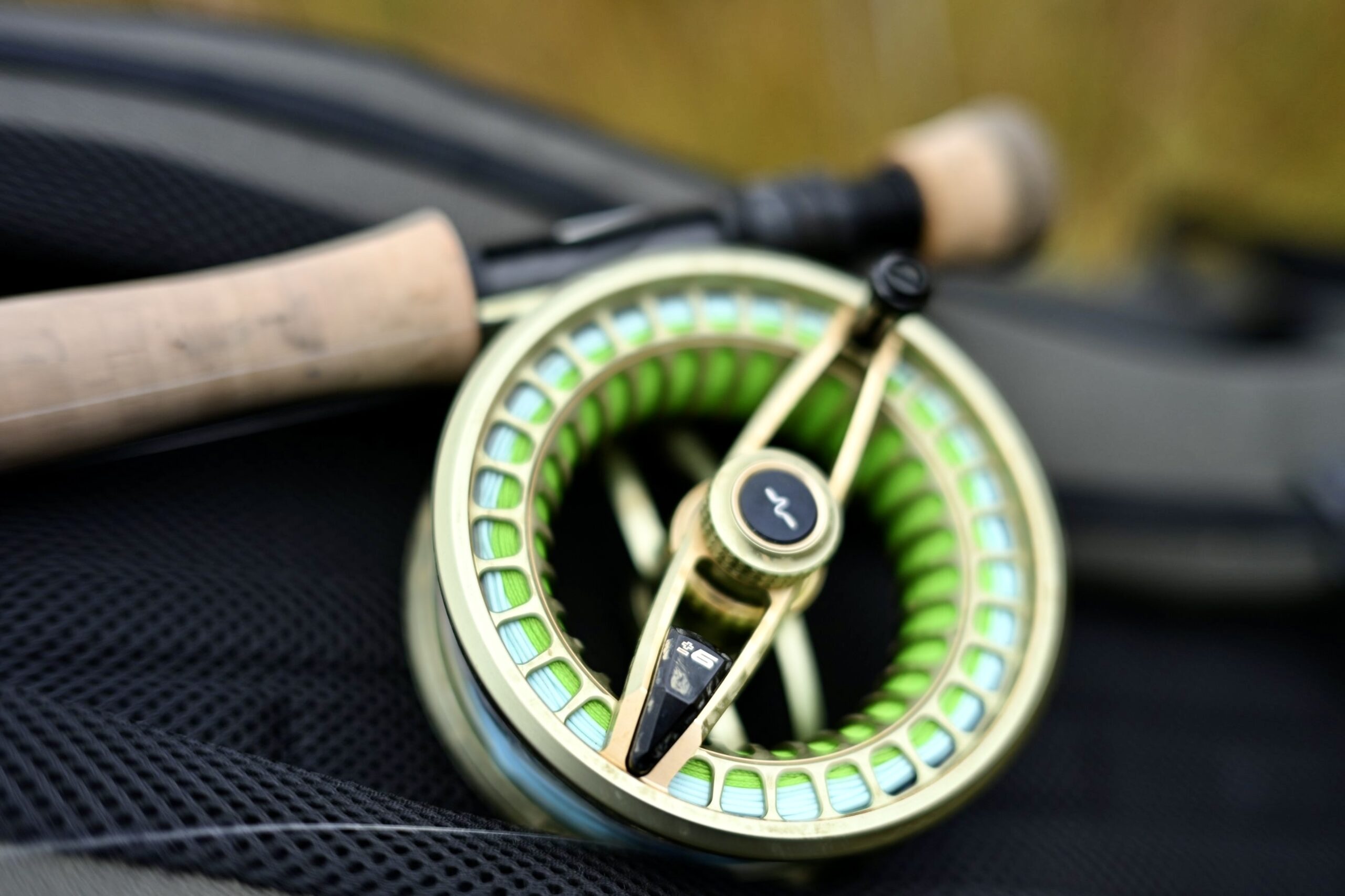
Aircraft-Grade Aluminium: The frame and spool are CNC-machined from 6061-T aluminium, with a reinforced core and spool for rigidity. Diamond-textured grip points on the spool give you something to hold onto when your fingers are cold and wet.
Weight: Guideline lists the ±6 at 130 g. For a reel that holds a #6 line and 125 m of backing, that’s light – and only 7 g more than the ±4.
Colours: Charcoal, Bronze and Champagne. We fished the Champagne.
The Details That Make It a Trout Reel
Sealed Carbon Drag: The drag is a sealed carbon system with a maximum of 1.2 kg (2.65 lb) of braking force. That’s not a big number on paper, and it isn’t meant to be: on a trout reel the drag exists to protect a 4X tippet, not to stop a tarpon. Being sealed means sand, grit and lake water stay out of the drag stack.
630° of Adjustment: The drag knob turns through 630° – a turn and three-quarters – from lightest to heaviest. A long range like that means each click is a small change, which is what you want when the difference between landing a fish and breaking it off is a few hundred grams.
Large Arbor, Narrower Spool: Compared with the previous generation, the outer diameter is 5% larger and the spool 20% narrower. A bigger diameter picks up more line per turn of the handle; a narrower spool lays it on more evenly and makes it less likely to bunch on one side when you’re reeling fast.
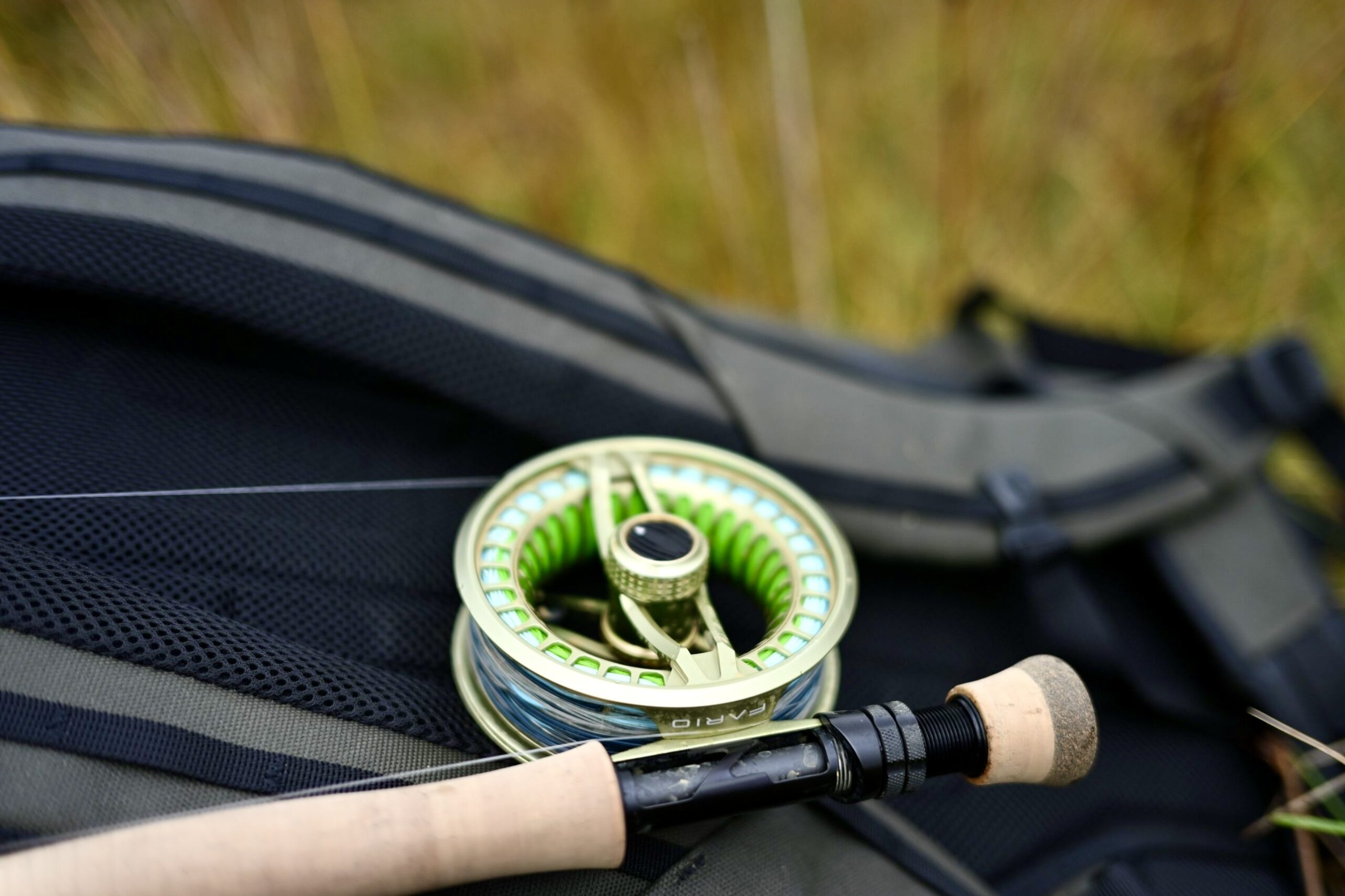
Recessed Reel Foot: The foot sits recessed into the frame, which brings the reel’s mass closer to the rod and is meant to improve balance in the hand.
Left or Right: The retrieve can be switched between left- and right-hand wind, and Guideline has simplified the internals to make that conversion and general servicing easier.
Neoprene Case: It comes in a neoprene case with a Velcro closure that also fits over the reel while it’s mounted on the rod – handy for the drive between beats.
Spare Spools: Spare spools are available in all three sizes and colours, listed at $278.
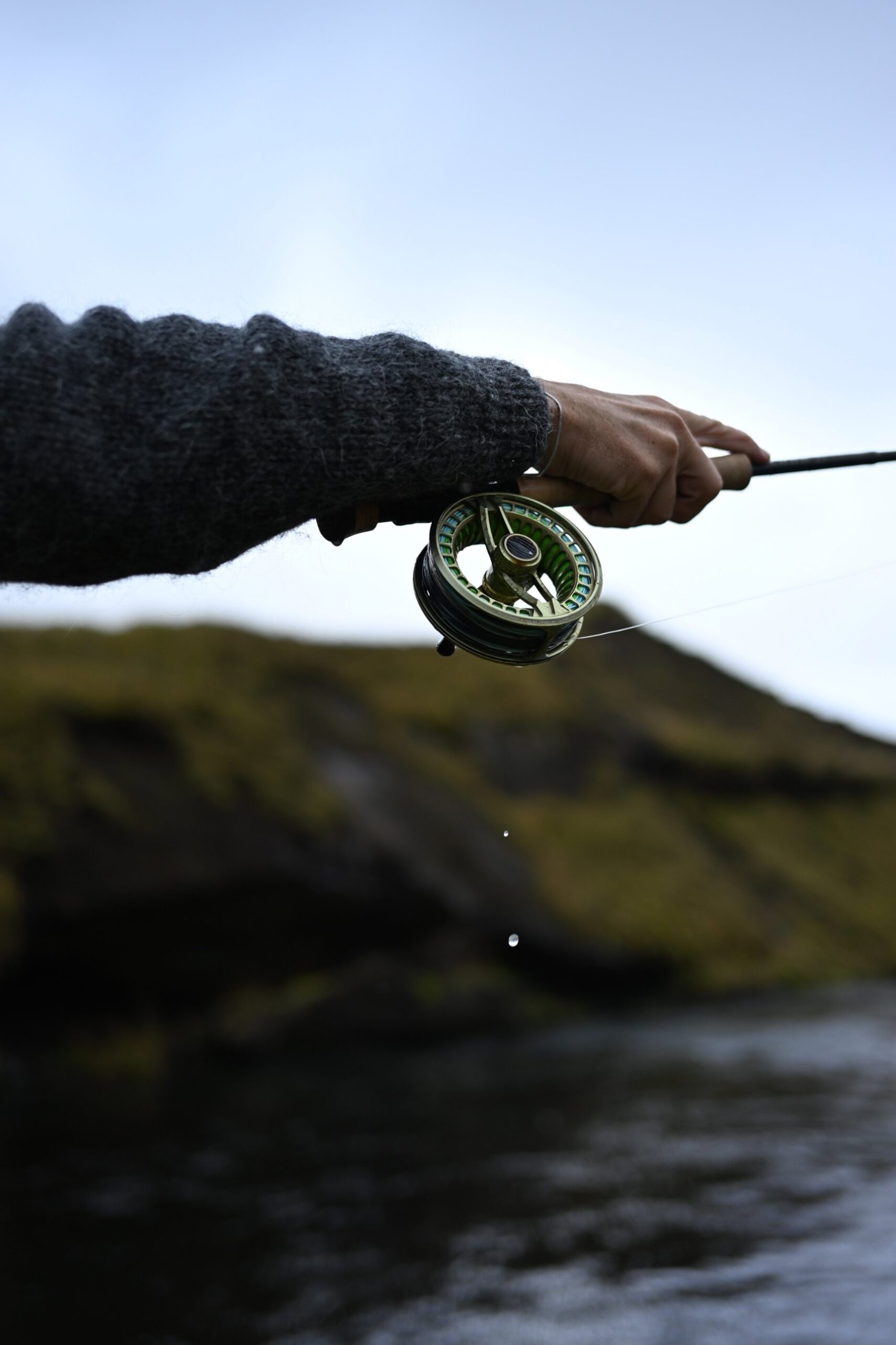
In the Wild: Performance Review
Sea Trout on the Drag
This is the part that matters, and it’s where the Fario earns its place. Set light for fine tippets, the drag started smoothly on the first pull of a run rather than sticking and then letting go – the moment where cheaper trout reels tend to snap a leader. When a fish turned and ran again near the net, the drag behaved the same way the second time as the first. 1.2 kg of maximum pressure sounds modest, but we never came close to needing all of it on a #6 with trout tippet. If you regularly fish heavy tippets for big fish, the bigger reels in Guideline’s range are the better tool.
Picking Up Line
The large arbor does what it should. When a fish swims back toward you – something sea trout do with annoying regularity – you gain line quickly enough to keep the hook set. The narrower spool laid the line back evenly, even when we were reeling in a hurry.
Balance in the Hand
At 130 g, the ±6 is light enough that it doesn’t feel like a weight hanging under the rod, and the recessed foot keeps it tight to the reel seat. Over a full day of casting, a reel that balances the rod near your hand matters more than it sounds, and the Fario got that right on our #6.
Wet, Cold and Dirty
Icelandic autumn means water everywhere: rain, moss, reels dunked during release, and gear strapped to the outside of a soaked backpack. The sealed drag didn’t change character after a dunking, and the diamond-textured grip points are easy to find with cold fingers. The Champagne finish shows water spots and grime more than Charcoal would – a quick rinse sorts it, but if you want a reel that always looks clean in photos, pick the darker colour.
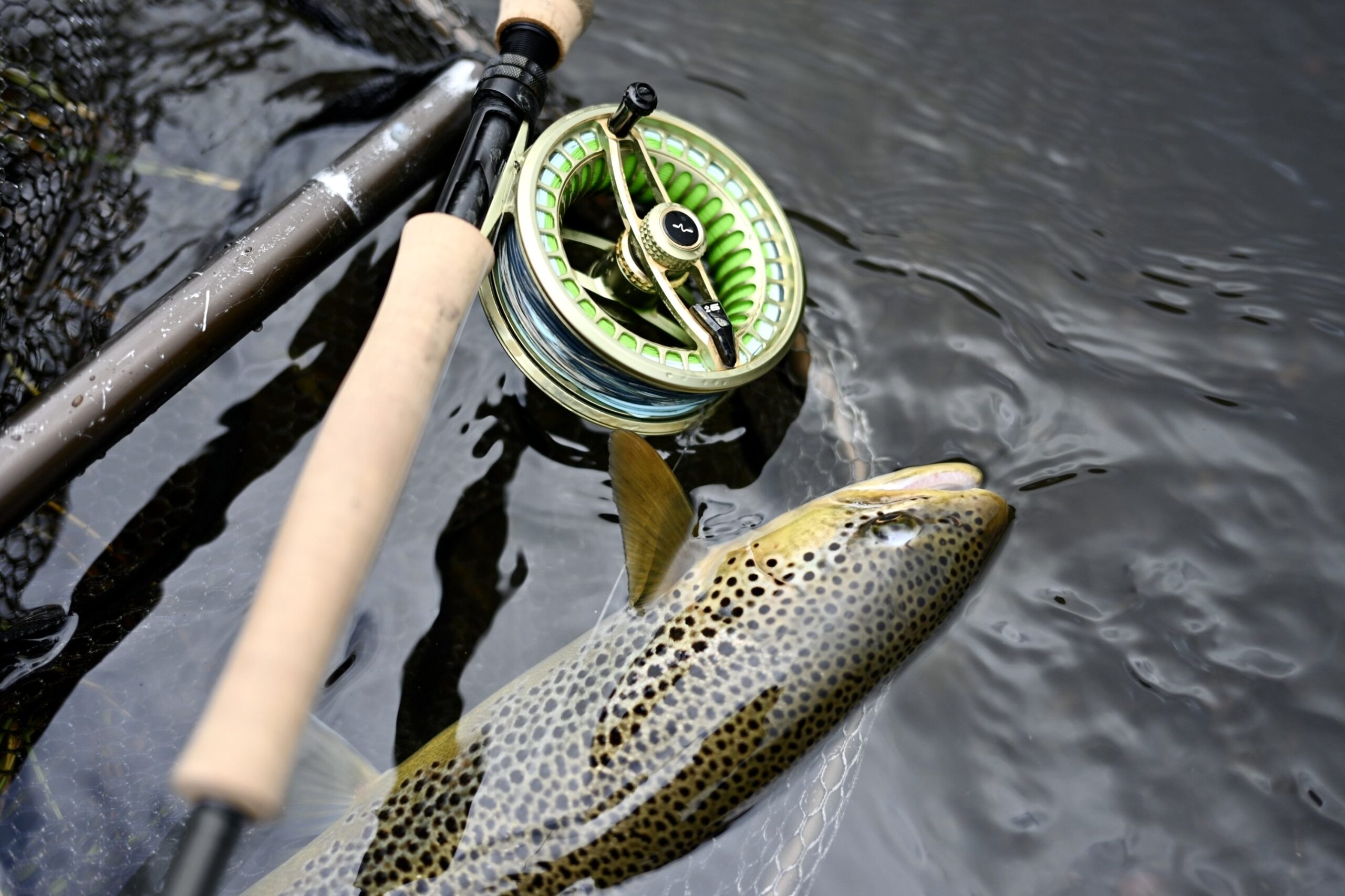
Where It Sits in the Market
At $555 for the Champagne ±6, the Fario is a serious purchase for a trout reel. What you’re paying for is a machined, sealed-drag reel that weighs next to nothing, a drag with a long, fine adjustment range, and a design that’s simple to service and switch between hands. If you fish small streams with short leaders and rarely see your backing, a cheaper click-and-pawl or basic disc-drag reel will do the job. If you fish fine tippets for fish that can actually take line – sea trout, big lake browns, char – the drag is what you’re buying, and it’s money well spent.
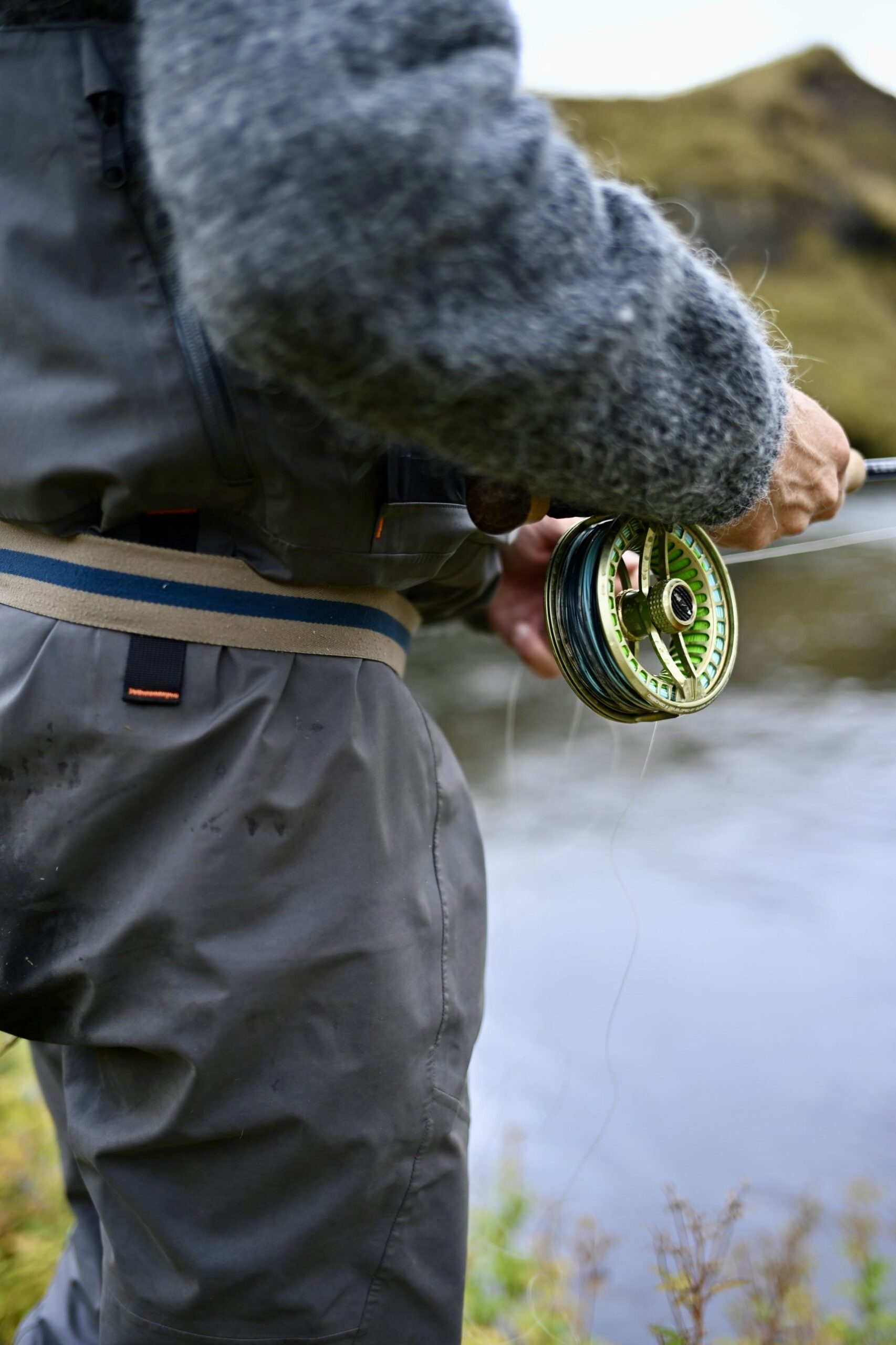
Pros and Cons
PROS:
- Smooth, sealed carbon drag that protects fine tippets on running fish
- 630° adjustment range makes small, precise drag changes easy
- Light: 130 g for the ±6
- Large arbor picks up line fast when a fish swims toward you
- Easy to switch between left- and right-hand retrieve
CONS:
- $555 is a lot of money for a trout reel
- 1.2 kg maximum drag limits it to trout-sized work
- The Champagne finish shows dirt and water spots
The Verdict
The Guideline Fario does exactly what a trout reel should: it stays light on the rod, picks up line quickly, and has a drag that protects a fine tippet when a fish decides to leave. It isn’t cheap, and it isn’t built for heavy-tippet fishing, but for sea trout and big browns on single-handers it’s one of the most complete reels we’ve used. At Heidarvatn, it’s the reel we reach for first on a #6.
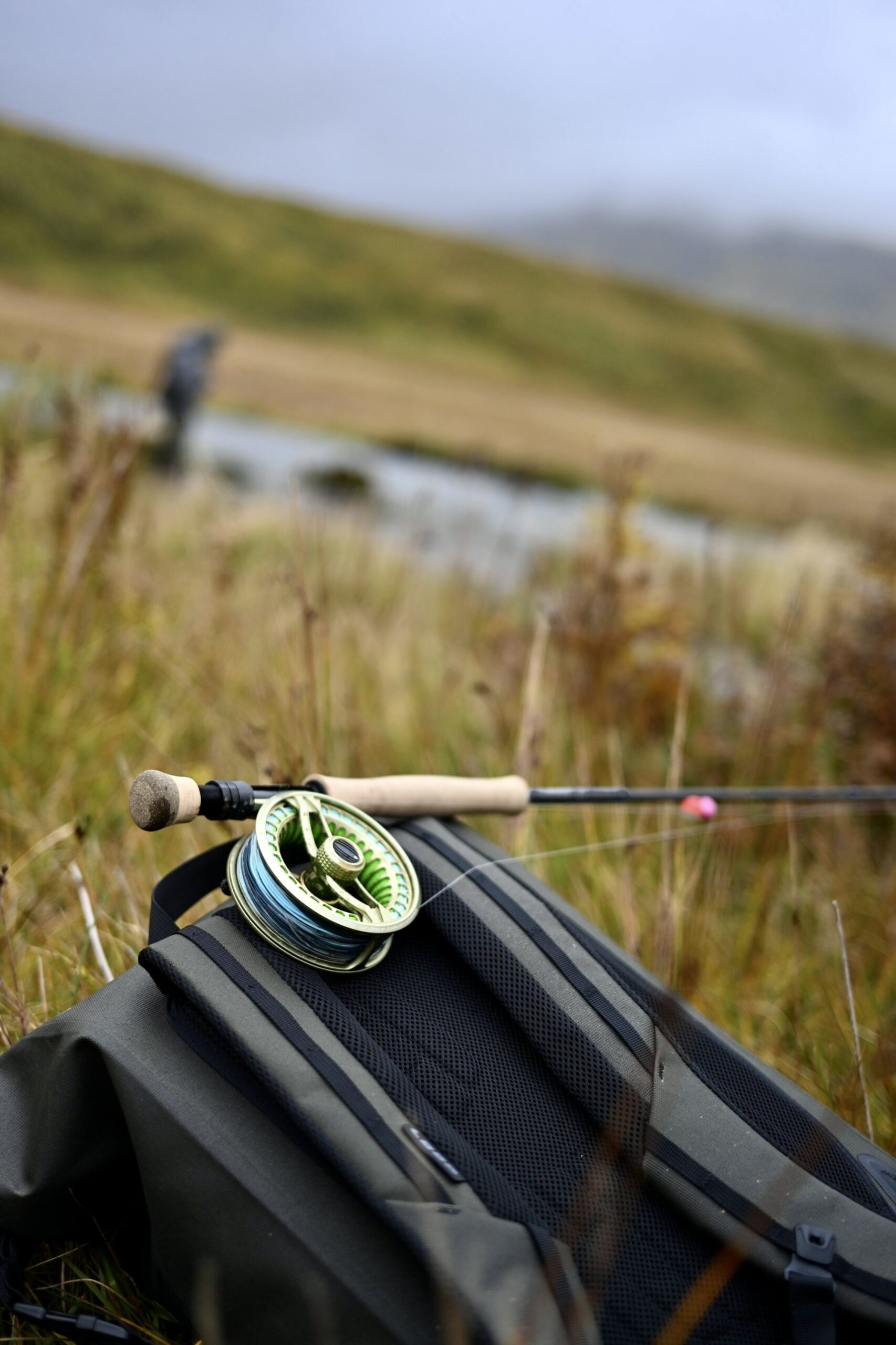
Frequently Asked Questions: Guideline Fario Fly Reel
What line weights does the Fario cover?
The ±4 covers #3–#5, the ±5 covers #4–#6 and the ±6 covers #5–#7.
How much does the Fario weigh?
Guideline lists the ±4 at 123 g, the ±5 at 128 g and the ±6 at 130 g.
How much backing does the Fario ±6 hold?
A WF #6 line plus 125 m (137 yds) of 20 lb Dacron backing.
Is the drag sealed?
Yes. It’s a sealed carbon drag with a maximum of 1.2 kg (2.65 lb) and 630° of adjustment.
Can I switch the Fario from right- to left-hand retrieve?
Yes. The retrieve can be converted, and Guideline has simplified the design to make that and servicing easier.
Where is the Fario made?
It’s designed by Guideline in Scandinavia and made in South Korea.

Leonard Schoenberger is a fly fishing professional and gear specialist with over 20 years of experience on the water. As the manager of Heidarvatn, a world-class sea trout lodge in Iceland, his product recommendations and tactical advice are tested in some of the most demanding conditions on earth. His expertise has been mentioned in The New York Times, the Financial Times, and at the Outdoor Media Summit.