- In Zane’s footsteps on the Tongariro - January 19, 2026
In 1925, author and fishing legend Zane Grey spent months in New Zealand.
He set world records in the salt as well as chasing huge rainbows and browns on the Tongariro and adjacent rivers of the North Island. He put New Zealand on the map for anglers around the world, and many of the greats (Powell, Trueblood, Zern, Schwiebert, Rajeff…) followed him to seek the extraordinary trout of the Taupo region. The rainbows and browns were so mighty that Hardy Bros. Ltd of England made a special edition of their Perfect reel in 1958 – the Perfect Taupo – to satisfy anglers fishing those waters who needed a stronger reel with more backing capacity for long casts and wild runs.
I cast my fly exactly where I wanted to. Halfway between the cast and where the line would have straightened out below me, a rainbow gave a heavy and irresistible lunge. Then followed a run the like of which I did not deem possible for any fish short of a salmon or a Marlin… he sprang aloft in so prodigious a leap that my usual steady shout of delight froze in my throat. Like a deer, in long bounds he covered the water, how far I dared not believe. The last rays of the setting sun flashed on this fish, showing it to be heavy and round and deep, of a wonderful pearly white tinted with pink.
When I felt the enameled silk come to my fingers, I gave another shout. Then I backed up the beach, pulling the trout hard. At last she got into the slack shallow water over the wide sand bar. “What a bally fine trout! Look at it! Deep, fat, thick. It’ll weigh fourteen.”
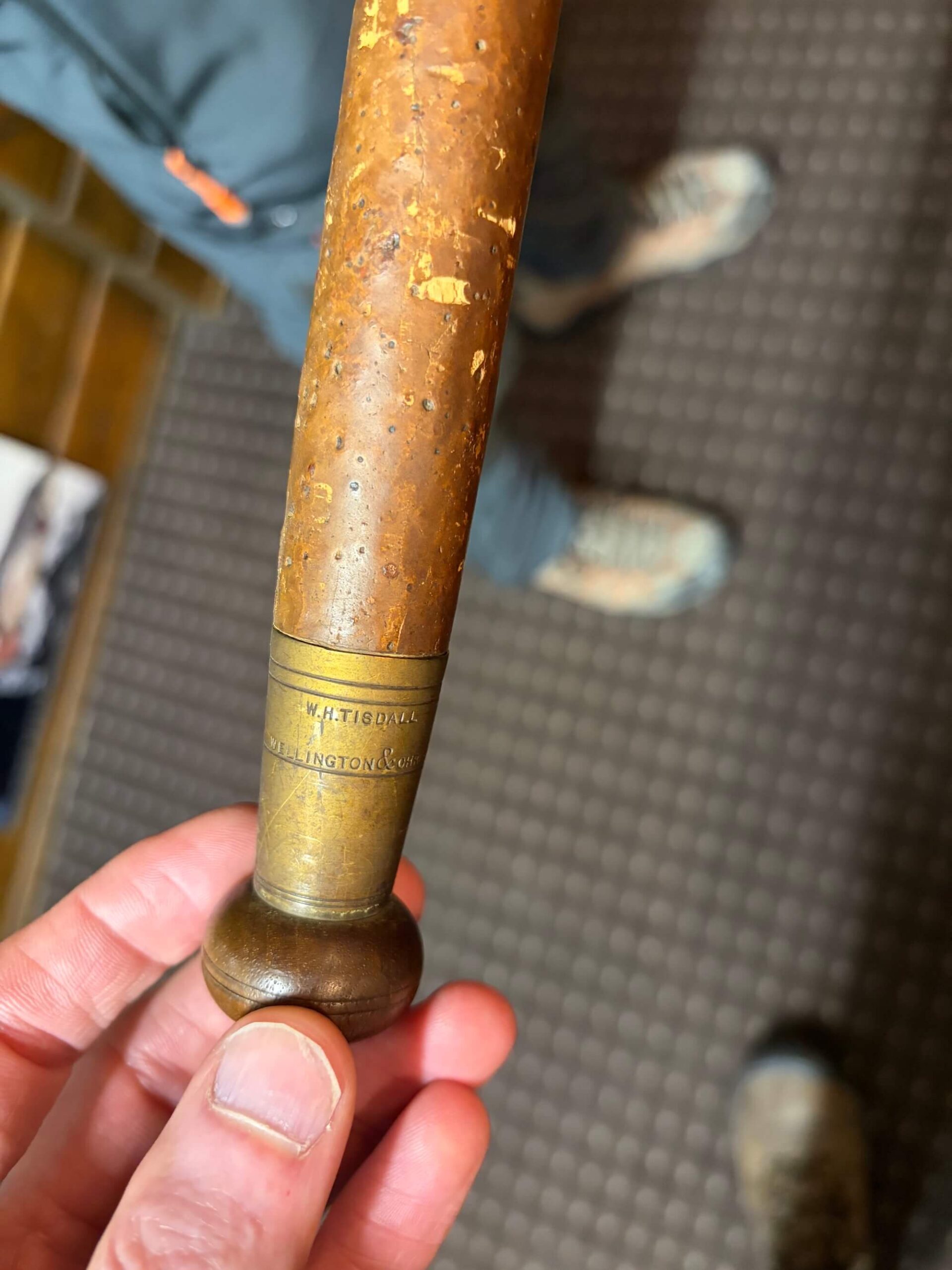
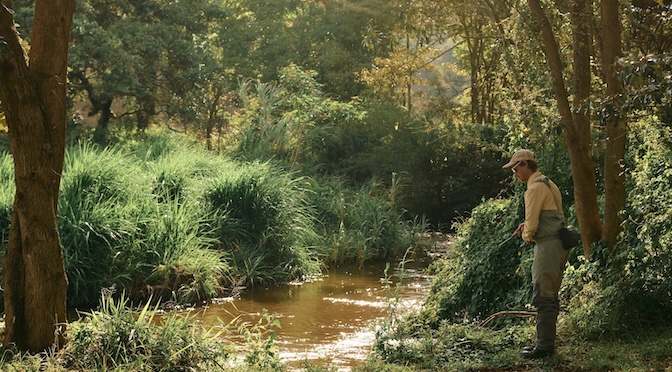
In 2025, my friend Doug and I marked the centenary of Grey’s visit with a week of fishing the same pools he did on the Tongariro and nearby rivers. We stayed at the Tongariro Lodge near Turangi, where Grey set up his fishing camp. The lodge has one of his rods on the wall, which they kindly handed me – I regarded it with reverence, and didn’t take it to the water!
We were guided by Tim McCarthy, a local legend who has been guiding these waters since 1984 and serving as head guide at the lodge since 2001. He’s forgotten more about this water than most people will ever know. A large spate of rain prior to our arrival had stirred up the fish, then the flows had fallen off quickly to good wading levels. With those conditions, we got quick results. Within 3 minutes of stepping into the water, I was attached to a big rainbow… which convinced me the week ahead was going to be very productive indeed.
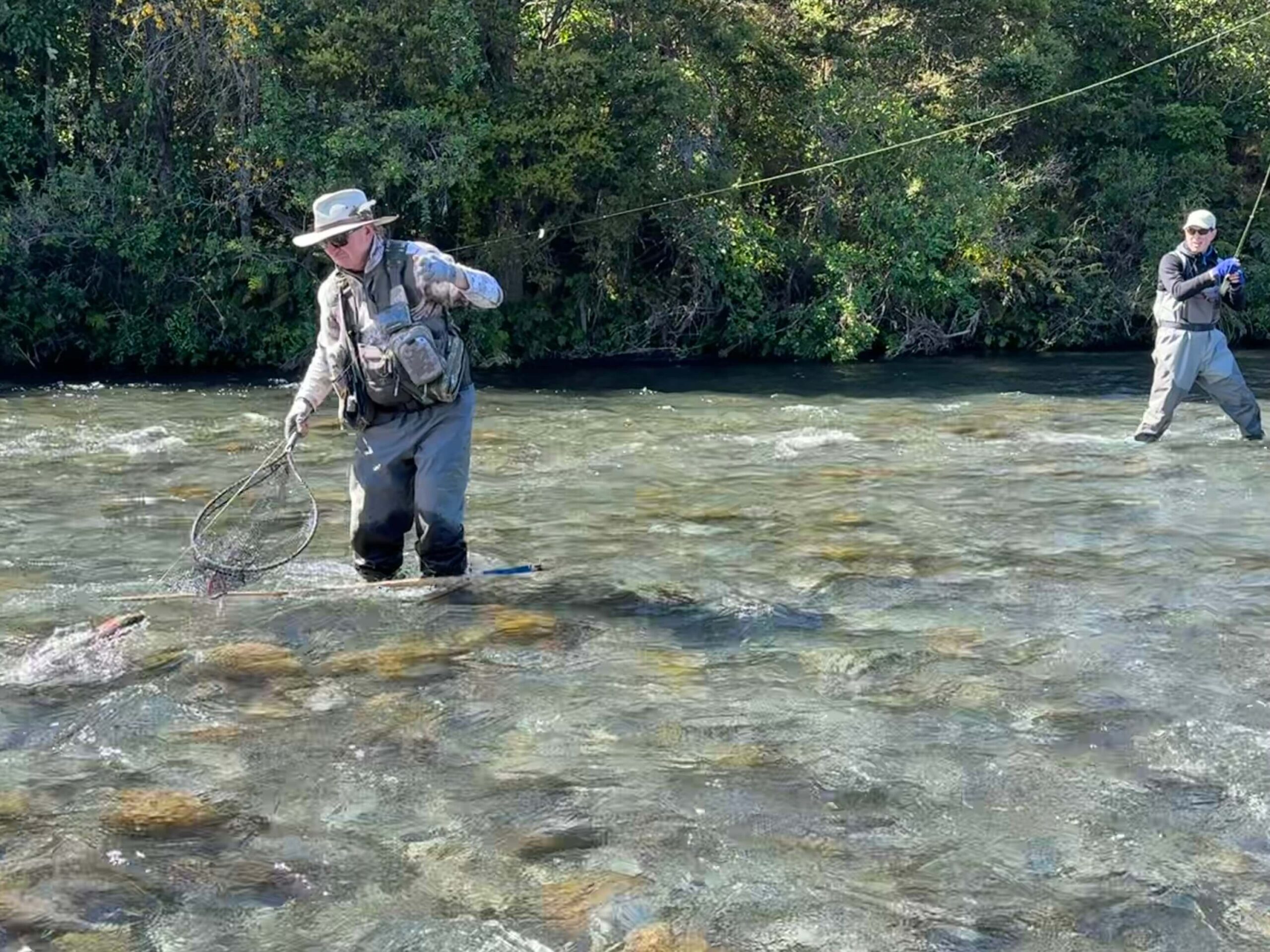
Today’s trout are not the 10-20 pounders of a century ago. But our typical fish was 3-4 pounds and often 20 inches or more. New Zealand browns came in the 1860s from Europe via Tasmania. Rainbows came in the 1880s from Californian steelhead strains – which explains some of their size and power. Today there are a variety of hybrids, and seeing the variation in markings was one of the highlights of the trip – for example, this ‘double-striper’.
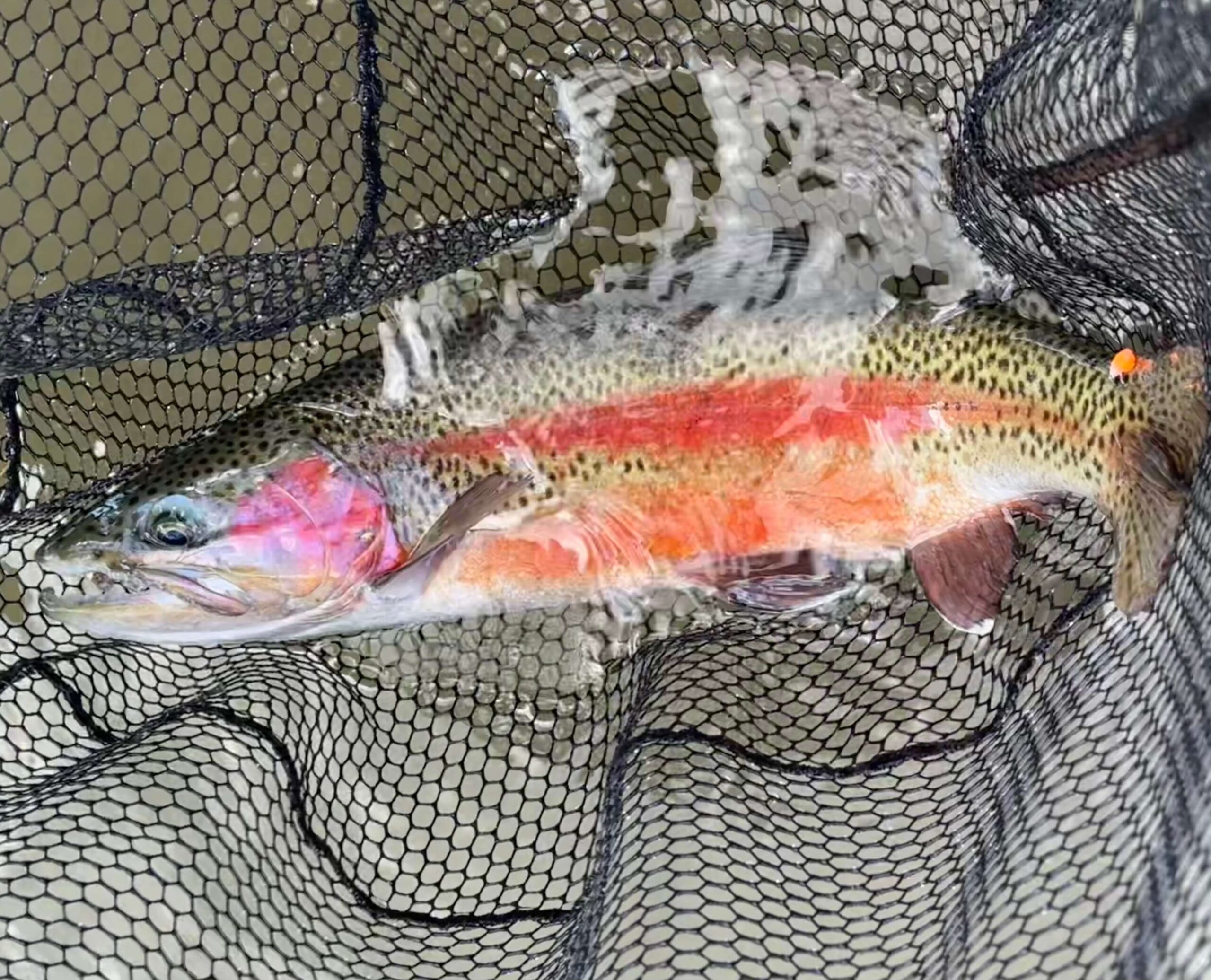
Today, the North Island holds mainly rainbows with a few browns, while the South Island is the reverse. If you’re choosing between them – go south if you want fewer but larger fish, maybe the fish of a lifetime – and go north if you want to wear your fighting arm out and see your backing a few times a day. We had virtually all rainbows, with a brown or two and even a leopard trout. Many of the rainbows had mixed ‘chromer’ steelhead markings.
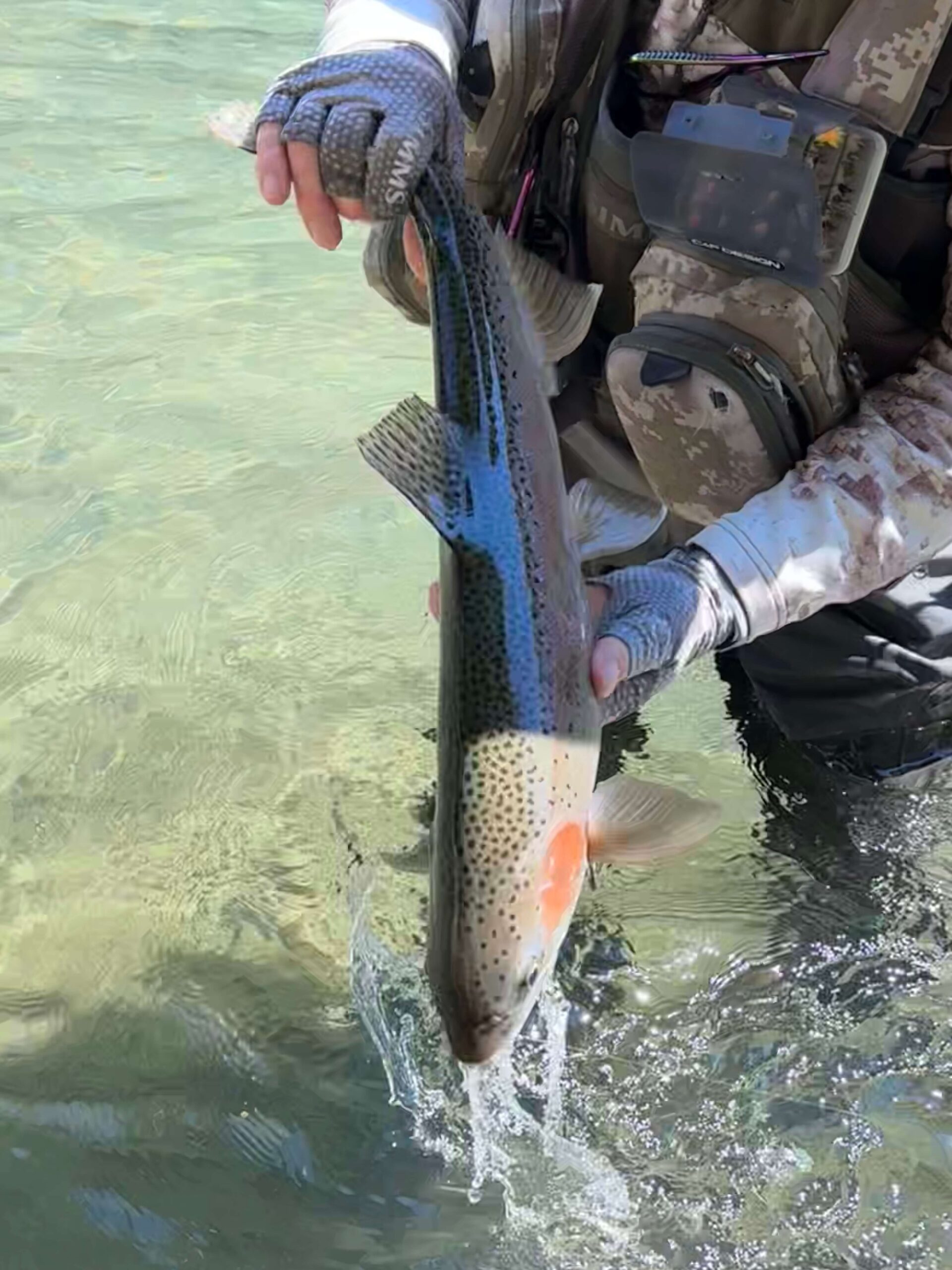
Due to the timing of our visit (early spring in New Zealand), nymphs were the ticket. A few of Tim’s self-tied patterns brought us regular action – certainly more than a dozen a day. This isn’t ‘easy water’ however – presentation is key, as the water is gin-clear and the trout are experienced. Tim would spot an individual fish or group and tell us where to cast, observing the trout’s movement with each presentation. If we could match his directed angle and length – fish on! Of course, hooking up to a large trout and keeping that trout attached are two entirely different things… even if we played them well, quite a few just smiled briefly at us as they snapped the fly and went on their way. At least I think that was a smile…
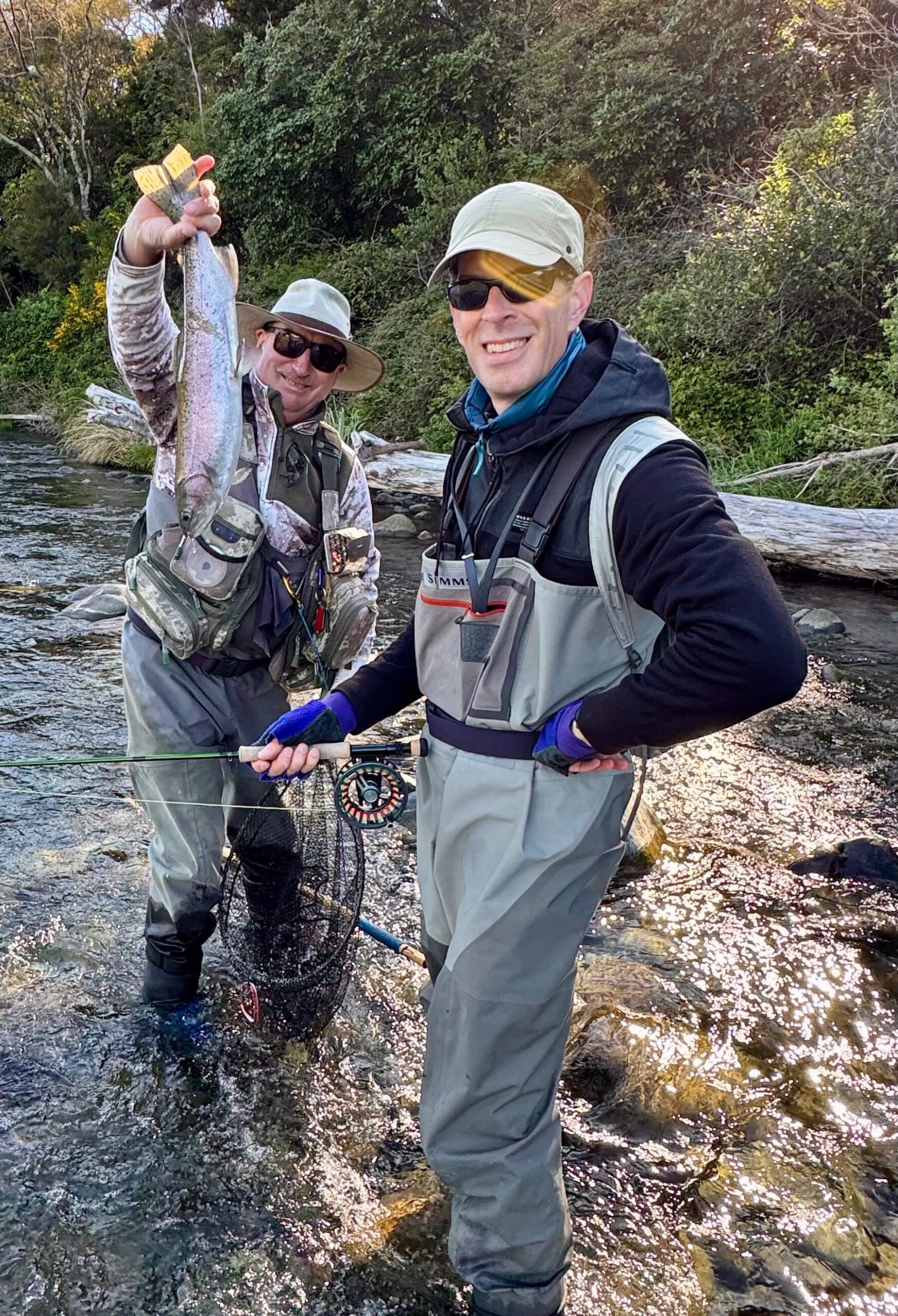
We generally walked to our river sections directly from the lodge or after a short drive. The lodge can also arrange raft fishing and helicopter transfers to access more remote water. We did one rafting day to access a pristine section, with some of the largest fish of the trip.
A six weight rod will do, with a large capacity reel and floating line + 3x. I used Tim’s gear, but Doug is a rodbuilder and had crafted two bamboo travel rods to put through their paces. If you’ve always thought bamboo was too fragile for big fish… Doug put a serious arc into both rods and landed plenty.
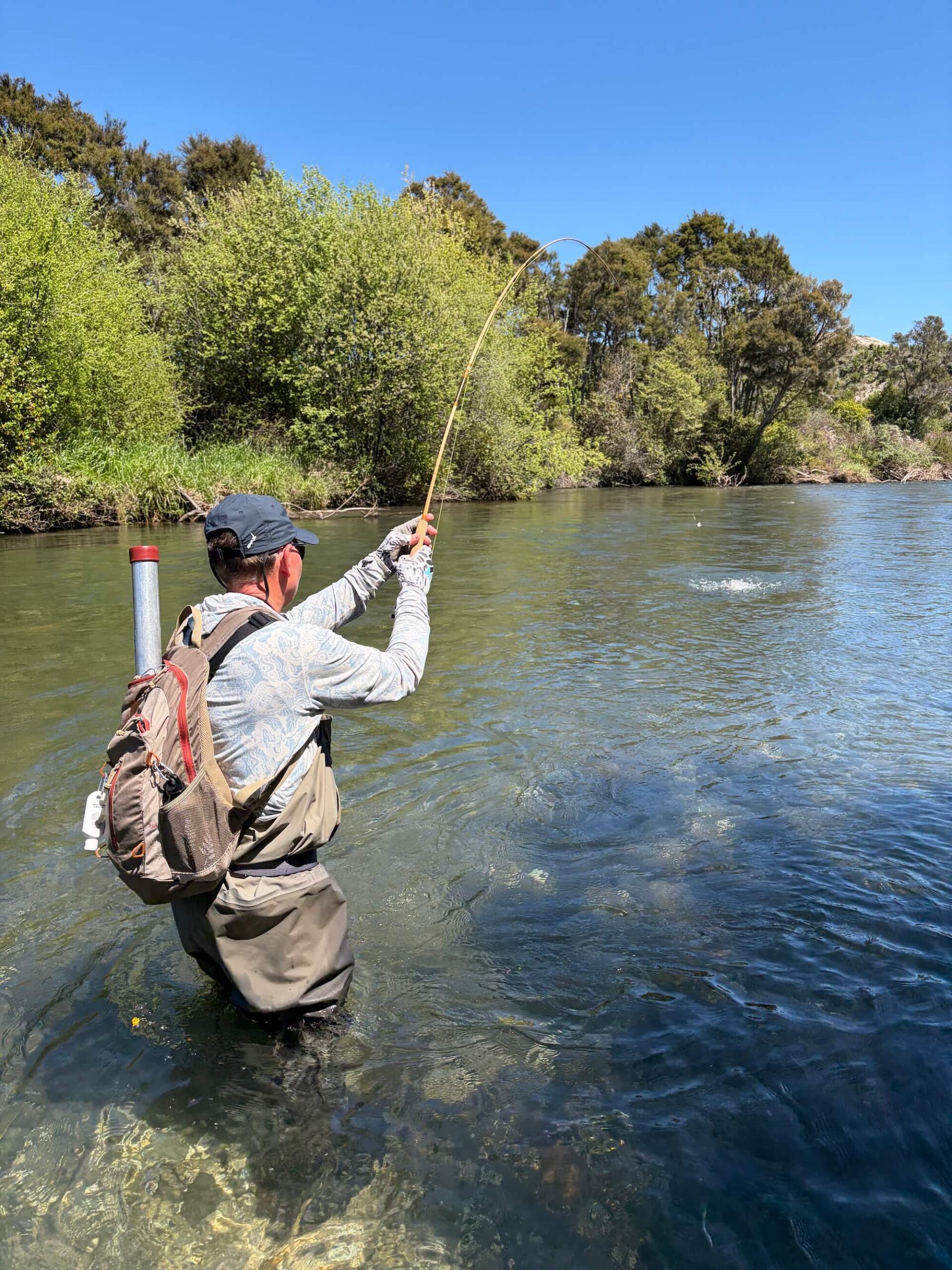
However… after a few days of punishment and glory, one of Doug’s rods did snap at the ferrule. Which is why you should always have a spare! A true engineer, Doug immediately began designing an improved ferrule joint for the next rod. I suppose that is our reason to return to the Tongariro…
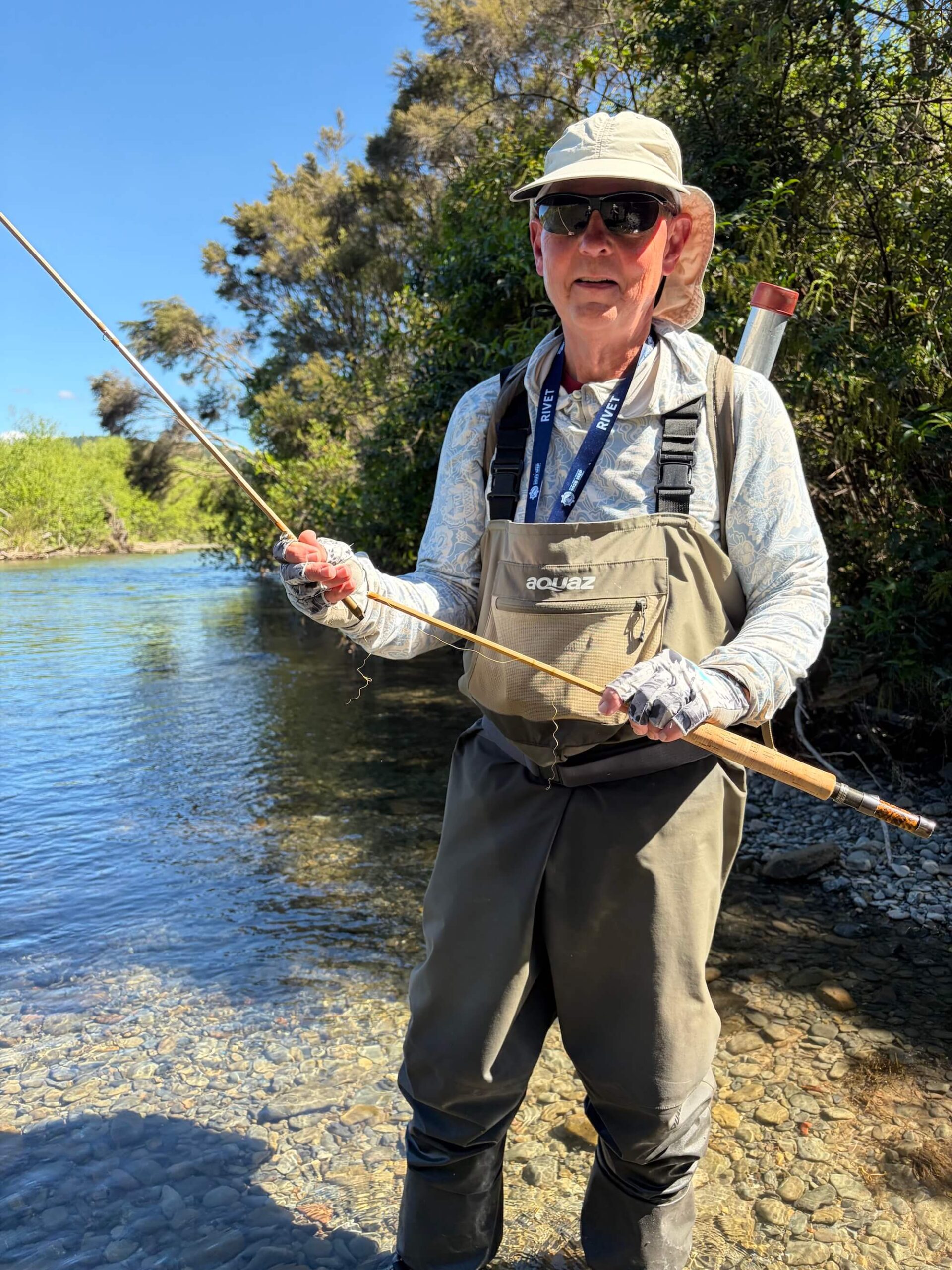
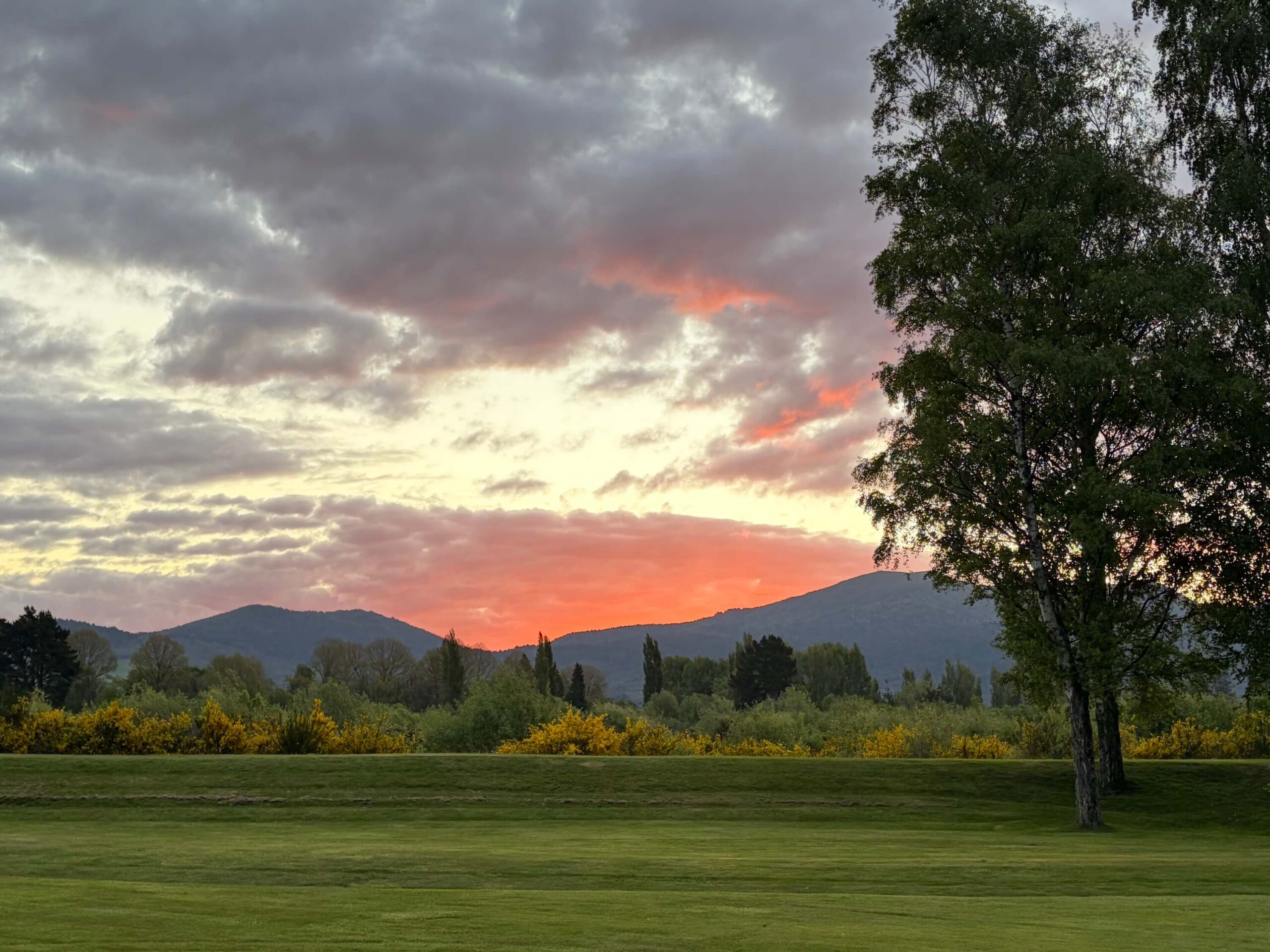
For most of us, it’s a very long way to New Zealand. But once you’re there, you quickly forget the travel hassles and immerse yourself in the beauty and wildness of the place. And it’s also the Shire, for goodness’ sake – though we didn’t see any hobbits. In the end, Doug and I agreed that it can still qualify as Zane Grey called it, ‘The Angler’s Eldorado’.
Logistics
The Tongariro Lodge New Zealand Iconic Trout Fishing Lodge has excellent location, simple but comfortable lodging, gourmet-level food, and friendly proprietors. And Tim McCarthy! I booked through Best of New Zealand Home Page for The Best of New Zealand- Luxury Travel. You can also book direct with the lodge if you prefer, but I don’t think there is any cost difference – I appreciated the extra advice and planning help from the Best of NZ team.
Ideal timing is probably mid-November to mid-December (when we went) – usually good river levels, not much fishing pressure (it increases mid-December to mid-January as Kiwis take vacation), and eager fish. But you will probably be nymphing and there may be wind or higher current flow. If you want to fish dries or prefer lower current, March to mid-April is probably ideal. But of course the best time to go is when you can!
If you bring your own gear, declare it as you enter New Zealand – they may inspect and disinfect it (they are admirably serious about keeping their rivers pristine). If you are hiring a guide, they can provide everything needed.
Haere pai – safe travels!