Last updated on October 19th, 2026.
A good wading boot is priceless. In this wader boots review we give you the best fly fishing boots of the year.
Disclaimer: All products in this guide are independently researched by our team. We only recommend products we believe in and never get paid for the reviews. Learn more about our review process here.
Quick advice: If you want a wading boot that can do it all, go for the Korkers River Ops with unmatched versatility. If you are looking for a lightweight boot, go for the Patagonia Forra.
My verdict: I admit it, the Patagonia Forra have become my go-to boots. They shine with a combination of sturdiness and lightweight, so if you often walk some distance to get to your fishing spot, the Forra are a great option. Read my full Forra review.
Our Top Picks of 2026:
-
Best Versatility: Korkers River Ops Boa
-
Best Highend: Simms G4 Pro Powerlock
-
Best Grip: Patagonia Danner Foot Tractor – Aluminum Bar
-
Best Comfort: Grundéns Bankside Wading Boot
-
Best New: Simms G3 Guide
-
Best Saltwater: Patagonia Forra
-
Best Lightweight: Orvis Men’s Ultralight
-
Best Newcomer: Korkers Bantam Lite
Comparison Table
| Model | Price | Sole | Lacing | Weight | Our Rating |
| Korkers River Ops Boa | $299.99 | Felt, Rubber and Studs | Boa Lacing system | 3 lbs 6 oz | Best Versatility |
| Simms G4 Pro Powerlock | $349.97 | Felt, Rubber, Studs | Traditional laces | 4 lbs 2 oz. | Best Highend |
| Patagonia Danner Foot Tractor – Aluminum Bar | Unavailable | Felt, Rubber, Aluminum Cleats | Traditional laces | 4 lbs 5 oz | Best Grip |
| Grundéns Bankside Wading Boot | $279.99 | Rubber, Studs | Traditional laces | n.a. | Best Comfort |
| Simms G3 Guide | $330 | Rubber, Felt, Studs | Traditional laces | 4 lbs 9 oz | Best New |
| Patagonia Forra | $319 | Rubber, Studs | Traditional laces | 2 lbs 9 oz | Best Saltwater Wading Boot |
| Orvis Men’s Ultralight | $229 | Rubber, Studs | Traditional laces | 2 lbs 8 oz | Best Lightweight |
| Korkers Bantam Lite | $179.99 | Felt, Rubber, Studs | Traditional laces | 2 lbs 8 oz | Best Newcomer |
An Introduction to Wading Boots
Wading boots literally make you stand on solid ground. No matter whether you go for a rubber sole, a felt sole or one of these choices combined with studs, a quality fly fishing boot is always a good investment.
The best ones provide you with a level of safety that is a prerequisite to enjoy your day at the water. It can prevent you from slipping and it can make you reach places a pair of bad wading shoes won’t. In this guide we’ll give you an overview of the best options. We will also explain what you should look for in general when buying a new pair of wading shoes: material, sole and fit.
Of course not every fly fisherman’s or woman’s budget is the same. Hence we included fly fishing boots from all price ranges in this guide. One thing to consider: if you are new to fly fishing or a beginner, you will be just fine with an entry level fly fishing boot. If you consider yourself a passionate fly fisher you should think about getting a premium wading boot since they will last longer and hence these fly fishing boots will even cost you less on the long run.
Table of contents:
8 Best Wading Boots for Waders in 2026
What you Need to Know about Fishing Boots
– Taking Care of your Fly Fishing Boots
Conclusion on Fly Fishing Boots
Frequently Asked Questions (FAQs)
Best Boots for Waders – Felt Soles vs. Rubber Soles
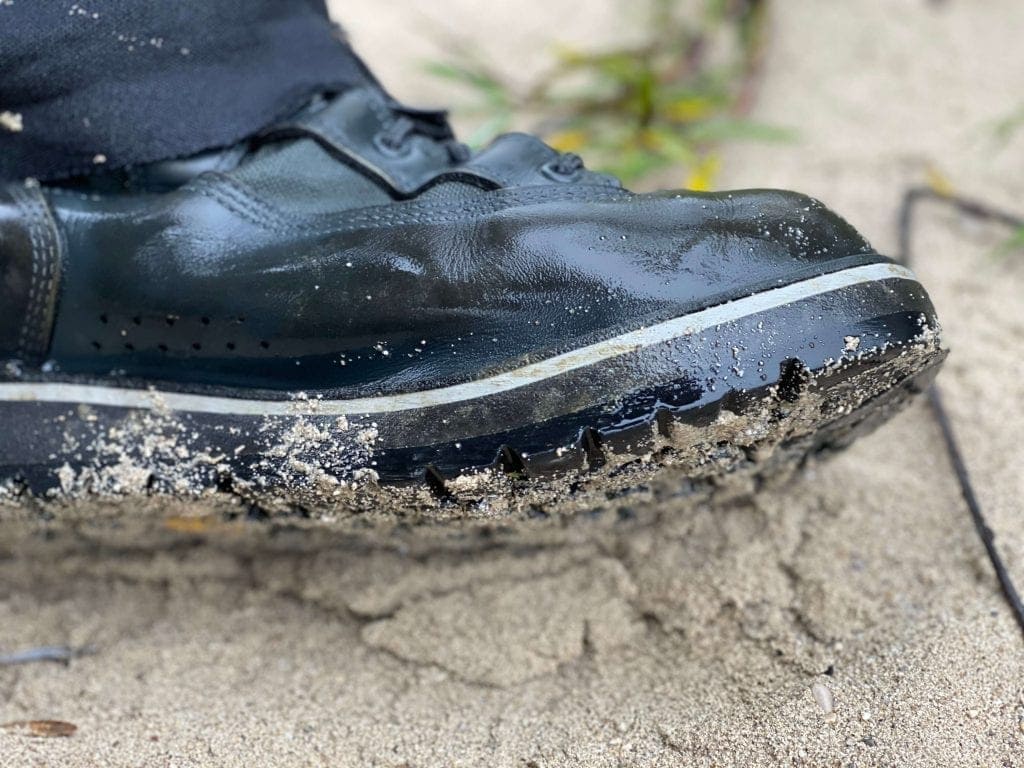
The general question you have to answer first is: felt sole or rubber sole. In fact you don’t have to answer that question if you go for the Korkers with their interchangeable sole system.Generally speaking rubber soles give you extra comfort when you do a bit of walking getting to and from your fishing location. Felt soles on the other hand are the better option on slippery surfaces such as river beds with rocks covered with algae.
No matter whether you opt for felt soles or rubber soles you can always add cleats/studs to your fly fishing boots. They provide extra traction and stability. The only downside of them is that you have to be careful off the river, for example when walking into a fly store.
Disclaimer: We source, test and review the best products in the market for you. We only recommend products we use ourselves. If you end up buying a product from one of the merchants, we might earn a commission at no extra cost for you.
How we Test the Best Wading Boots
Now that you now what to pay attention to before making a purchase, we want to give you our favourite fly fishing boots out there. From years of experience we can tell you that the best fly fishing boots come from a handful of manufacturers. Of course, they produce several different models. To make it easier for you, we pick our top choice in terms of durability, traction, versatility, weight and budget. Here are our favourites.
1. Korkers River Ops Boa: Best Versatility
Main features:
– Exchangeable soles
– Boa lacing system
– Enforced toe and heel cap
– Easy entry loop at the heel
Why we picked it:
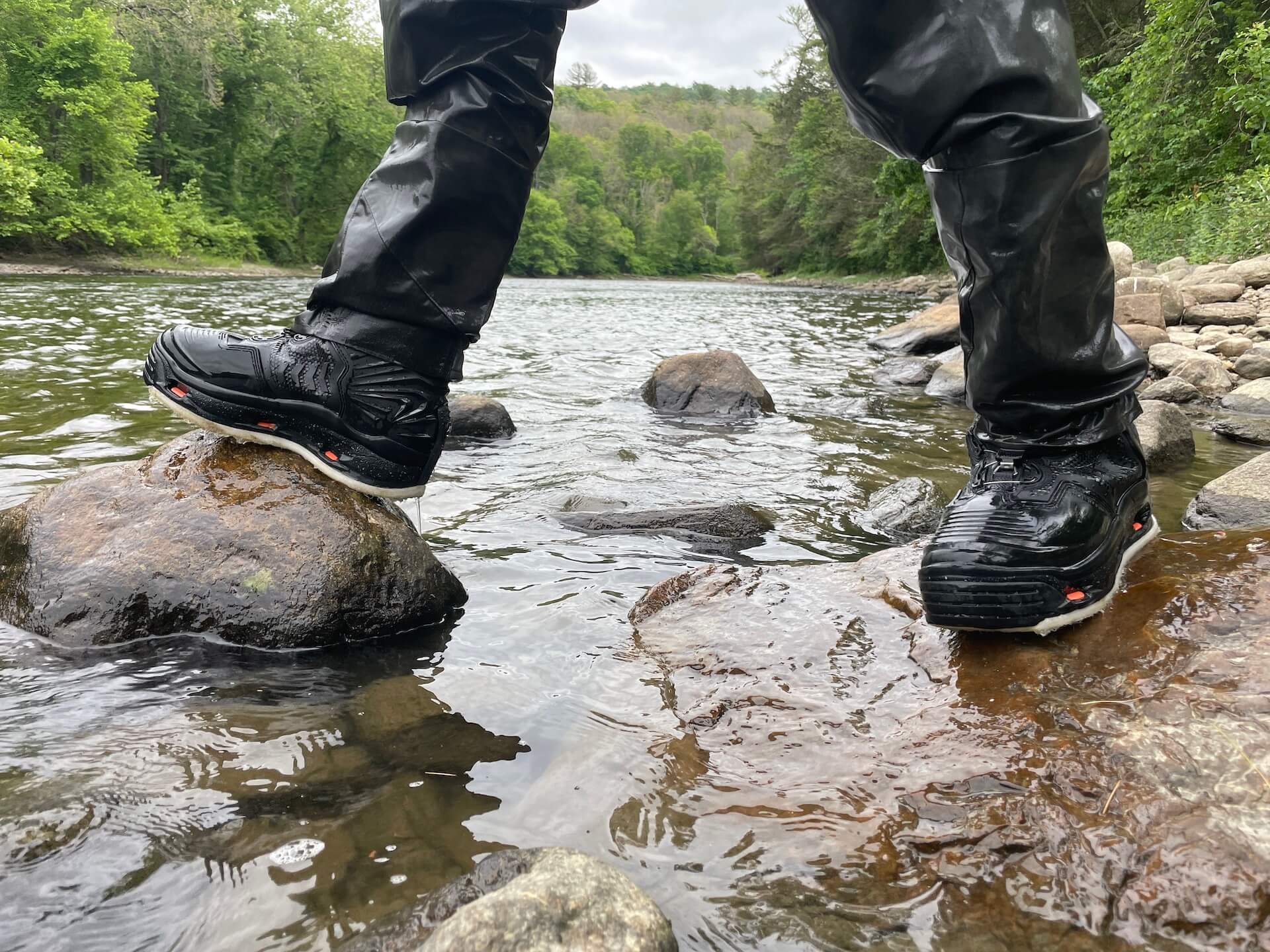
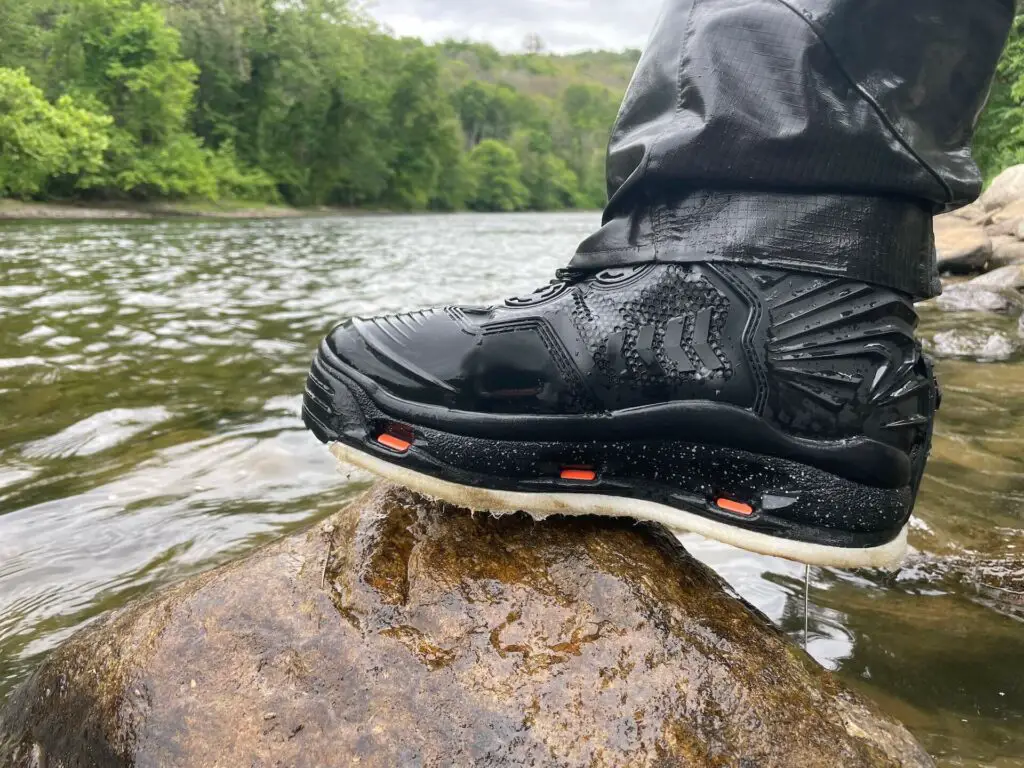
Portland-based Korkers has innovated fly fishing boots over the last decades. They solve the tricky question of different soles in wading shoes. The brand new Korkers River Ops Boa (read our in-depth review here) feature their unique sole system and the highly practical BOA lacing system.
With the Korkers River Ops Boa you can choose between two sole options. Option 1 comes with a felt sole and a classic Vibram sole. This package is a the right choice if you don’t want to pass up on a felt sole which still provide supreme grip to this day if you wade river with slippery rocks. The classic vibram rubber sole that also comes with this set is a great allrounder providing solid grip on all terrain. Option 2 features two vibram soles with one of them being studded which provides even more grip than a traditional rubber sole. Be careful though with studs when entering a fly shop or restaurant since you might leave nasty traces on the floor.
The Korkers River Ops Boa feature Korker’s Boa quick lacing system which makes putting them on and taking them off really easy. Heavy rubber toe caps provide extra abrasion resistance. The Korkers River Ops Boa are the brand’s ultimate work horse. If you tend to spend fewer days at the river check our their Darkhorse and Terrorridge boots. No matter which one you end up getting, all Korkers provide premium durability and stability.
PROS
-
Highest versatility of all boots
-
Ideal grip in different situations
-
Excellent stability around the ankle
CONS
-
A bit on the heavier side
GET THEM AT TRIDENT FLY FISHING
2. Simms G4 Pro Powerlock: Best High-End Wading Boot
Simms G4 Pro Powerlock
Main features:
– Vibram sole
– Conventional lacing system
– Foam lined neoprene ankles
– New power lock cleat system
Why we picked it:
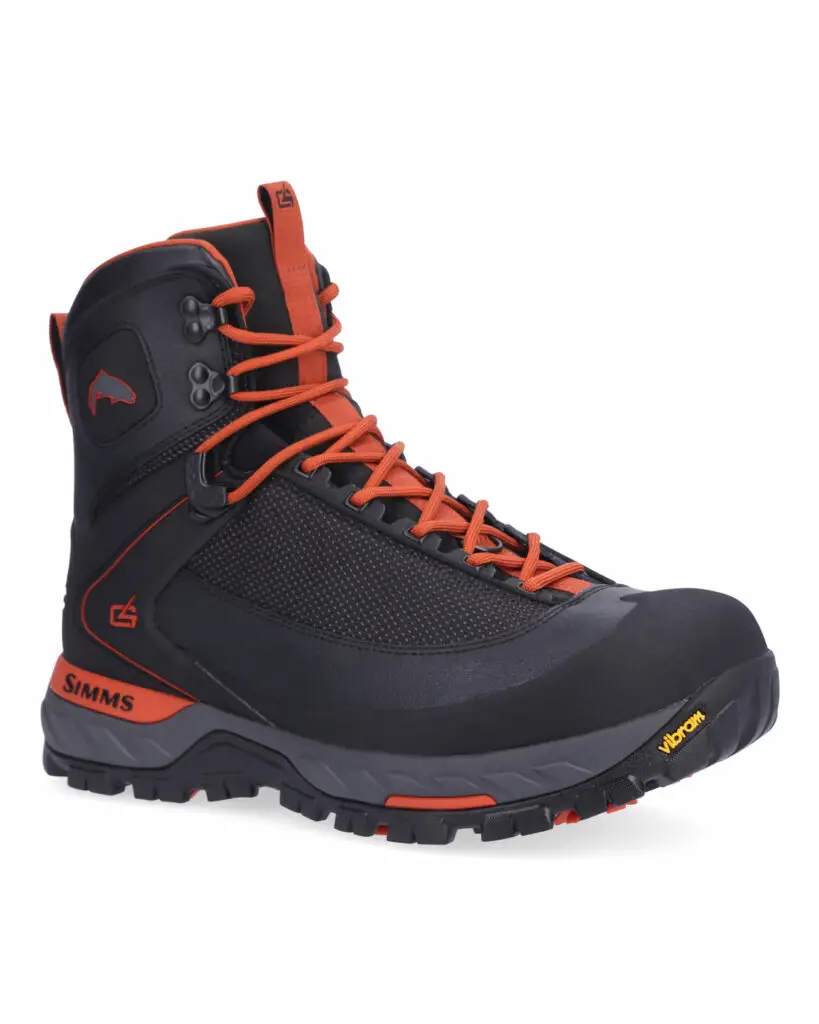
American manufacturer Simms just released a brand new piece of gear: the Simms G4 Pro Powerlock (Read our in-dephth review of the new Simms G4 here). The new boot is Simms’ new flagship boot and hence has all the features of a great wading boot: stability, secure lacing system, vibram rubber sole – and on top of that a new power lock cleat system that is customisable. This makes the Simms G4 Pro Powerlock a great choice if you demand the utmost in terms of durability from your boots.
The Simms G4 Pro Powerlock features Vibram’s new Idrogrip sole which promises even more grip on slippery rocks. The heel and front have reinforced TPU overlays since that’s where most of the abrasion happens. The ankles are foam lined with neoprene for increased comfort. I found the neoprene to be very comfortable to wear and it also made taking the boots on and off very easy when they are fully soaked. The Simms G4 Pro Powerlock comes with two sets of cleats and a cleat wrench.
The loops at the heel of the Simms G4 Pro Powerlock further facilitate getting into and out of the boots. The lacing system is top notch and ensures a secure and tight fit no matter the conditions.
PROS:
-
Very durable
-
Excellent grip on all surfaces
CONS:
-
Their bullet proof construction makes them rather heavy
3. Patagonia Danner Foot Tractor – Aluminum Bar: Best Grip
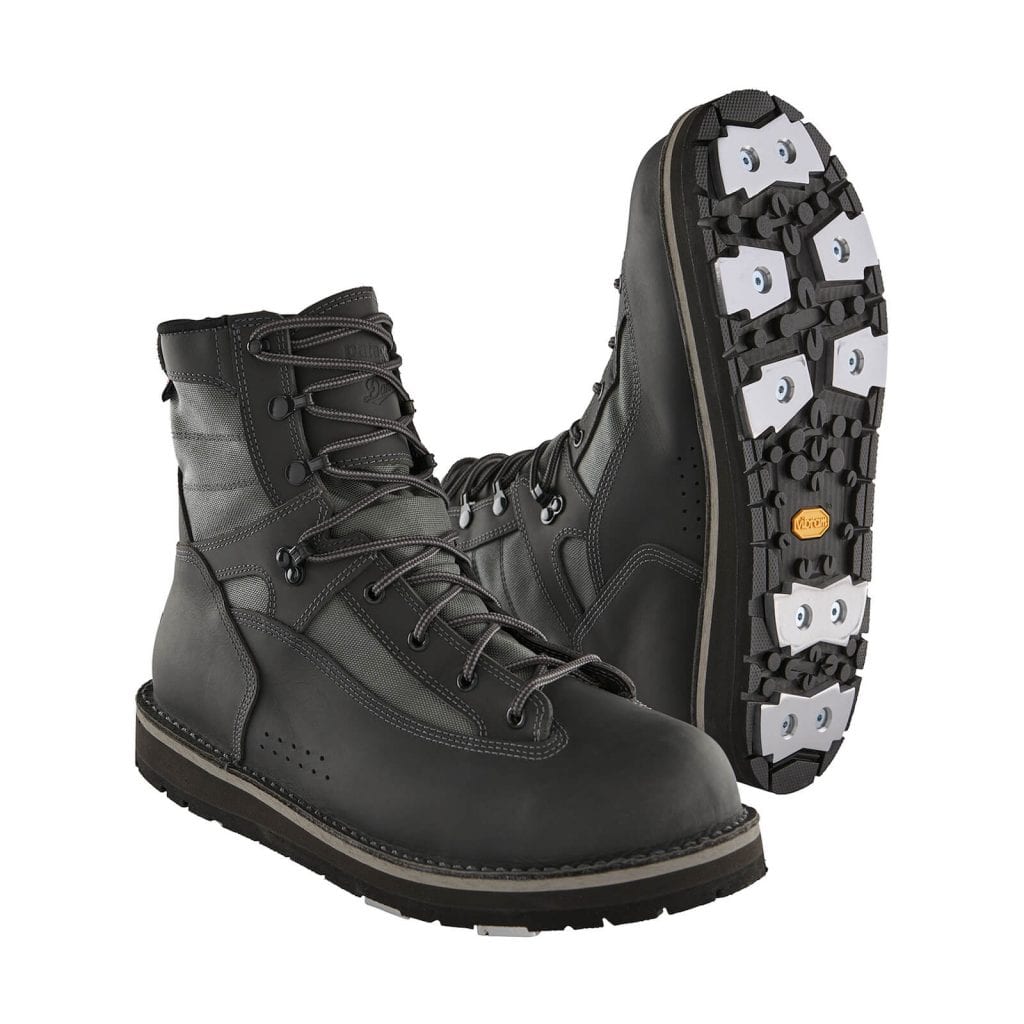
Main features:
– Extremely grippy foot tractor studs
– Full leather design
– Re-solable
– Vibram sole
Why we picked it:
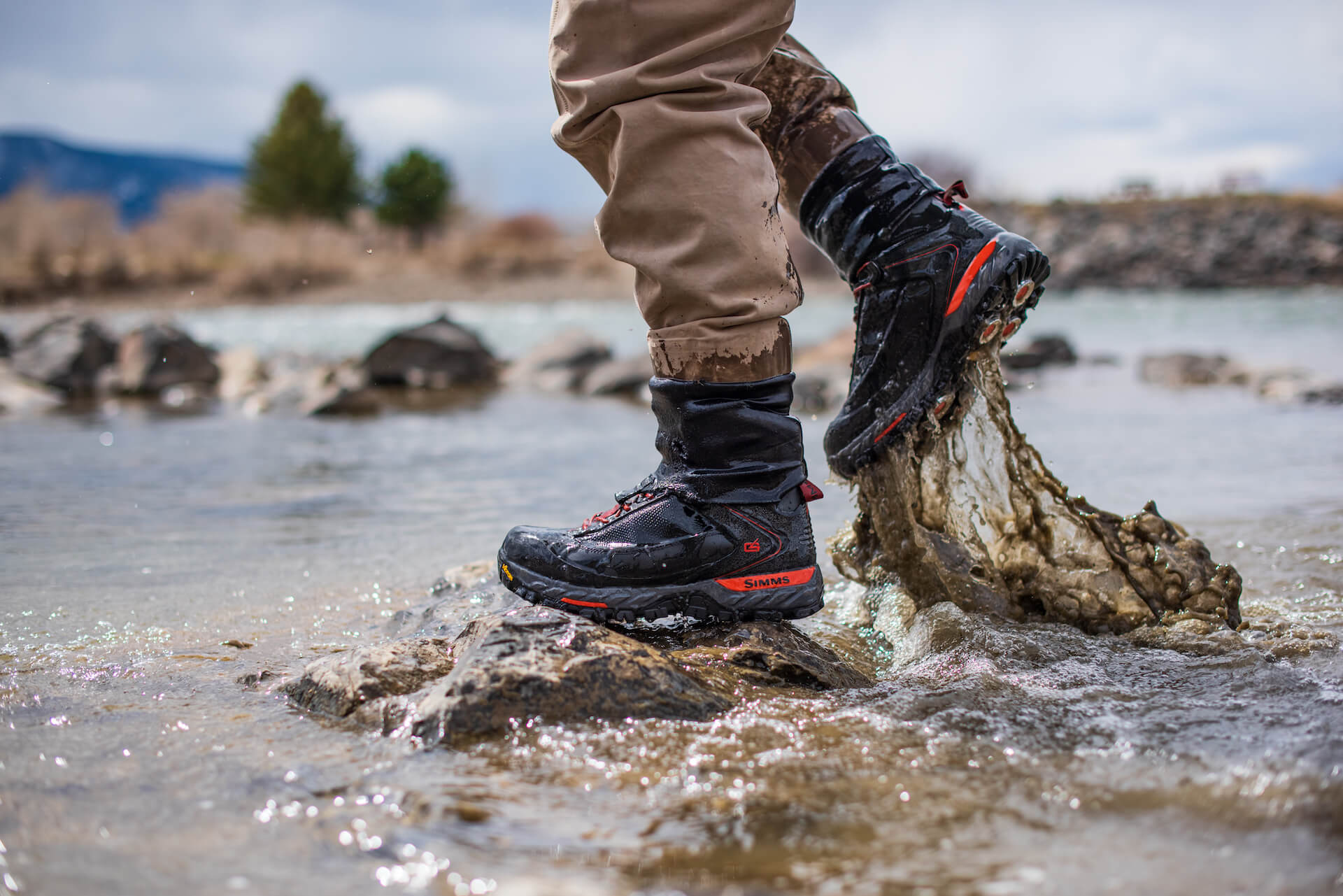
The Patagonia Danner Foot Tractor (Read our in-dephth review of the Patagonia Danner Wading Boot here)are our favorites in this wader boots review when it comes to traction. The Foot Tractor system made from Aluminum bars is just supreme when it comes to slippery river beds. The Patagonia Danner Foot Tractor where built in cooperation with the American hiking boot specialist Danner. The comfort of these is simply amazing and you can feel the superior built quality.
Yes, the Patagonia Danner Foot Tractor are expensive but they will last you a long time and Patagonia gives you the opportunity to resole. If you think the cleats are not for you, you can get these with a rubber Vibram sole or felt sole. Only downside on these boots is the fact that they are a little heavy and you almost feel like wearing a snowboard boot. Hence I don’t recommend driving a car with these on.
PROS
-
Extremely durable
-
Perfect grip on slippery underground
CONS
-
Definitely on the heavier side
-
Take a long time to dry
4. Grundéns Bankside Wading Boot – Best Comfort
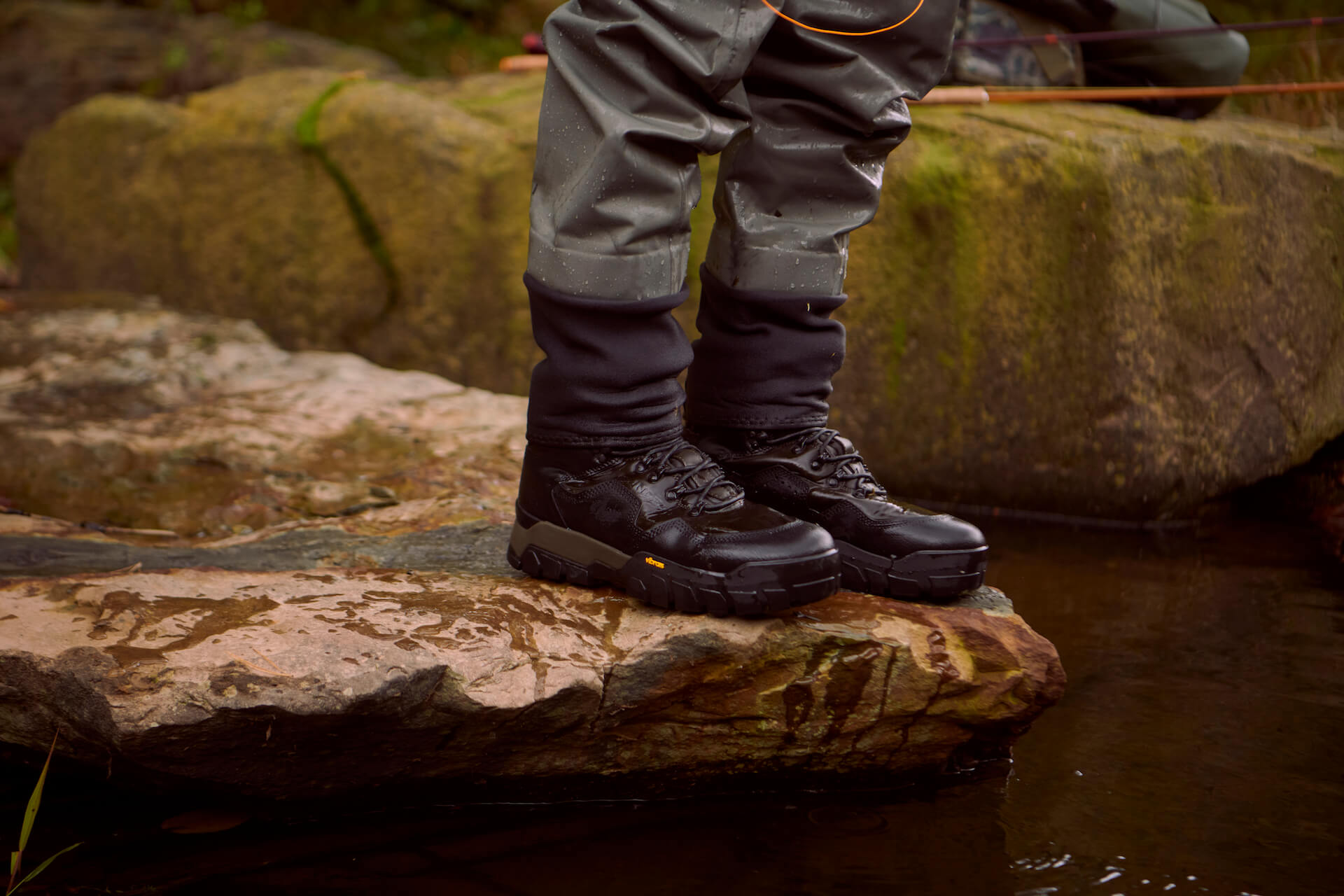
Main features:
– Extra padding around the ankles
– Made from hydrophobic Nubuck leather
– Equipped with a vibram sole
– Reenforced heel and toe section
Why we picked it:
Brand new for the season and their first ever wading boot in fact, let me introduce you to the Grundéns Bankside (Read our in-depth review here). If you’ve ever gone Bluewater fishing or seen commercial fishermen dock in the harbor, you’ve probably come across Grundéns. They’ve been making some of the toughest rain gear for fishermen for decades and now entered the wading boot market. It only makes sense from a product perspective since their fishing shoes have been some of the best on the market for years.
I have to say I was impressed with their new Grundéns Bankside the first time I checked them out since these boots check all the boxes when it comes to a high quality, yet sturdy and comfortable boot. At first glance they reminded me of a traditional hiking boot with reinforced toe and heel caps. The main material is hydrophobic Nubuck leather combined with a vibram rubber sole which provides excellent grip (you can add cleats if you want even more grip around slippery areas such as rocks and boulders). Around the ankles the Grundéns Bankside feature extra padding for long days along the river.
On the inside, the Grundéns Bankside Wading Boot is equipped with EVA foam midsoles that provide excellent stability and are yet soft enough for hours of wading. One thing I really like about these new wading boots is the fact that all the materials used in this boot are corrosion resistant which means you can safely use them in saltwater environments (I still recommend rinsing your boots after every use in salty waters).
PROS
-
High-end components and first grade materials
-
Saltwater proof
CONS
-
A felt sole would be a nice addition to the line up
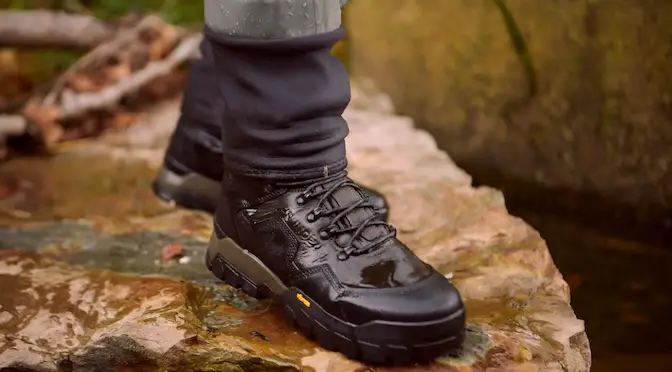
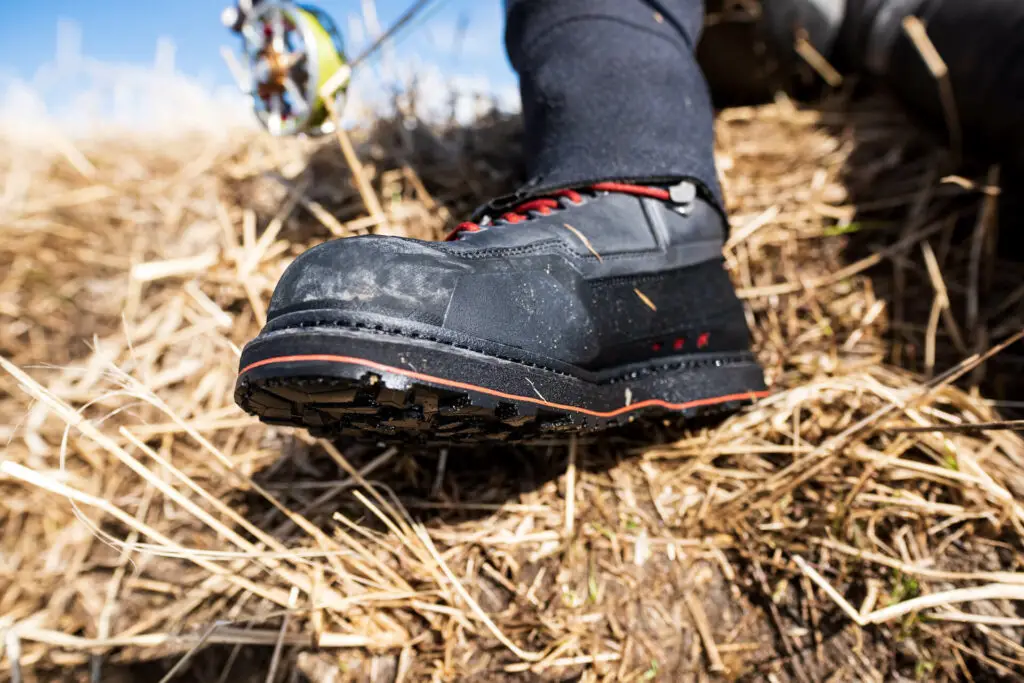
5. Simms G3 Guide: Best New
Main features:
– Vibram Rubber Sole or felt sole available
– Conventional lacing system
– Re-enforced toe and heel cap
– Loops at the heel make putting them on easy
Why we picked it:
The Simms G3 Guide (read our in-depth review here) is an excellent wading boot if you’re looking for a wading boot that can do it all. American manufacturer Simms its well known for the durability of their products. Mesh fabric and rubber toe caps guarantee scratch resistance and extra impact protection where it matters most. In terms of soles you can choose between a vibram rubber and a felt sole. Both options can be equipped with different kinds of cleats.
Simms’ new mid-range flagship G3 Guide costs less than the G4. You won’t get the exact same level of traction the G4 provides (thanks to the new powerlock system) but we found the vibram sole (even without studds) to work really well on all kinds of surfaces. Drainage holes on the side of the boots round off a great package at an attractive price point.
PROS
-
Durable and sturdy thanks to toe and heel cap
-
Comfortable to wear all day
CONS
-
Not quite as lightweight and agile as the Patagonia Forra
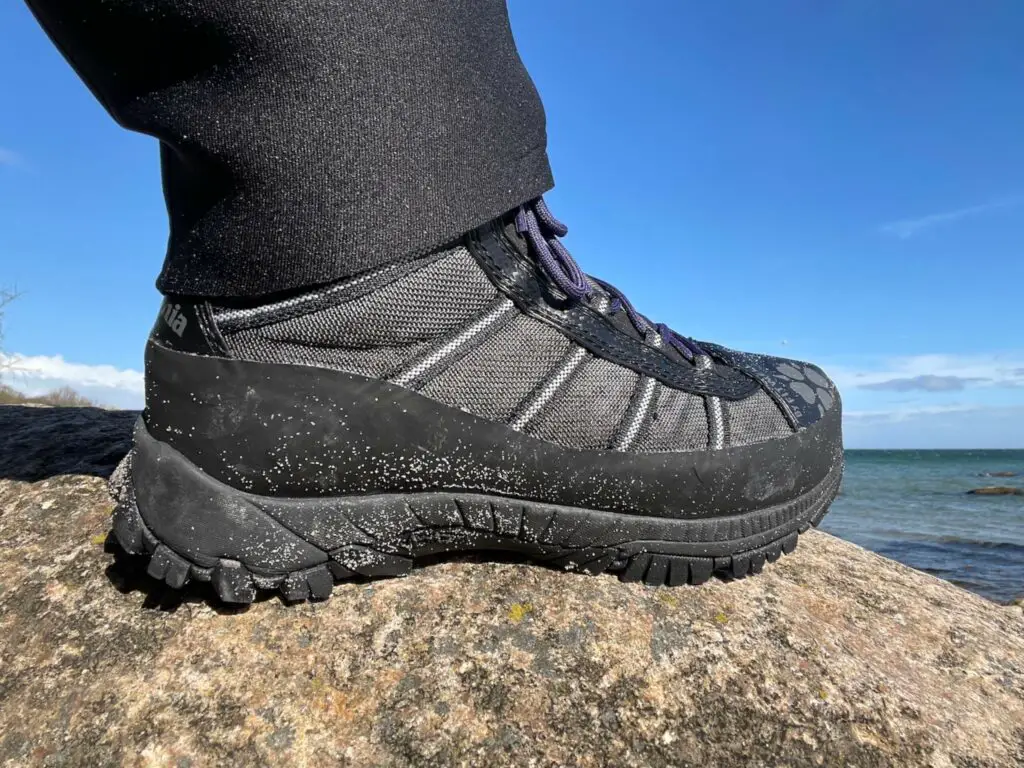
6. Patagonia Forra: Best Saltwater
Main features:
– Very lightweight
– Lacing system without any metal parts
– Heel and toe sections are reenforced
– Mesh fabric dries quickly
Why we picked it:
The new Patagonia Forra Wading Boots (read our in-depth review here) are an excellent choice if you are looking for a lightweight boot but don’t want to compromise on ankle stability and traction. Their looks are not particularly sexy with their all grey/black design but they can shine with their “inner” qualities.
Out of the box they offer a high degree of traction thanks to their vibram sole (the outer and inner areas of the sole are much sturdier than on the Simms Flyweight for example). Their lacing system does not feature any metal parts and hence the boot is also well suited for saltwater use (rinse them afterwards of course). And finally we were impressed with the amount of stability they provide around the ankles. They are really a great fusion of low light and stability. Hence if you find yourself putting in a few extra miles to get to your favorite fishing spot, make sure to check out the Forra.
PROS
-
Excellent mix of low weight and stability
-
Great traction with vibram rubber sole out of the box (without studs)
CONS
-
The color design of the boot is not particularly sexy
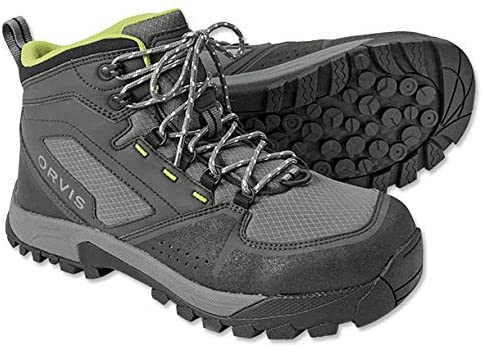
7. Orvis Men’s Ultralight Wading Boots: Best Lightweight
Main features:
– Low ankle design
– Very lightweight
– Easy slip on thanks to loop in the back
– Drainage holes on the side of the boot
Why we picked it:
The American manufacturer Orvis has been in the fly fishing business for decades and known to make some of the best fly fishing gear in the industry. Their Orvis Men’s Ultralight is no exception to this rule. The Orvis Men’s Ultralight is our wader boots review top choice in the lightweight category. The lower shaft gives the Ultralight Fly Fishing boots the feeling of hiking shoes. You can comfortably wear them all day.
The Orvis Men’s Ultralight feature a Vibram sole and still come in at only 40oz (1.14kg)/pair. You can add studs for extra stability. The Orvis Ultralight are a great choice for trips when you have to keep the weight of your gear low plus they have drainage holes on the sides of the boot that keep the boot light and make them quick drying.
PROS
-
Lightweight and highly packable due to smaller size
-
Comfortable lacing system
CONS
-
Limited ankle support
8. Korkers Bantam Lite: Best Newcomer

Main features:
– Interchangeable sole system
– Traditional lacing system
– EVA mid sole for extra comfort
– Lightweight
Why we picked it:
The Korkers Bantam (read our in-depth review here) is our pick for the best newcomer in 2026. Korkers has always been a fan favorite thanks to their interchangeable sole system which basically gives you several wading boots in one.
For the new season they came out with a lightweight boot that is aimed at fly fishing travelers and fishermen who tend to put in significant distances to get to their fishing spots. The new Bantam Lite feature extra padding around the ankles for increased stability and and EVA mid sole for all day comfort.
PROS
-
Lightweight, yet durable
-
Good traction with felt and rubber sole
CONS
-
Can’t think of any to be honest
GET THE BANTAM LITE AT KORKERS
GET THE KORKERS BANTAM LITE AT TRIDENT
What you Need to Know about Wading Boots
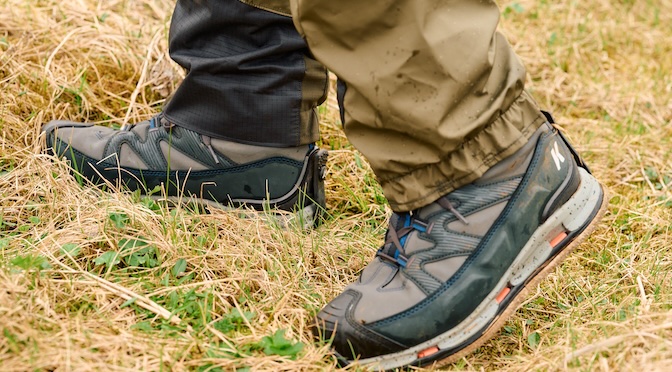
Choose a wading boot by sole, support, closure and fit over the stockingfoot of your waders. The best option depends on the riverbed, approach distance and local rules on felt.
Sole Choice: Felt, Rubber and Studs
Felt can grip smooth, algae-covered rock well, while rubber is more versatile for mixed walking and easier to clean between watersheds. Studs can add bite on slick rock but can damage boat decks and finished floors. Check local felt rules before traveling. For a separate fit comparison, see the women’s wading boots guide.
What Size Wader Boots for Fishing should I Get?
Another word of advise: every wading boot recommended in this guide is to be worn with a pair of stockingfoot waders, the gold standard among today’s fly fishing waders. Stockingfoot waders are fly fishing waders that have neoprene booties. Over these, you wear a pair of fly fishing boots. The same goes for stockingfoot wading pants, the waist-high version for shallow water and hot days. This often brings up the question. What size wading boot should you get? Since these neoprene booties are quite thick, most of the wading boots have to be one size more than your street shoes. Most of the manufacturers have special sizing charts for their products.
What if I want to do wet wading? That’s another good question that we often get in the summer. Wet wading means you only wear fly fishing boots. In order for you to not have to get another pair of fly fishing boots, we recommend using neoprene socks with your boots. This means they will have the same fit plus they will keep you warm. Because even if the temperatures are hot outside, the water temperatures are much lower and your feet will most likely get cold if you wade for hours.
Weight of Your Boots for Waders
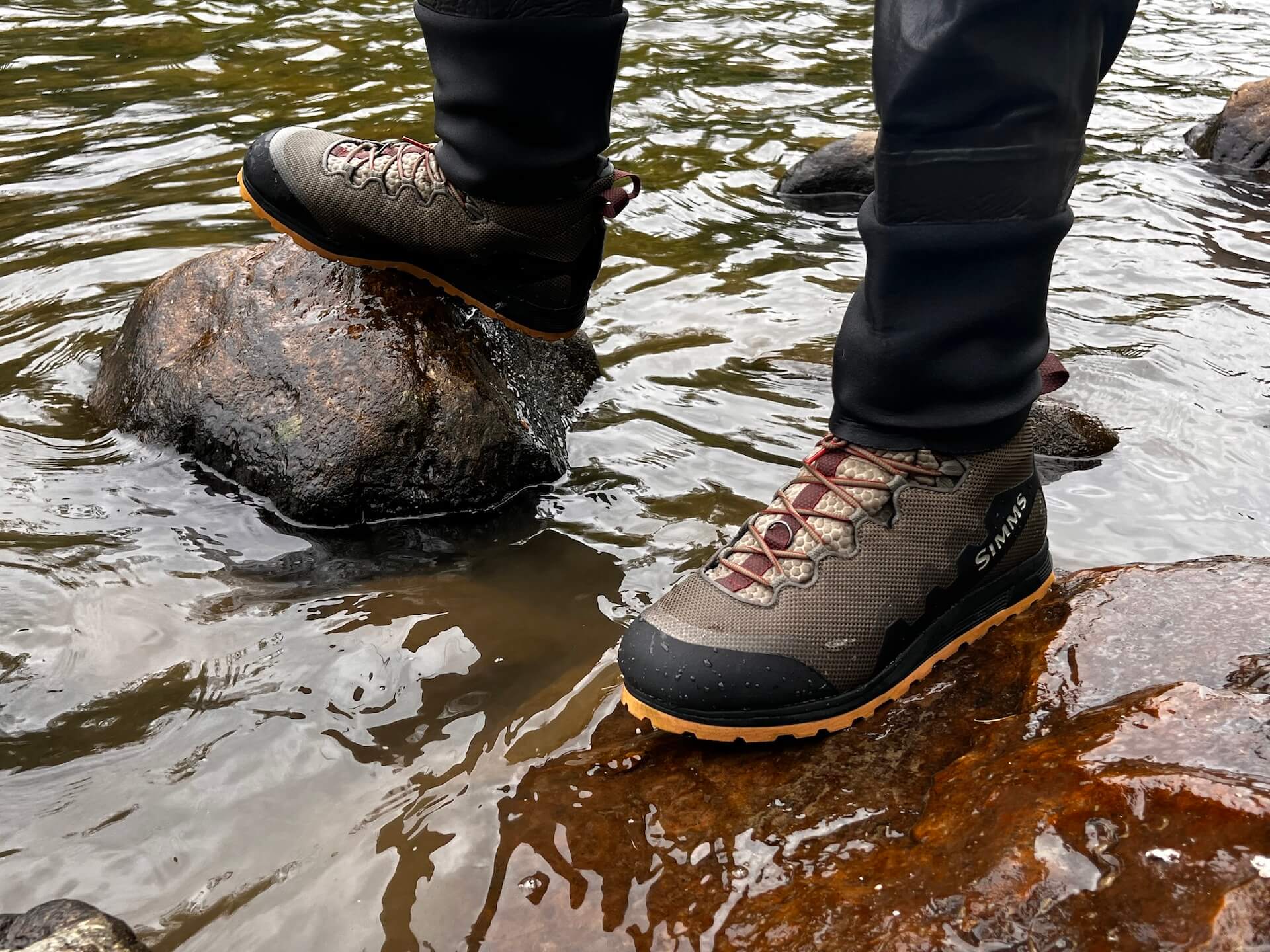
The shape and built of your wader boots has an influence on its weight. If you prefer a really light boot you should go for one with a lower shaft such as the Orvis Men’s Ultralight. If you want increased stability and sturdiness a product such as the Simms Freestone is the way to go. A higher shaft and more structure usually add weight, so compare support with the distance you expect to walk.
Taking Care of your Wader Boots
Rinse off mud, grit and salt after use, remove the insoles, open the closure fully and let the boots air-dry before storage. Avoid direct heat, which can damage adhesives and materials.
Durability
You might ask yourself why you should pay hundreds of dollars for a wading boot? You don’t have to of course but here’s an aspect to consider. Oftentimes the premium manufacturers such as Simms, Orvis, Korkers or Patagonia use the best materials for their high-end products. This means they are more expensive to purchase in the beginning but might not be more expensive on the long run in fact. The reason: durability.
Wading boots such as the Simms G4 Pro, the Korkers River Ops Boa or the Patagonia Danner are made from the most durable fabrics out there. And in the case of the Patagonia you can even resole your boot further extending its lifespan. That’s not only more economic in many cases but oftentimes also more ecologic.
Conclusion
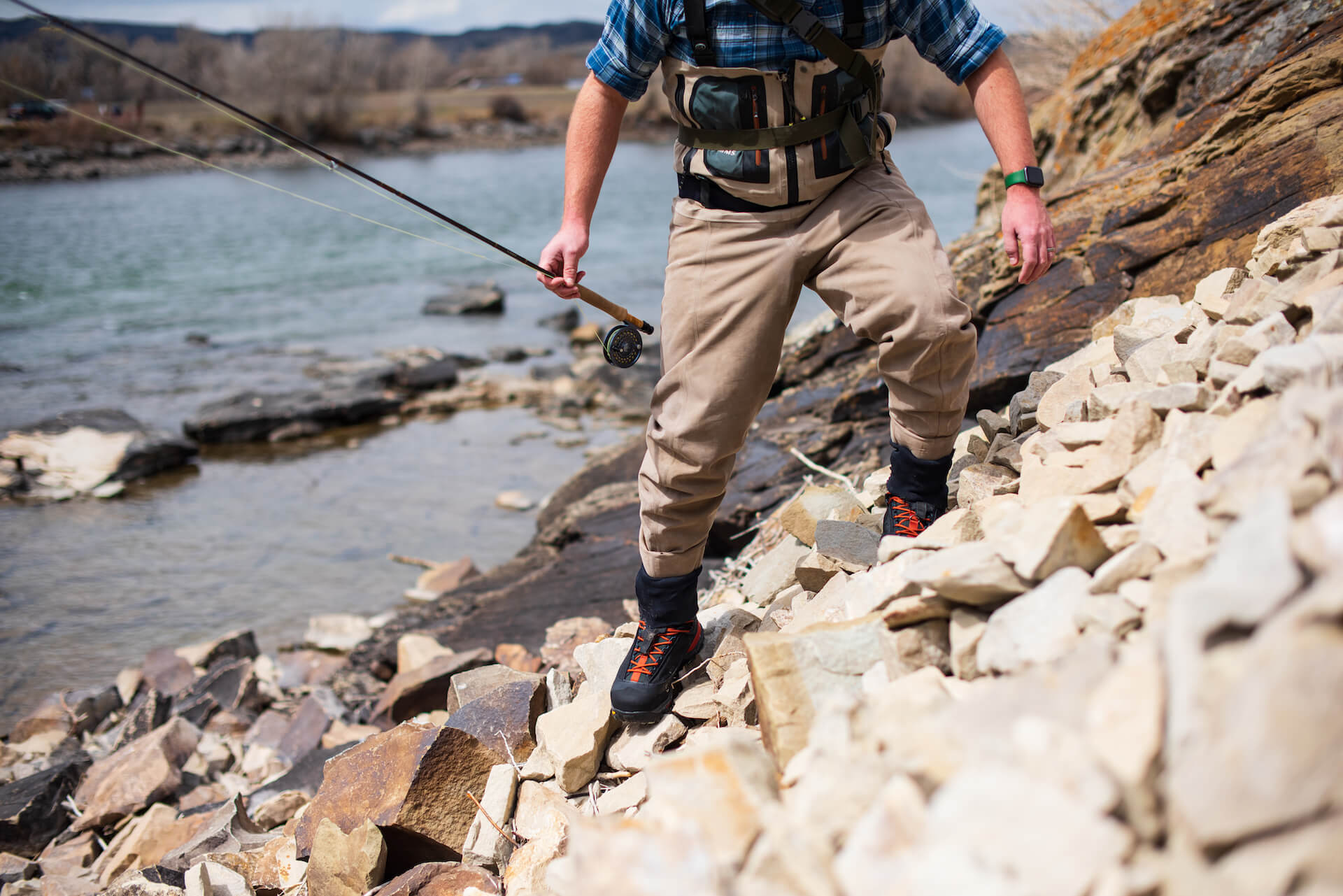
Wading boots provide traction, ankle support and protection on uneven riverbeds. Match the sole to the water you fish, then compare fit, weight and closure. The eight picks above cover different budgets and conditions rather than one universal winner.
Why You Should Trust Our Reviews
Leonard Schoenberger and his team spend countless days on the water testing new fly fishing gear. Our goal is to use our experience, give you our honest opinions and recommend the best products so you can make a solid purchase decision. We never get paid for reviews and are proud of our editorial independence. Our focus is on you – thanks for reading and supporting The Wading List.
Best Wading Boots: Frequently Asked Questions
Why are specialized wading boots important for fishing?
Wading boots provide anglers with the necessary grip on slippery riverbeds or lake bottoms, support for the ankles, and protection against potential hazards like sharp rocks, shells, or unseen underwater obstacles.
What’s the difference between felt soles and rubber soles in wading boots?
Felt soles provide excellent traction on slippery rocks and riverbeds. However, they can carry invasive species between water bodies. Rubber soles, on the other hand, are more durable, eco-friendly, and versatile but may provide slightly less grip on certain slippery surfaces.
How should wading boots fit?
A good wading boot should fit snugly, with room for neoprene-booted waders and a pair of socks. It shouldn’t be too tight, which could restrict circulation, or too loose, which might cause blisters.
Are wading boots waterproof?
While wading boots are designed to be submerged in water, they aren’t necessarily waterproof in the sense of keeping water out. They are made to drain water quickly once you step out, ensuring you don’t carry extra weight.
Do I need to consider the type of waders I have when purchasing wading boots?
Yes, especially if you have boot-foot waders (where the boot is attached). Stocking-foot waders (separate booties) are more versatile, allowing you to pair them with any wading boot.
How do I maintain and care for my wading boots?
After each use, rinse them thoroughly with fresh water, especially if you’ve been in saltwater. Remove insoles and let everything air dry completely to prevent mold or mildew. Periodically check for wear and tear.
What should I consider when buying wading boots for colder environments?
Look for boots with insulated linings and ensure there’s room for thicker socks without compromising circulation. Proper fit is crucial, as maintaining blood flow is essential for warmth.
Do wading boots come in different ankle heights?
Yes, wading boots can come in low, mid, or high ankle designs. Higher ankle boots offer more support and protection, which can be essential in rocky or uneven terrains.
Can I use wading boots for activities other than fishing?
While wading boots are designed specifically for fishing, they can be used for other water-related activities. However, they might not provide the comfort or support required for extensive hiking or trekking.
Are there any environmental concerns associated with using wading boots?
Yes, especially with felt-soled boots which can trap and transport invasive aquatic species between water bodies. Always clean, drain, and dry your boots thoroughly after each use to minimize this risk.
Read more about wading gear here:
BEST POLARIZED SUNGLASSES FOR FLY FISHING
PATAGONIA SWIFTCURRENT EXPEDITION WADERS
REVIEW: A SEASON WITH PATAGONIA’S DANNER BOOTS
Disclaimer: The Wading List is reader supported. We take part in so-called affiliate programs. If you click on one of the links in this article and end up purchasing a product we earn a small commission at no extra cost for you. Thank you!

Leonard Schoenberger is a fly fishing professional and gear specialist with over 20 years of experience on the water. As the manager of Heidarvatn, a world-class sea trout lodge in Iceland, his product recommendations and tactical advice are tested in some of the most demanding conditions on earth. His expertise has been mentioned in The New York Times, the Financial Times, and at the Outdoor Media Summit.